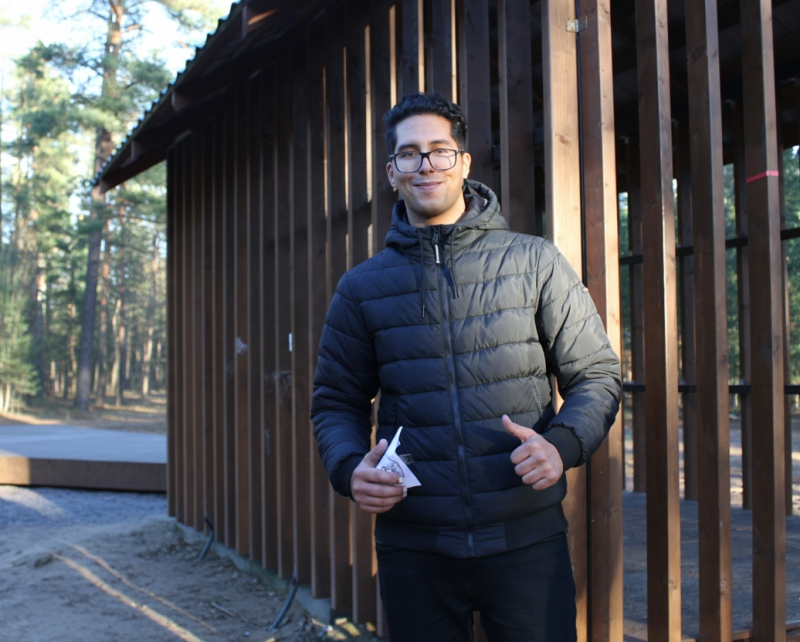
Please introduce yourself to our readers.
Hello everyone! My name is Haithem Sandel. I’m an international student from Algeria, currently in my third year of the information security Bachelor’s program at ITMO University. I strongly believe that real growth happens outside your comfort zone, which is exactly why I traded the Mediterranean sun for the beauty of St. Petersburg. I consider myself a lifelong learner, always eager to explore new ideas and build bridges between different cultures.
What made you choose information security as your field of study?
I’ve always been fascinated by how the internet works, but even more by how fragile it can be. Today, we live our entire lives online: our banking, memories, communication, and work. I wanted to be on the side that protects that digital infrastructure. To me, information security is like a high-stakes chess game, where you constantly need to outthink your opponent, i.e., the hackers. I wanted to learn how to build digital fortresses.
How did you first hear about ITMO University, and what convinced you this was the right place for your Bachelor’s degree?
In the world of computer science, ITMO has a legendary reputation, especially because of its multiple ICPC champion status. When I started researching universities in Russia, ITMO immediately stood out. It didn’t feel like a dusty, old-fashioned institution. It felt modern, innovative, and very hands-on. The information security curriculum looked rigorous yet practical, and the fact that the university is located in the heart of St. Petersburg sealed the deal for me.
How does student life in St. Petersburg compare to life in Algeria? Did anything surprise you?
The weather is definitely the biggest difference! Going from Algerian sunshine to Russian snow was a shock, but a beautiful one. St. Petersburg never sleeps; there are always hackathons, meetups, and cultural events happening. Trips to Yagodnoe with the ITMO Buddy System have been especially memorable.
What surprised me the most was experiencing the white nights in the summer. Walking out of the dorm at nearly midnight and seeing the sun still shining felt surreal. It’s something every student here cherishes.
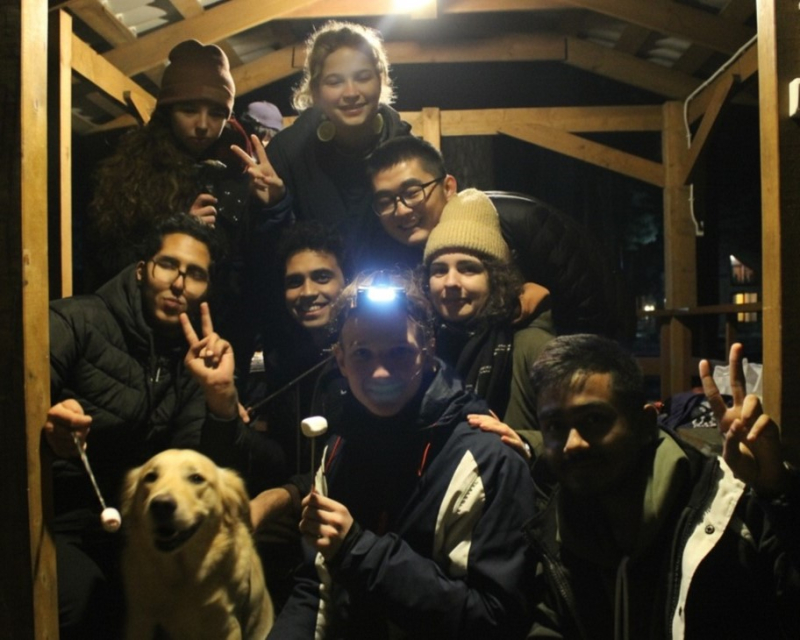
Haithem with his human friends and a furry friend at Yagodnoe. Photo courtesy of the subject
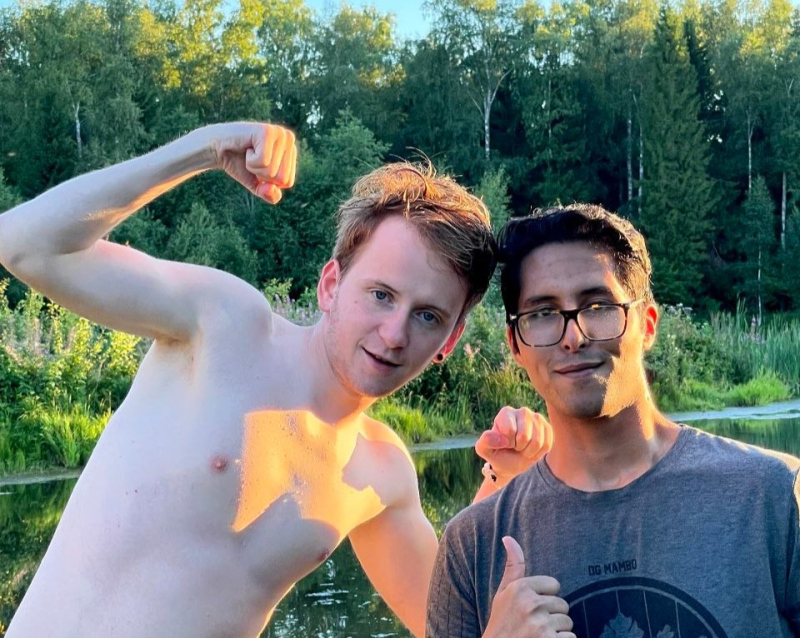
Haithem with his friend at Yagodnoe. Photo courtesy of the subject
If you had to explain information security to a five-year-old, what would you say?
Imagine you have a secret diary where you write down all your secrets. My job is to build a special lock for that diary so your annoying big brother can’t open it. And even if he steals the diary, I use a secret language so that when he opens it, he can’t read a single word!
That’s wonderful! What part of cybersecurity excites you the most, and why?
Right now, I’m fascinated by the intersection of AI and cybersecurity. We’re standing at the edge of a new era where threats are becoming faster and smarter because of artificial intelligence. It’s essentially an arms race; defenders using AI to catch attacks, and attackers using AI to create them. What excites me most, though, is the realization that humans still won’t be replaced. Cybersecurity isn’t just about code; it’s about intuition, creativity, and understanding human psychology. An AI can follow patterns, but it takes a human mind to outsmart another human mind. Knowing that our creativity remains our strongest defense makes this field incredibly important and future-proof.
What’s the most mind-blowing thing you’ve learned in your program so far?
Steganography completely blew my mind. The idea that you can hide a secret text file inside an ordinary image, like a photo of a cat or a landscape, without changing how it looks to the naked eye is fascinating. It really taught me that in the digital world, nothing is ever exactly what it seems.
What was the biggest challenge you faced adapting to Russian academic culture, and how did you overcome it?
The language barrier in technical subjects was the toughest challenge. Conversational Russian is one thing, but understanding complex mathematical and physics terminology is on a completely different level. Luckily, I got incredibly fortunate. On my very first day in St. Petersburg, I met a Russian guy at a hostel who later became a close friend. We spent a lot of time together, which forced me to practice Russian naturally. He even invited me to his family’s dacha near Moscow, where we shared some unforgettable days. Having a local friend gave me great memories and helped me understand the culture faster, improve my language skills, and eventually feel much more confident academically.
What do you enjoy doing when you’re not studying?
I try to maintain a balance between logic and creativity. Since my studies involve a lot of structured thinking and code, I turn to music production to unwind and express myself. I’m also a big movie lover, so you’ll often find me wrapped in a blanket watching films. In addition, I work as an English tutor, which I genuinely enjoy. It’s not just about teaching grammar; I love the conversations I have with my students. Connecting with people, learning about their lives, and helping them grow makes those sessions the highlight of my week.
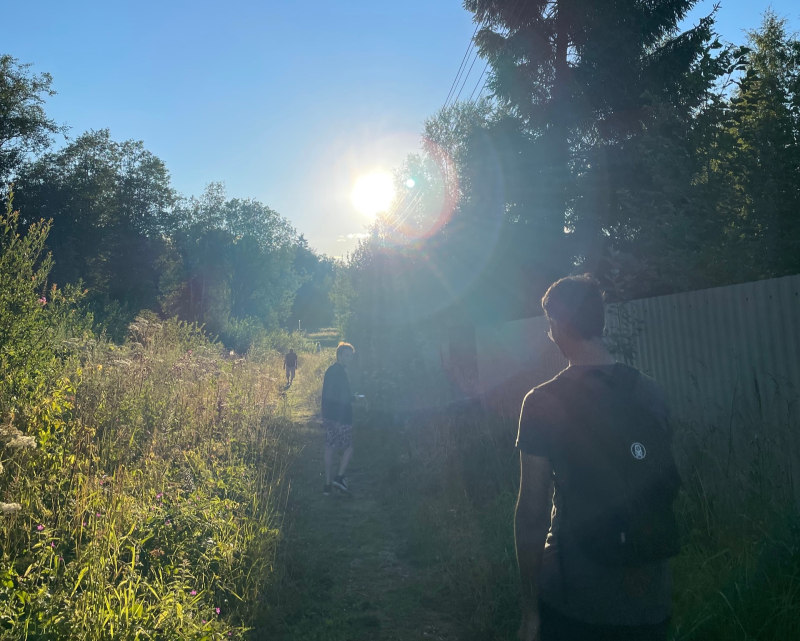
Photo courtesy of the subject
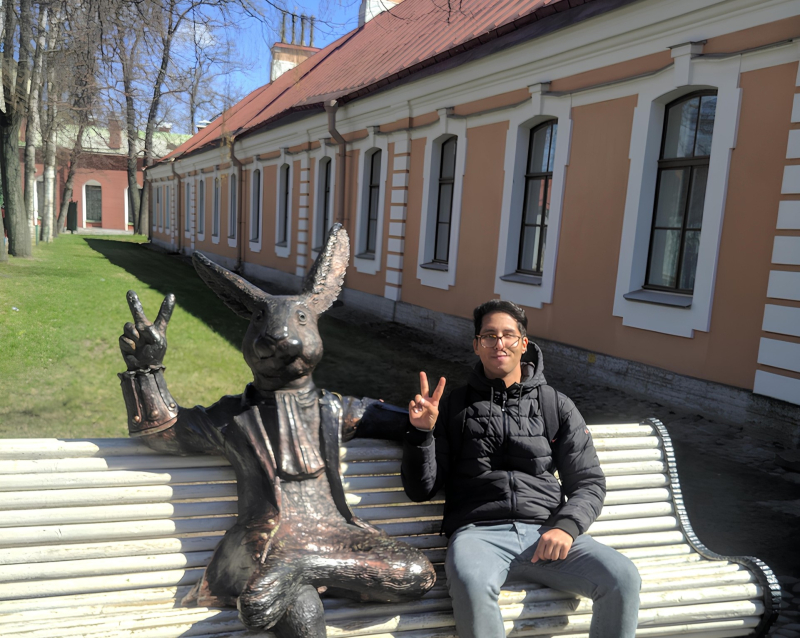
Photo courtesy of the subject
What’s one Russian word or phrase you’ve adopted into your daily vocabulary?
Definitely “давай” (pronounced as davay). It’s such a versatile word; you can use it to say goodbye, encourage someone, agree to plans, or simply say “let’s go.” It perfectly captures the energy and spirit of people here.
What advice would you give future students from Algeria considering ITMO?
First, don’t buy your winter clothes in Algeria. Wait until you arrive in Russia; the clothes here are actually made for this weather. Second, learn the Cyrillic alphabet before you come. It makes the first week much easier. And finally, don’t be afraid. ITMO is a very open and welcoming community. If you have a passion for technology, you’ll find your people here, no matter where you’re from. Just take the leap.