Could you introduce yourself and tell us where in Nigeria you’re from?
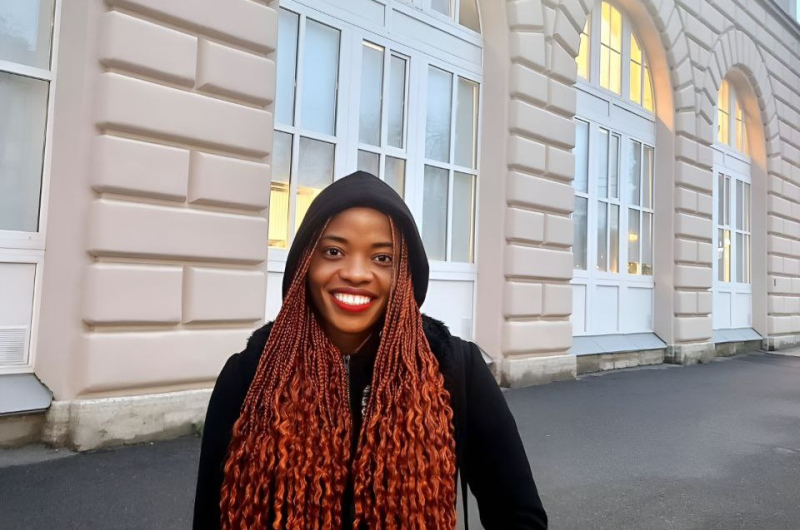
I am Chizoba Nzeakor, a Master’s student at the Institute of Design and Urban Studies. I am proudly Igbo from the eastern part of Nigeria, Enugu State, precisely. The city of Enugu is known for its beautiful hilly landscape and relatively cooler climate.After coal was discovered there in 1909, it became a key administrative center during colonial rule. Growing up with such a blend of history, geography, and identity shaped my perspective on cities as living systems shaped by culture, politics, and infrastructure.
What first inspired you to explore digital urban studies?
Through the Open Doors scholarship, I had multiple options within the Earth and Environmental Sciences track, ranging from ecology to oil and gas. However, digital urban studies immediately stood out – the program combined data, technology, urban systems, sustainability, and spatial intelligence in a way that felt future-oriented and globally relevant. I saw that it would not only allow me to understand the social and policy dimensions of cities, but also equip me with strong technical competencies from geospatial analysis to data-driven urban modeling.
In the climate and sustainability sector, especially working between the Global South and Global North, I believe this combination positions me distinctively. I would not just speak about sustainability conceptually, I would design, measure, model, and implement it technically. That realization made my choice clear.

Photo courtesy of the subject

Photo courtesy of the subject
What fascinates you most about how technology shapes urban life?
It’s how invisible systems influence visible realities. Technology shapes mobility patterns, waste management efficiency, energy distribution, housing development, and even social interaction. A city today is not only concrete and steel; it is also algorithms, data layers, digital twins, and sensor networks. In rapidly urbanizing regions like Lagos or other African megacities, technology can either deepen inequality or bridge systemic gaps. That tension fascinates me. The question is not whether technology will shape urban life – it already does – but how intentionally we design it.
For those unfamiliar with the field, how would you explain digital urban studies in simple terms?
Good question; digital urban studies is the study of cities using technology and data. In simple terms, it means understanding how transportation, housing, waste management, energy, and public spaces work, and using digital tools to analyze and improve them.
We use tools like geographic information systems (GIS), data analytics, satellite imagery, and digital modeling to see patterns that are not visible to the naked eye. We can map traffic congestion, measure pollution, simulate urban growth, or analyze access to services like schools and hospitals.
If traditional urban planning asks, “How should we design cities?” digital urban studies asks, “How can data and technology help us design better, smarter, and more sustainable cities?” At its core, it is about making cities more efficient, inclusive, and climate-resilient by using evidence instead of assumptions.
Have you worked on any academic or personal project that made you feel proud or excited about your field?
My thesis is my baby. It has been a two-year journey from shaping the research design to navigating technical challenges and refining the methodology, but every stage strengthened me as a researcher.
What makes me most proud is not only the academic outcome but the impact. The audience it has reached, the conversations it has sparked, the product that has emerged from it, and the network of people who believed in the vision and contributed in diverse ways – all of that makes it meaningful, and I am excited to see how it will continue to evolve and create impact in the years ahead.
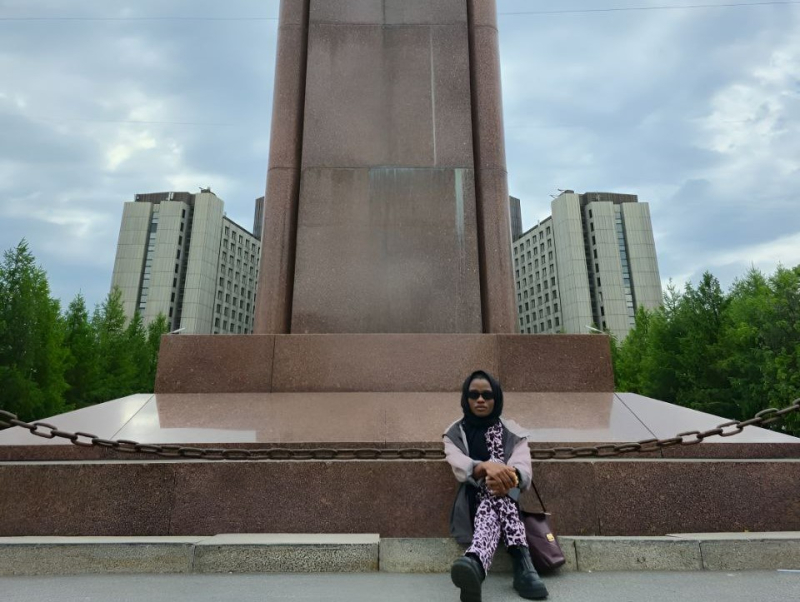
Photo courtesy of the subject
You’re actively involved in youth leadership initiatives. How did that journey begin?
It began early, even from my days in church and youth communities. I am naturally optimistic and deeply faith-driven, and whenever I find myself in communities, I often end up in leadership roles, sometimes without actively seeking them. Leadership, for me, has always felt organic rather than strategic.
From childhood, I was inspired by figures like Patrice Lumumba and Nelson Mandela, leaders who stood firmly for justice and dignity despite adversity. Their courage shaped my worldview. I have my own share of adversity, too!
What does leadership mean to you personally?
To me, leadership is service. My understanding of leadership is deeply shaped by my faith. My role model is Jesus Christ, not in a symbolic way, but in the practical sense of servant leadership. He led by serving, by lifting others, by standing for truth, and by acting with compassion.
Leadership is about responsibility and creating opportunities for others to grow, protecting the vulnerable, and using influence to advance justice and dignity. Leaders are servers. One of my lecturers, Andrey Drozhzhin, is a good example of a leader.
How often do you have to step up and lead during a challenge?
As the founder of Climate Technology Solutions, stepping up during challenges has almost become part of my daily reality. Leading a startup is not for the faint-hearted. Some days, you wear many hats at once: strategist, researcher, communicator, fundraiser, technical lead, and sometimes even emotional anchor for the team.
What has been the most surprising part of studying abroad?
One of the most surprising and refreshing aspects of studying abroad, particularly in Russia, has been the flexibility to work while studying. I genuinely appreciate that adjustments can be made to accommodate students’ work routines. It reflects an understanding that students are not only learners but also professionals building their careers and supporting themselves. It has allowed me to apply what I learn in real time and connect theory with practice.
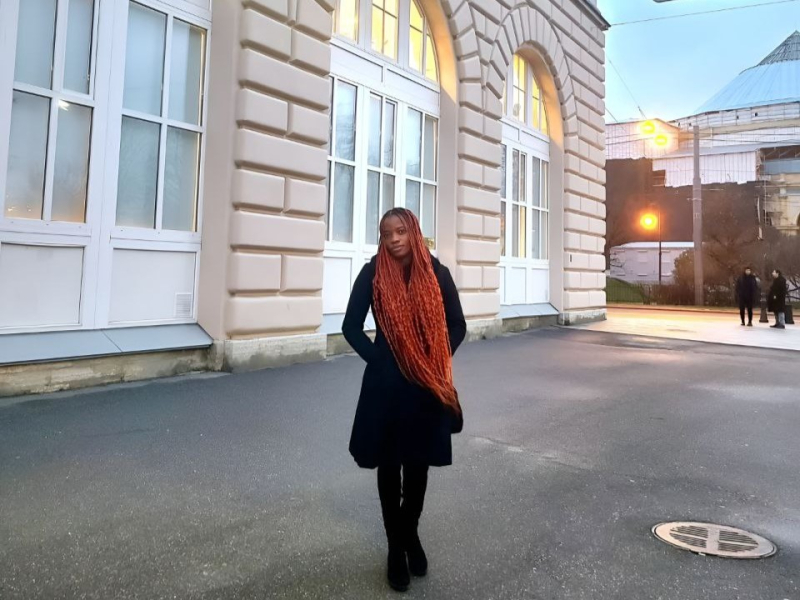
Chizoba Nzeakor at ITMO. Photo courtesy of the subject
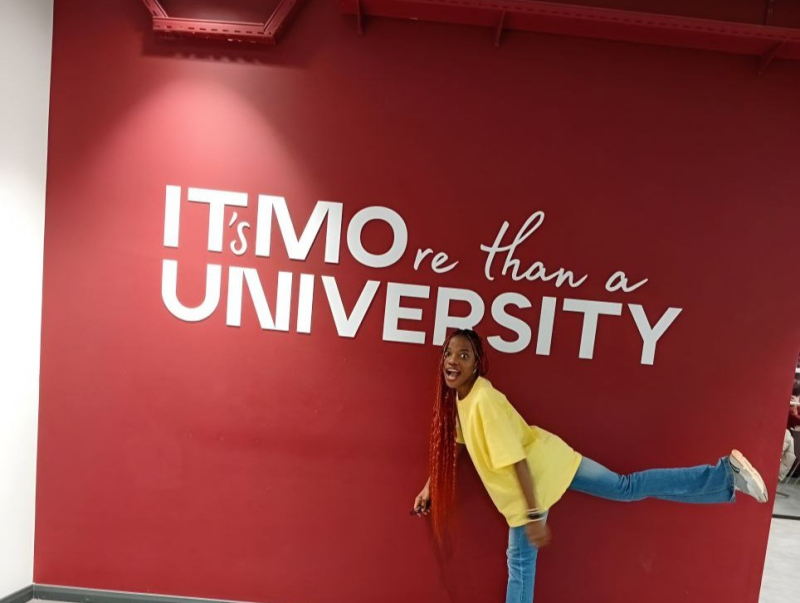
Chizoba Nzeakor at ITMO. Photo courtesy of the subject
Has living in a new cultural environment changed your perspective on cities and community life?
Let me start with this – I absolutely love St. Petersburg. Living here has not necessarily changed my perspective on cities, but it has deepened my understanding of how profoundly cities shape us. I have come to appreciate that the way we interact with a city evolves depending on its culture, rhythm, and spatial character.
Now in my fourth and final semester at ITMO, we began with courses like Psychology of Interaction with the Urban Environment and Sustainable Mobility. These subjects made my experience even more personal. The way I move, socialize, and experience public spaces in Abuja, Nigeria, is very different from how I engage with St. Petersburg, Sochi, or even Dubai. Each city has its own tempo, its own design language, and its own social codes. Without even consciously deciding to, you begin to adapt your routines, shift your pace, and your relationship with space transforms.
How would you like to contribute to urban development in Nigeria?
By building data-driven, climate-resilient urban systems. Nigeria is urbanizing rapidly, and cities like Lagos and Abuja face complex challenges. My goal is to integrate technology into urban governance and infrastructure planning, ensuring that development is not only fast but intelligent and sustainable.
I want to design solutions that combine spatial data, digital modeling, and decentralized systems to improve service delivery, especially in waste management, mobility, and environmental monitoring. Urban development in Nigeria must move from reactive planning to predictive and evidence-based systems. I want to be part of that transition.
What are your personal plans for the future?
I love to live life to the fullest. In the future, I see myself operating at the intersection of research, technology, and policy. I plan to continue developing innovative urban solutions through Climate Technology Solutions, while also advancing academically in research. My long-term vision is to build scalable models that can be replicated across African cities, combining digital tools, climate resilience, and inclusive governance.
Ultimately, I want my work to contribute to cities that are not only smarter but fairer, more efficient, and environmentally responsible.