This year, the congress saw over 2,000 reports at 111 sections in eight scientific fields:
- Life Sciences;
- Chemoinformatics and Chemical Engineering;
- Artificial Intelligence;
- Information Technologies;
- Interdisciplinary Research: Humans, Art, Science, and Technology;
- Energy-Efficient Engineering Systems, LNG Technologies, Hydrogen Power;
- Physics and Engineering;
- Smart Analytics in Decision-Making and Management. In total, the event brought together representatives of 162 universities and scientific organizations.
One of the perks for participants are educational events held as part of the congress. For instance, workshops on designing presentations, working with the audience, and using AI assistants in research. Participants from other universities could also share their experience of developing student research associations at a dedicated communication platform.
Over 285 participants were named winners in the categories Best Report by a Young Researcher and Best Report or Project by a School Student. They received diplomas and will get bonuses when applying to ITMO: school students get 6 additional points for personal achievements when applying to Bachelor’s programs, while university students can participate in the Portfolio Contest when applying to Master’s programs or get personal achievements points when applying to PhD programs. Additionally, more than 200 research supervisors were awarded in the dedicated category.
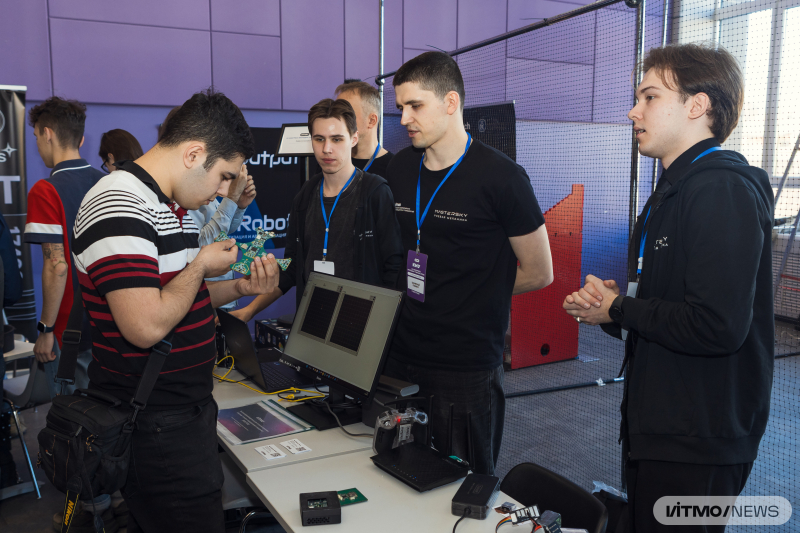
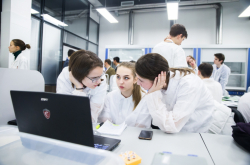
Exhibition at the Congress of Young Scientists. Photo by Dmitry Grigoryev / ITMO NEWS
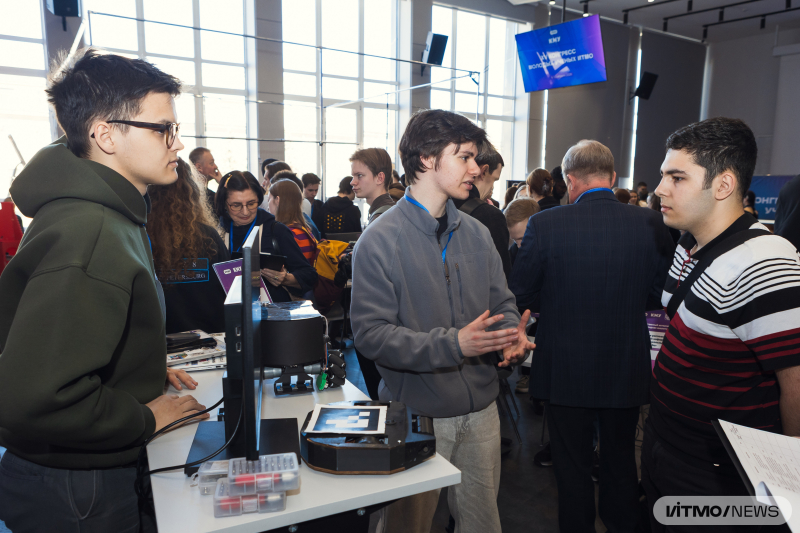
Exhibition at the Congress of Young Scientists. Photo by Dmitry Grigoryev / ITMO NEWS
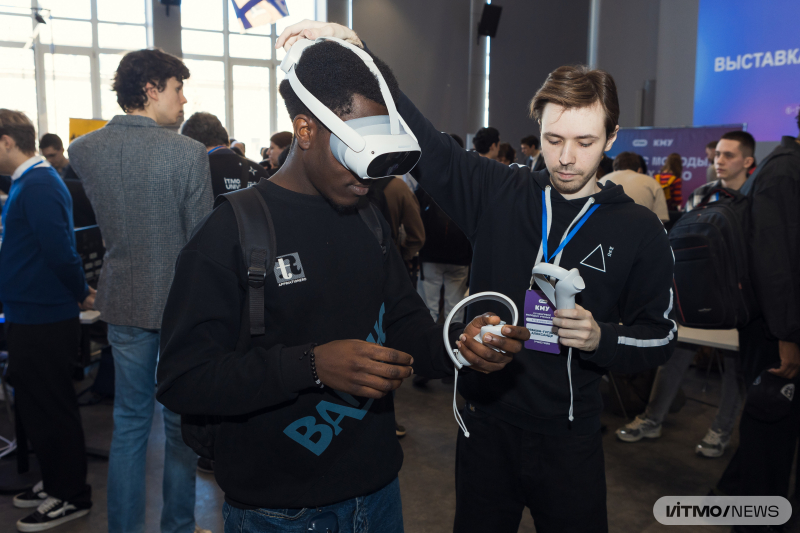
Exhibition at the Congress of Young Scientists. Photo by Dmitry Grigoryev / ITMO NEWS
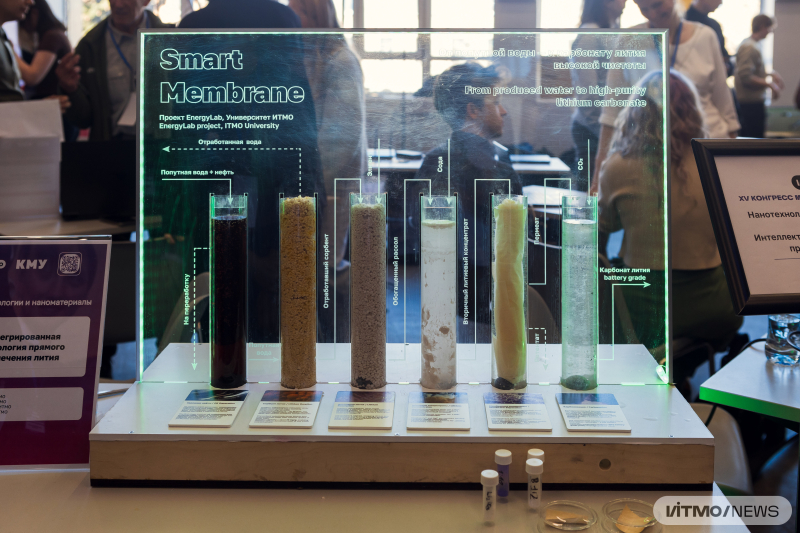
Exhibition at the Congress of Young Scientists. Photo by Dmitry Grigoryev / ITMO NEWS
The congress concluded with the traditional exhibition of projects, where students of ITMO, Peter the Great St. Petersburg Polytechnic University, St. Petersburg State Marine Technical University, Vladivostok State University, Mozhaysky Military-Space Academy, and various St. Petersburg schools presented 40 projects in robotics, digital technologies, infochemistry, photonics, and chemical engineering. Two sections received the greatest number of applications: Information Technologies and Artificial Intelligence and Applied Analytics. Authors of the best solutions will receive up to 100,000 rubles in funding to participate in other exhibitions and research projects.
For instance, ITMO students in collaboration with the Kirov Military Medical Academy have developed an app for automatic screening for cognitive impairments based on eye movements. Using artificial intelligence, the app analyzes eye movements recorded with a special medical headset and helps determine the probability of patients developing neurodegenerative diseases, such as dementia. The technology will facilitate the work of clinicians and potentially detect cognitive impairments more accurately.
“Using the headset, the system ‘records’ saccades, which are quick eye movements from one point to the next. Then, our app analyzes this information and presents it to clinicians for diagnosis. We have tested our system on 30 patients. While existing international counterparts require pricey subscriptions, our app will be free for medical specialists. In the future, we are planning to implement speech analysis in addition to analysing eye movements,” explains Gleb Komelin, one of the project’s developers and a student of the Faculty of Applied Informatics.
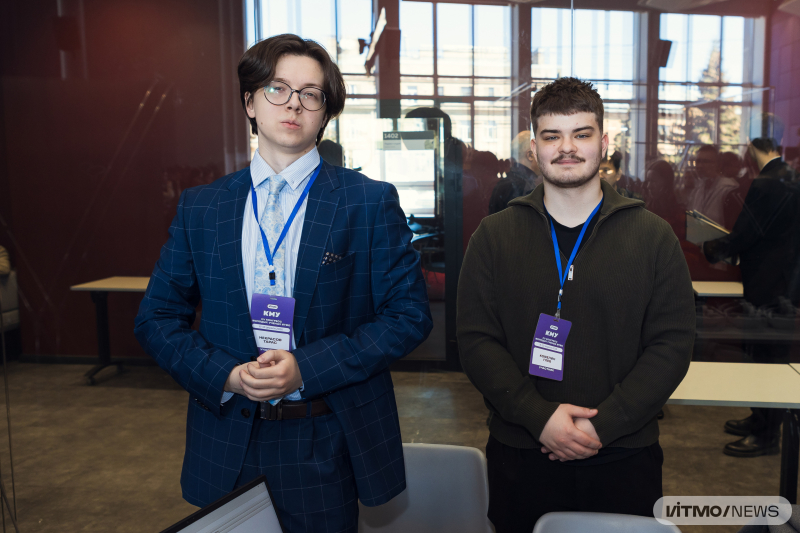
Gleb Komelin and Taras Nekrasov, developers of the app. Photo by Dmitry Grigoryev / ITMO NEWS
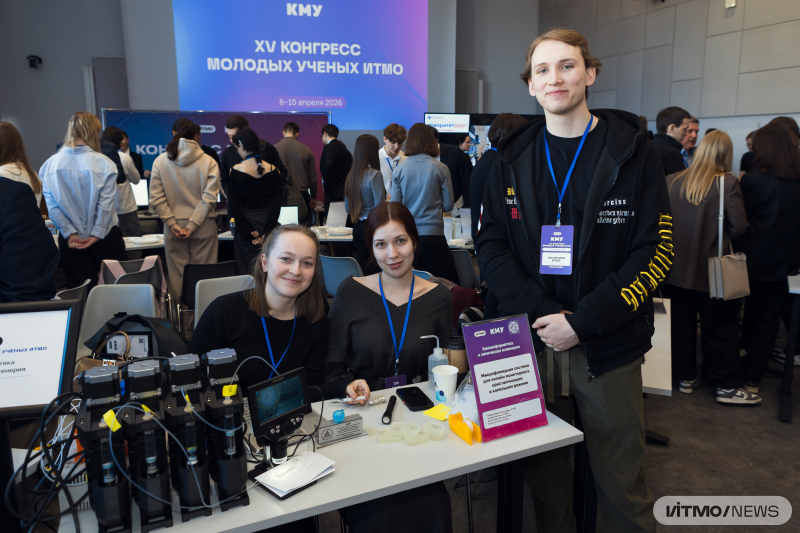
Students and researchers of the Infochemistry Scientific Center presented a microfluidic system for online monitoring of substance crystallization in a droplet regime. At its core are UV‑resin chips for carrying out chemical reactions, which contain micro‑ or nanoscale elements – channels and reservoirs – inside them. With these elements, it’s possible to control substance flows: for example, by mixing reagents in a required sequence and separating the resulting nanoparticles. In addition, microfluidics makes it possible to reduce costs of synthesizing expensive substances by minimizing reagent consumption.
“As our system is so tiny, we can have more control of the chemical reaction happening at the interface of reagents, and as a result, obtain a higher yield of usable product. For instance, at the exhibition, we presented a chip for synthesizing melamine barbiturates. These serve as matrices for reactive oxygen species with antibacterial properties. In theory, this substance can be used to develop antimicrobial surfaces,” shares Ilya Anufriev, one of the project’s authors and a PhD student at the Infochemistry Scientific Center.
Students of the Research and Educational Center for Photonics and Optical IT developed a system to control for objects with defects. It uses a camera and a laser to scan objects and identify defects. Such systems can be used for quality control in production of dental implants and parts in the metal and automobile industries.
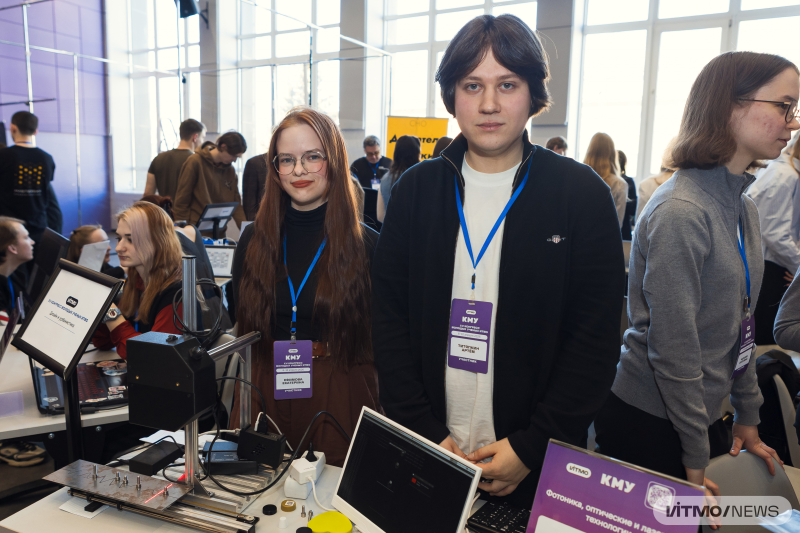
The team behind the laser defectology device. Photo by Dmitry Grigoryev / ITMO NEWS
“The laser beam projected onto the object deviates from the baseline proportionally to the part’s height. A camera records these changes at a rate of 20 frames per second; the system then combines the resulting profiles and, using mathematical algorithms, compares the outcome with a reference template. If the image does not match the reference, the object is considered defective. A template of any object of suitable size can be uploaded into the program,” says Artem Tityapkin, one of the project’s developers and a student at the Research and Educational Center for Photonics and Optical IT.
Other projects presented at the exhibition include an automated knowledge‑assessment system with voice identification, an AR‑based program for lab work training, a technology for lithium extraction using membranes, a “smart” needle for kidney biopsy that identifies tissue type by measuring impedance amplitude, a VR program for training in the use of an atomic‑force microscope, a neural network for grading national tests for school students, and the educational AI platform Learnity, which creates individual learning tracks for its users.
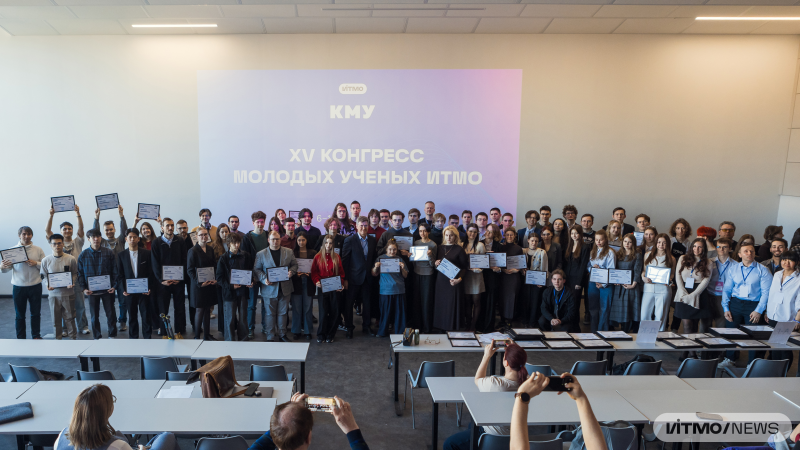
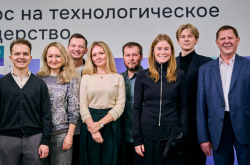
Winners in various categories of the congress. Photo by Dmitry Grigoryev / ITMO NEWS
The exhibition concluded with an awards ceremony for the congress’ winners with ITMO’s Vice Rector for Research Vladimir Nikiforov.
You can learn more about the exhibited projects here.