Daria Kozlova, ITMO's Director for Strategic Development, launched the discussion by identifying the main challenges of the 2025-2026 academic year:
“ITMO is a university that sets the education and research agenda in Russia and beyond. It has over 18,500 students who are working on breakthroughs, and this academic year, we will welcome 6,800 more students who trusted us to build their future and joined our ITMO Family. Today, at ITMO CONF, we ask ourselves two main questions. First, why do we want to be a technological corporation, what does it mean for us, and why is there no alternative? And secondly, do we see AI as another technology to simplify business processes or is it here to transform education, research, and management at the university?”
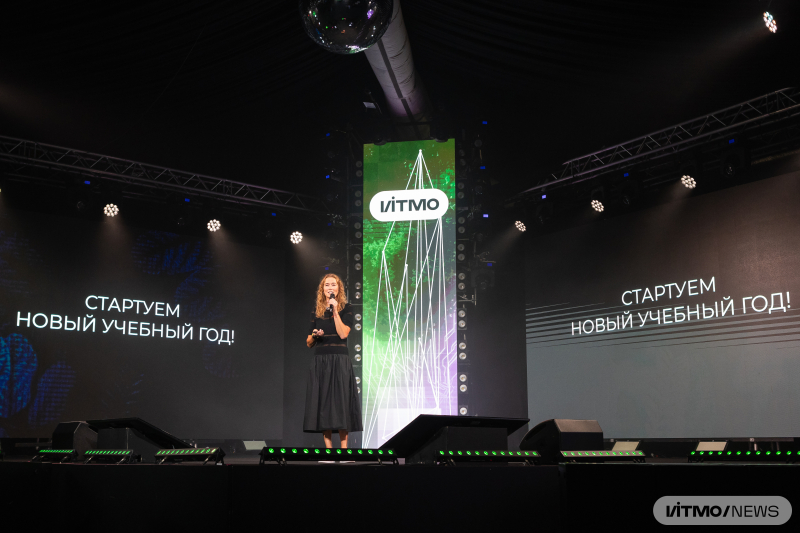
Daria Kozlova. Photo by Dmitry Grigoryev / ITMO NEWS
Complex tasks – from cybersecurity risks to climate change – require researchers to work in project teams, notes Sergey Makarov, the head of ITMO’s Engineering Center of Photonics and Optoelectronics. He adds:
“These days, researchers hardly work on innovative applied projects alone. The university is turning into a platform that helps small research groups and PIs make larger project teams, interact with major industrial partners, and solve socially-beneficial tasks.”
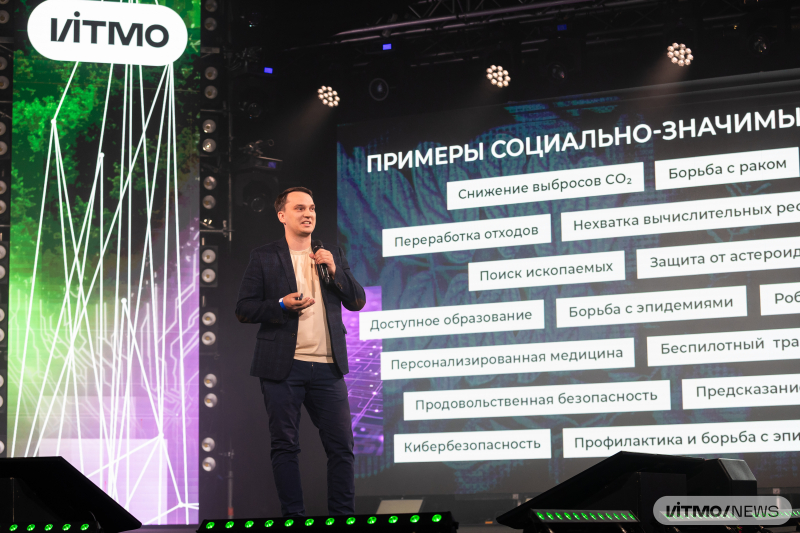
Sergey Makarov. Photo by Dmitry Grigoryev / ITMO NEWS
New educational model: from one job to flexible roles
Traditional educational models cease to cope with the challenge of today: the industry needs multifunctional specialists, but the strict government standards interfere with flexible education. As a solution, ITMO offers its own role-based competency model that has roles and competencies – rather than a job title – at its forefront.
“The role-based competency model will be a mechanism that will help us design and implement educational products, which will combine different yet complementary resources of both IT companies and the university. It will help business and science speak the same language and match a specialist’s responsibility area and their level of education. Since the industry is seeking fast-developing and reliable senior- and C-level specialists, we have to teach our students to not only apply specific tools but also understand how technologies and products work to make conscious and systematic decisions about their use,” explains Alexander Mayatin, the executive director of ITMO’s Information Technologies and Programming Faculty.
The model unites four domains: software engineering, infrastructure management, data, and end-to-end processes. Each domain is divided into subdomains and roles, which, in their turn, include roles, competencies, and levels of skill proficiency from applied to fundamental. This approach allows students to shape their own individual learning tracks and transform them along the way, while maintaining a holistic understanding of technologies.
By the end of 2025, Alexander Mayatin's team plans to complete the IT-tailored model and then expand it to other fields to lay the groundwork for interdisciplinary education. The model is open-source. Anyone can join one of the project’s development teams: expert (for coordinators), industrial (for business representatives), or academic (for lecturers).
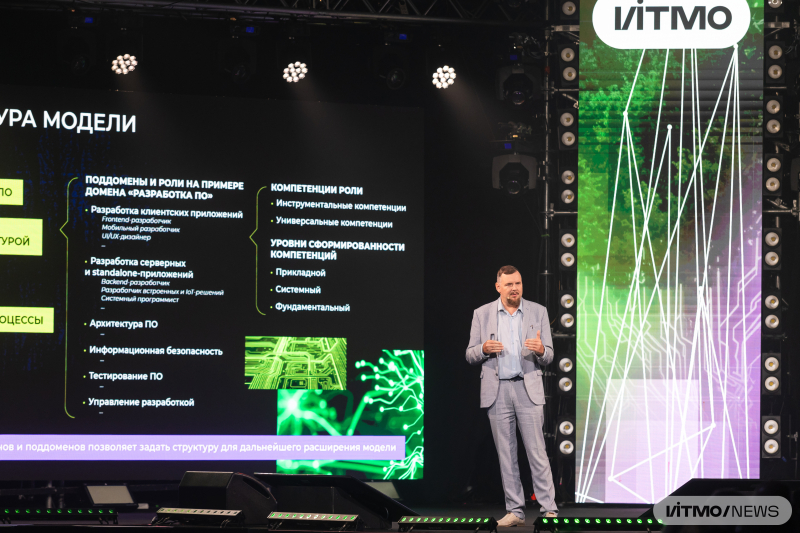
Alexander Mayatin. Photo by Dmitry Grigoryev / ITMO NEWS
Synthesis of science and industry
Experts at ITMO CONF 2025 pointed out that universities are moving towards being the centers of an ecosystem where fundamental studies and their applications are inseparable. Here are some examples of such collaborations:
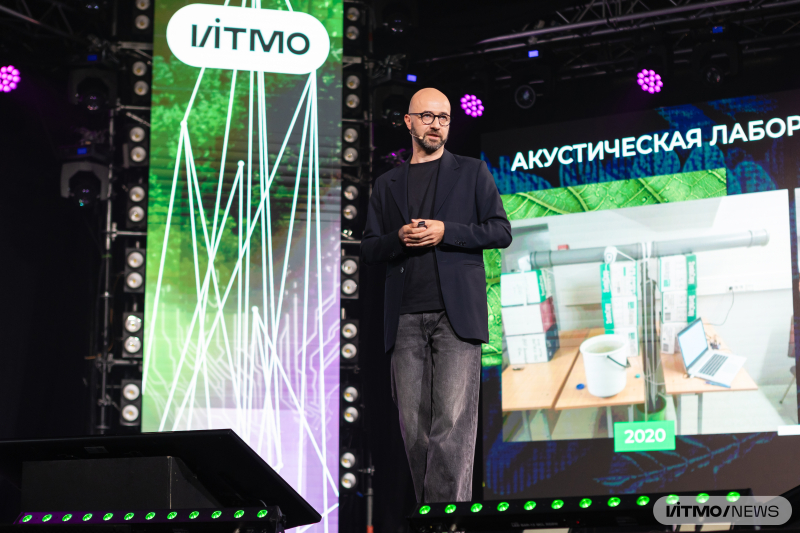
Mihail Petrov. Photo by Dmitry Grigoryev / ITMO NEWS
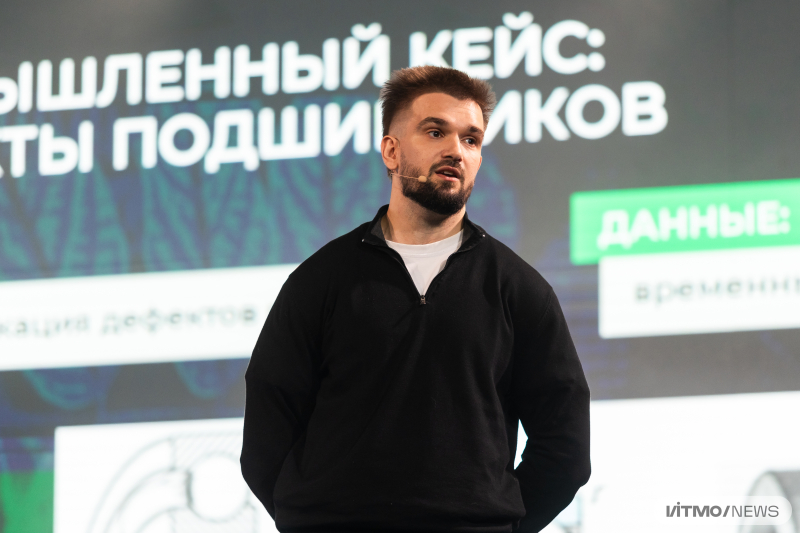
Ilya Revin. Photo by Dmitry Grigoryev / ITMO NEWS
Pavel Krivoshapkin. Photo by Dmitry Grigoryev / ITMO NEWS
Sergey Kolyubin. Photo by Dmitry Grigoryev / ITMO NEWS
-
In 2025, an acoustic laboratory at ITMO’s Faculty of Physics received a grant of 250 million rubles from the Russian Science Foundation (RSF). One of the laboratory’s leaders, Mihail Petrov, shared the team’s future objectives: innovative acoustic metastructures that will absorb 97% of sound, metalenses for medial examination, metastructure-based sound-to-electricity converters, and intellectual systems that locate a malfunction in a car by sound. The research will be led by Andrey Bogdanov, an associate professor at ITMO’s Faculty of Physics, and Yong Li, a professor at Tongji University, China;
-
Ilya Revin, a researcher at ITMO’s National Center for Cognitive Research, spoke about the evolution of open-source projects into in-demand industrial solutions. Earlier on, his team developed FEDOT – an open-source automated ML framework that boasts 685 stars on GitHub, several wins at major hackathons, and 200+ downloads by users from around the world. To scale up their development, the team came up with a new solution – a framework for automated classification of time series named FEDOT.Industrial;
-
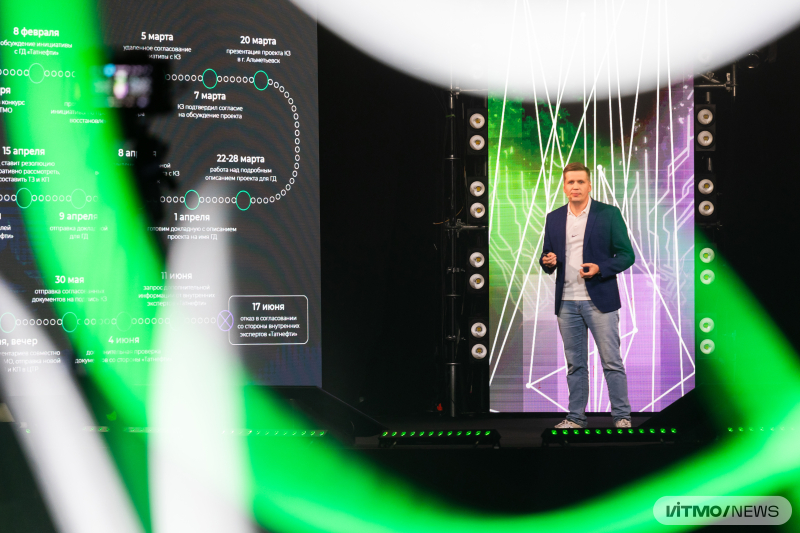
Pavel Krivoshapkin, a professor at ITMO’s ChemBio Cluster, shared his experience in commercializing research products. His team developed a method to turn associated water from oil deposits owned by Gazprom Neft into raw materials for lithium-ion batteries. Additionally, they created a technology for processing biomass into green energy for Tatneft and a method for recycling used batteries to create new ones – for Nornikel;
-
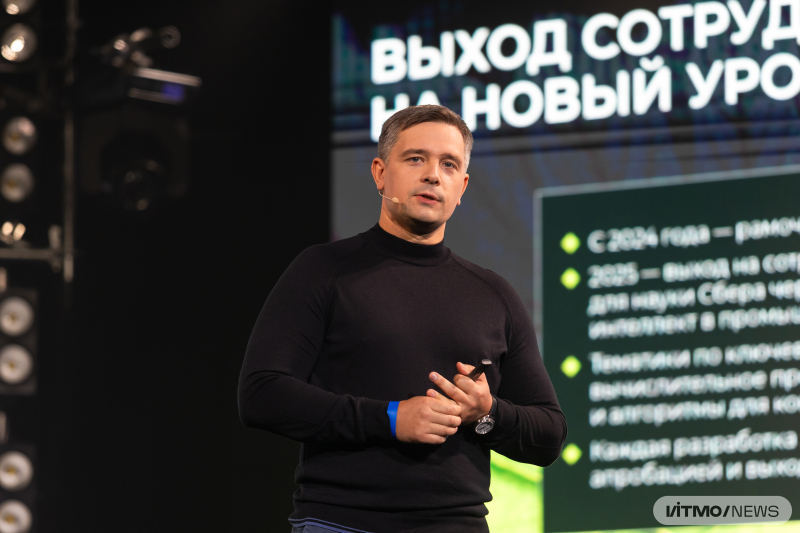
Sergey Kolyubin, a professor at ITMO’s Faculty of Control Systems and Robotics and the head of ITMO’s Laboratory of Biomechatronics and Energy-Efficient Robotics (BE2R), talked about how a niche startup can turn international. What started in 2016 as a business in the then-hardly known generative design of robotics and embodied AI now collaborates with Sberbank, which has a joint corporate Master’s program at ITMO in robotics and AI, and produces a series of R&D projects in commutation design, composite models, and contact manipulation algorithms.
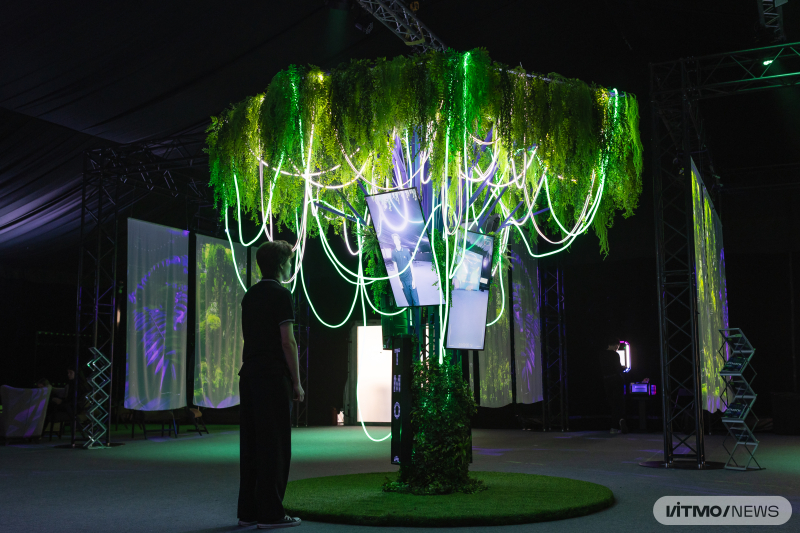
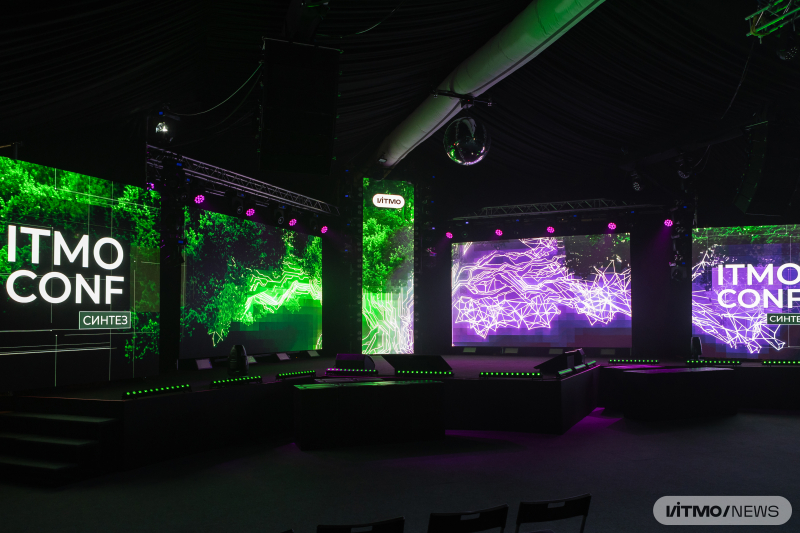
The centerpiece of ITMO CONF 2025 – an art object titled Neural Tree that symbolizes the conference as an attraction point. It shows how science, education, technologies, and people unite and grow together. Photo by Dmitry Grigoryev / ITMO NEWS
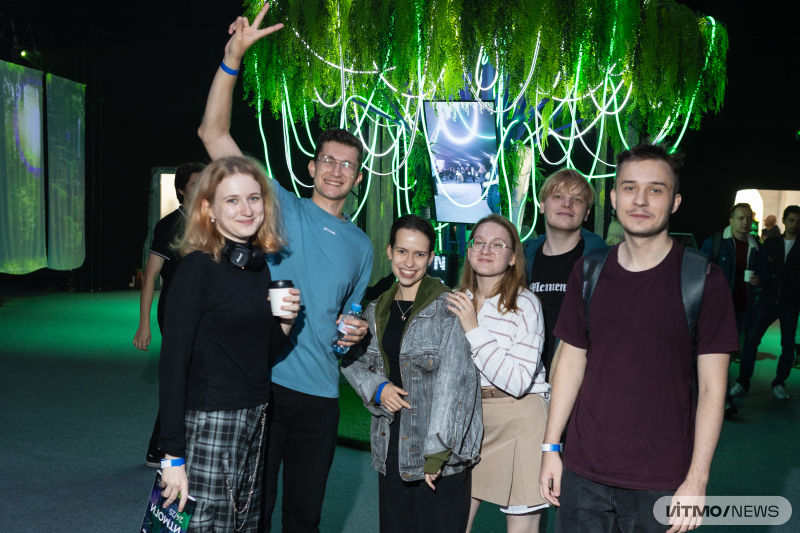
ITMO CONF 2025. Photo by Dmitry Grigoryev / ITMO NEWS
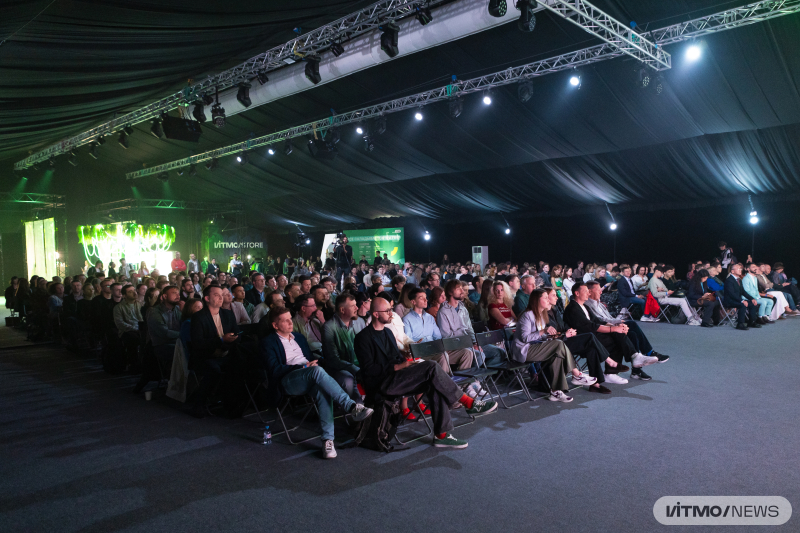
ITMO CONF 2025. Photo by Dmitry Grigoryev / ITMO NEWS
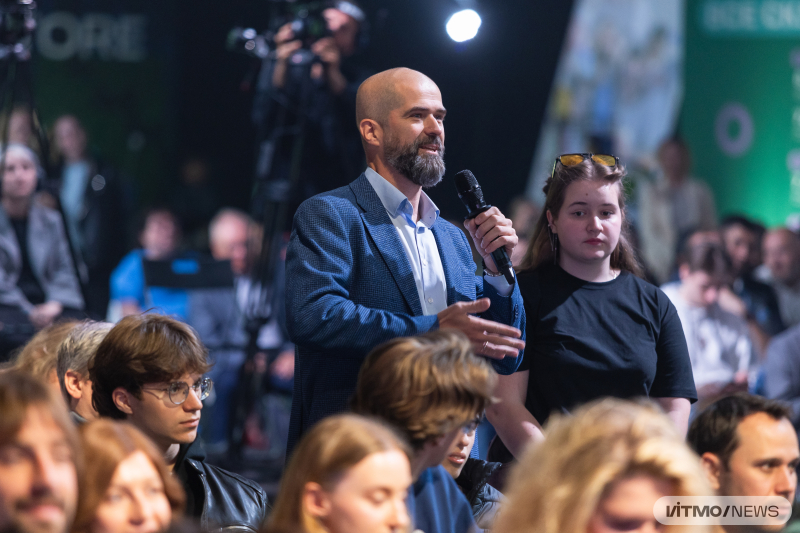
ITMO CONF 2025. Photo by Dmitry Grigoryev / ITMO NEWS
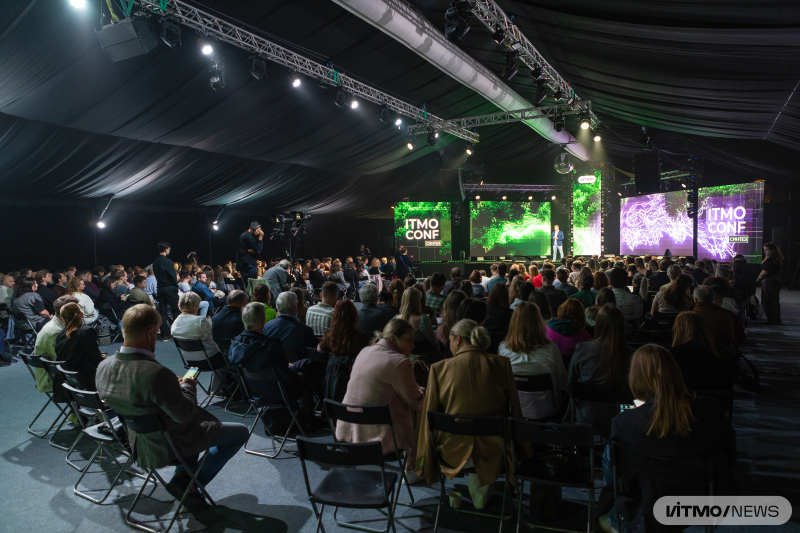
ITMO CONF 2025. Photo by Dmitry Grigoryev / ITMO NEWS
This year, ITMO has already made several breakthroughs in physics and chemistry, launched new educational programs with Alfa-Bank, Samolet Group, Sberbank, Yandex Practicum, and Positive Technologies, developed a digital chemistry assistant and an intelligent multi-agent system for planning business processes under conditions of uncertainty and incomplete data. Discover and rediscover ITMO’s major achievements in 2024-2025 here.