Sergiyev Posad
Year of founding: 1337
Population: 98,251
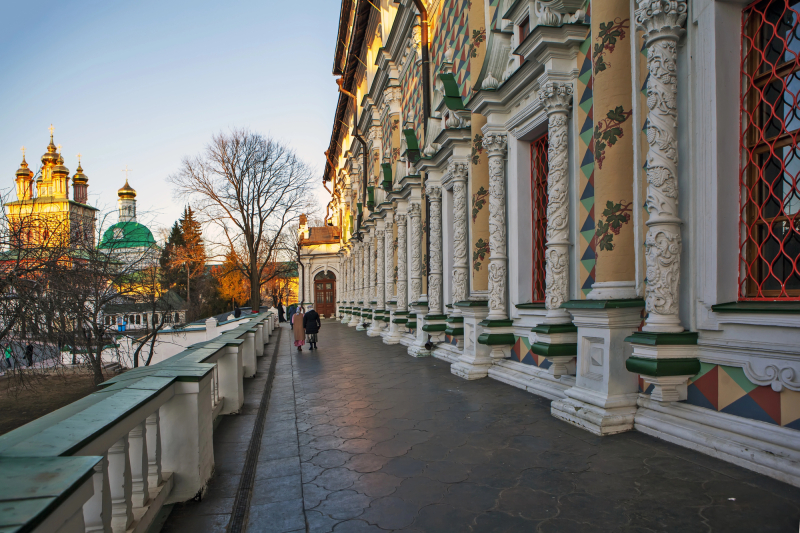
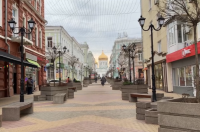
The path to the Church of the Nativity of John the Baptist in Sergiev Posad. Credit: APHONUA / photogenica.ru
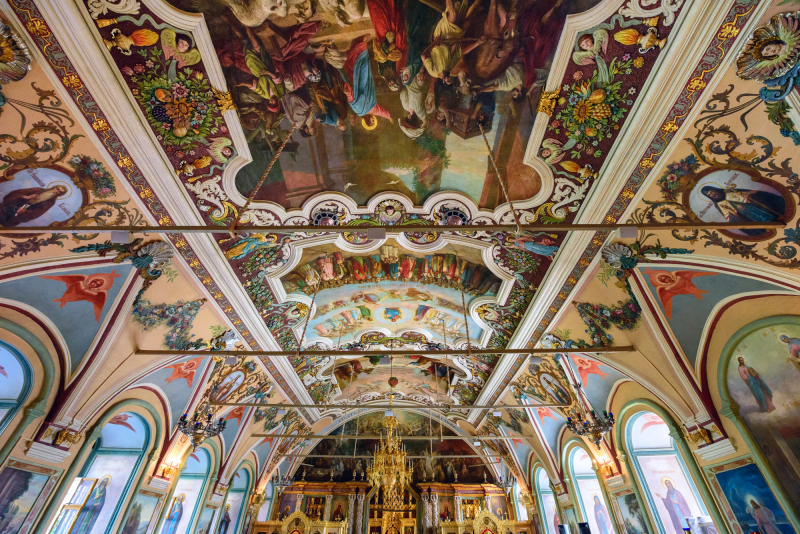
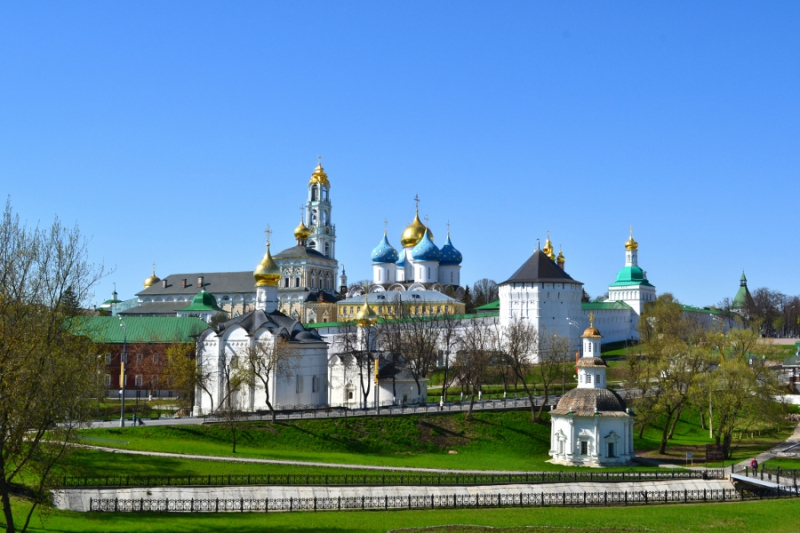
The interior of the Trinity Lavra of St. Sergius in Sergiev Posad. Credit: Balakate / photogenica.ru
A bit away from Moscow, Sergiyev Posad is most renowned for its toy-making, as well as wood and bone carving. In fact, it’s the birthplace of the matryoshka – the traditional Russian nesting doll. The city holds a special allure for the Russian Orthodox community, as it is home to the Trinity Lavra of St. Sergius – a spiritual and cultural hub that attracts believers and tourists alike from all over the world, including world-renowned writers and painters of the past.
Pereslavl-Zalessky
Year of founding: 1152
Population: 37,738
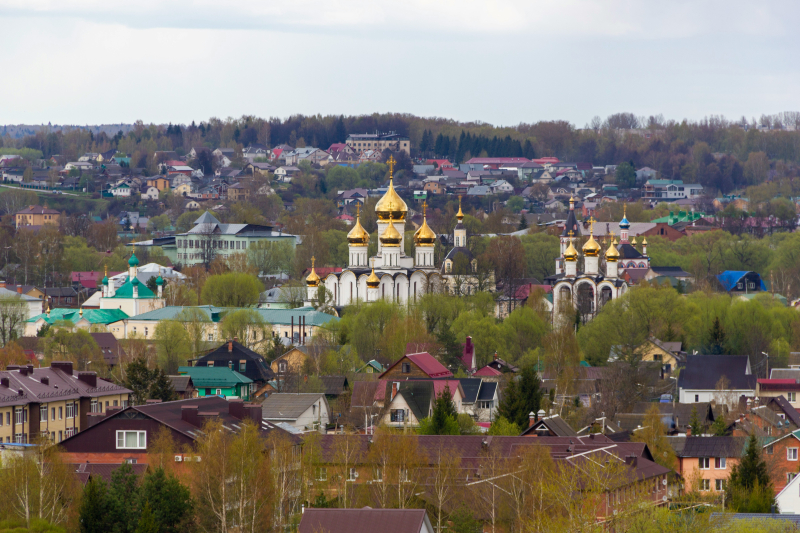
A bird’s eye view of Pereslavl-Zalessky. Credit: Maria Krasnova (@salty_morning) via Unsplash
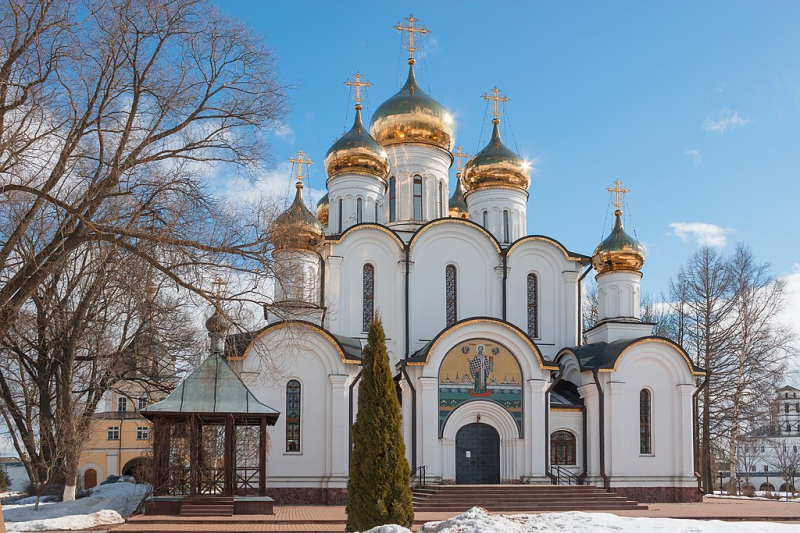
St. Nicholas Monastery in Pereslavl-Zalessky. Credit: AlixSaz / Wikimedia Commons / CC BY-SA 4.0
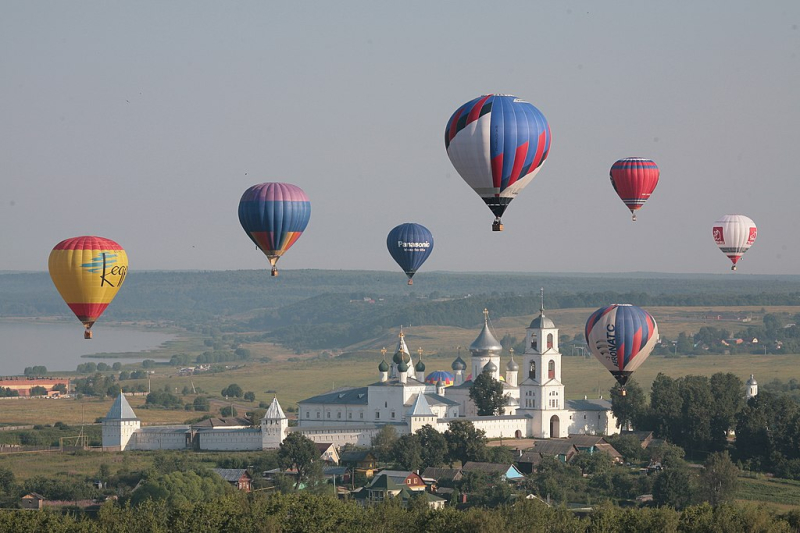
An aeronautics festival over St. Nicholas Monastery in Pereslavl-Zalessky. Credit: Игорь Шелапутин / Wikimedia Commons / CC BY-SA-3.0
Sitting on the bank of Lake Plescheyevo, Pereslavl-Zalessky offers a whole gamut of activities. Here, you can visit the Transfiguration Cathedral, along with other local sacred sites, experience a vast – and sometimes peculiar – museum scene, make a wish at the pagan color-changing Blue Stone, and even see the first-ever wooden boat built by Peter the Great himself.
Rostov Veliky
Year of founding: 862 (first mentioned)
Population: 27,298
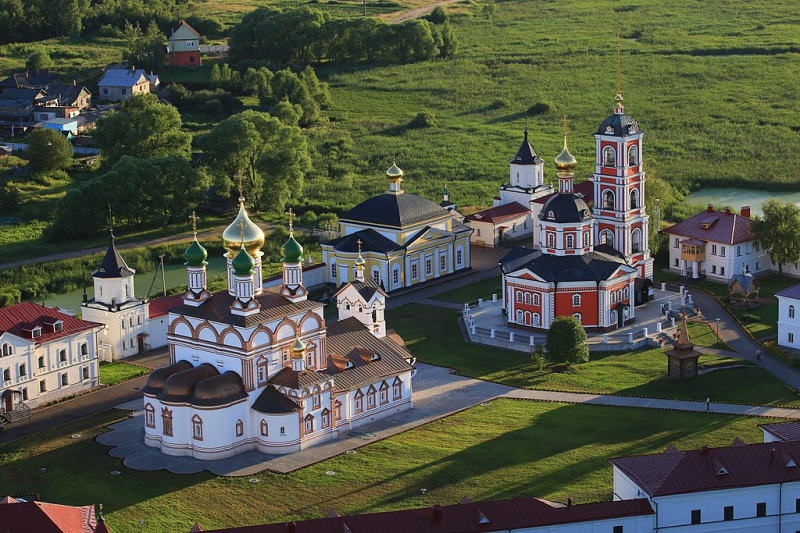
A view over the Trinity-Sergius Varnitsky Monastery in Rostov. Credit: Игорь Шелапутин / Wikimedia Commons / CC BY-SA-3.0
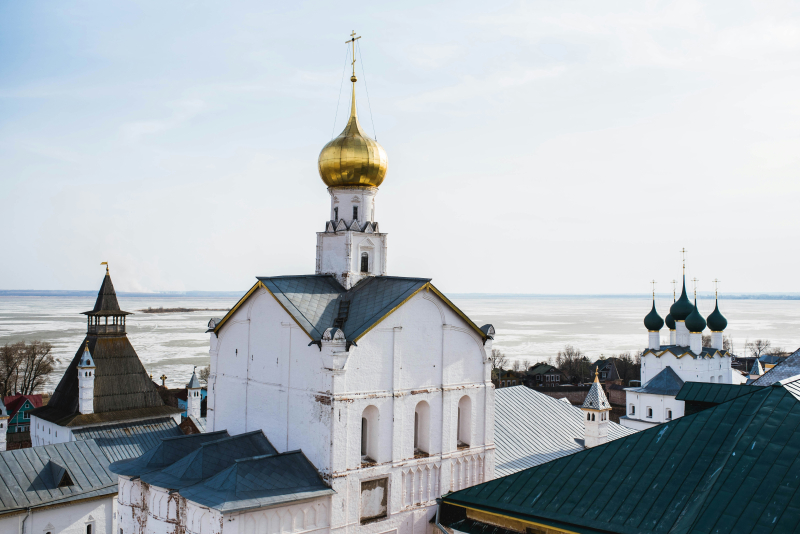
The Rostov Kremlin. Credit: Aurelien Romain (@aurelien_romain) via Unsplash
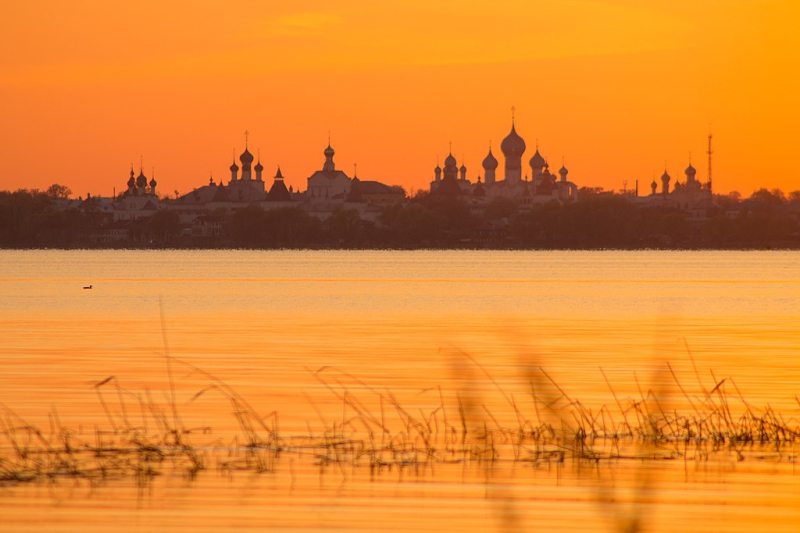
View of the Rostov Kremlin at sunset. Credit: ZichSmith / Wikimedia Commons / CC BY-SA 4.0
Rostov Veliky is the oldest city of the Golden Ring, with its first mentions dating all the way back to the 9th century. Among the city’s highlights is the mesmerizing ensemble of four churches called the Rostov Kremlin – one of over 50 kremlins across the country – which is gorgeously set against the massive lake. Fun fact: the back-in-time scenes of the film Ivan Vasilievich Changes His Profession were filmed in Rostov Veliky, specifically in this exact kremlin.
Yaroslavl
Year of founding: 1010
Population: 563,717
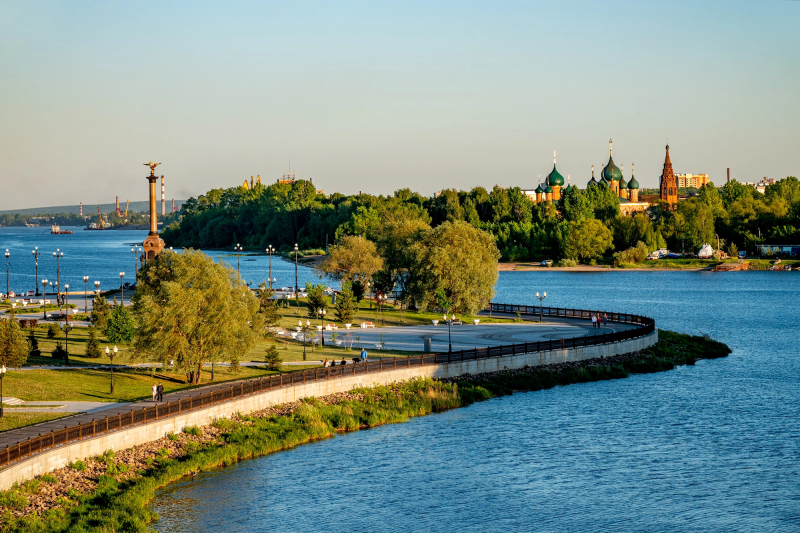
The Monument to the 1,000th Anniversary of Yaroslavl in Strelka Park, Yaroslavl. Credit: BestPhotoStudio / photogenica.ru
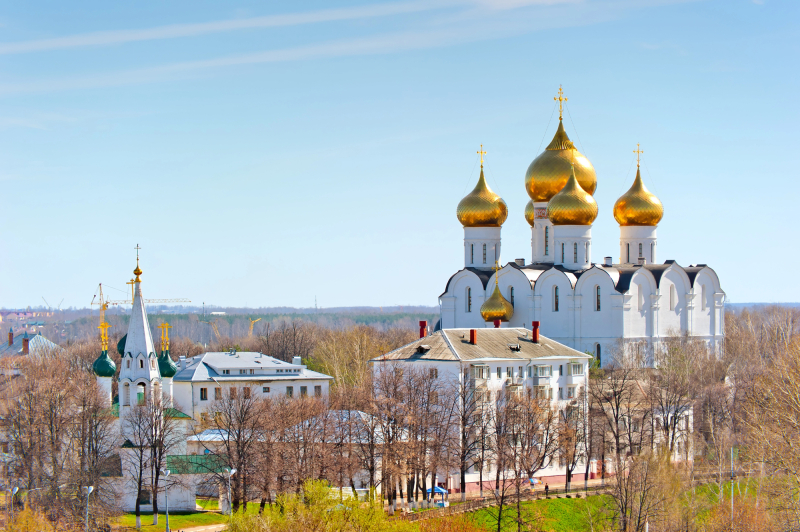
The Assumption Cathedral in Yaroslavl. Credit: kosmos111 / photogenica.ru
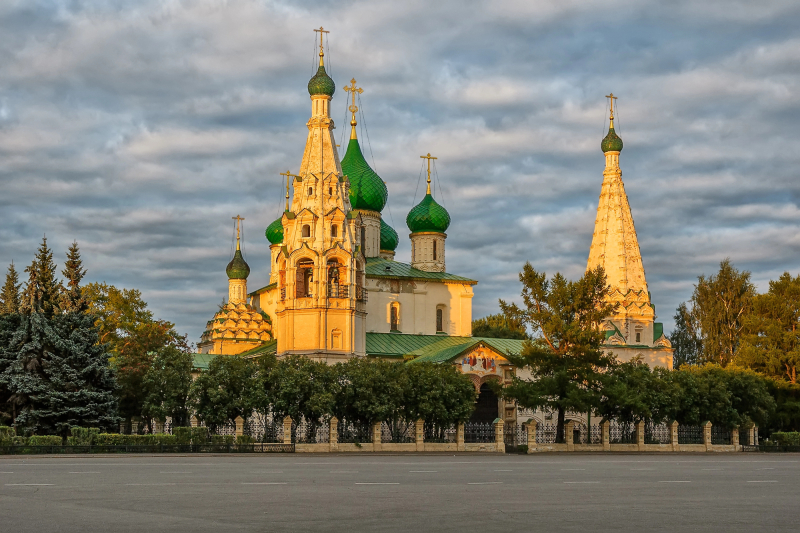
The Church of Elijah the Prophet in Yaroslavl. Credit: Igor-SPb / photogenica.ru
Located on the Volga River, Yaroslavl is regarded as the heart of the Golden Ring. Its downtown holds the title of a UNESCO World Heritage Site and is featured on the Russian 1,000-ruble banknote. Among the local must-see spots are the Assumption Cathedral, the city’s main embankment, and numerous monuments of bears – the city’s main symbol. Yaroslavl can be clocked in quite a few books and movies – its latest on-screen appearance was in the viral TV series The Boy's Word.
Rybinsk
Year of founding: 1071
Population: 177,295
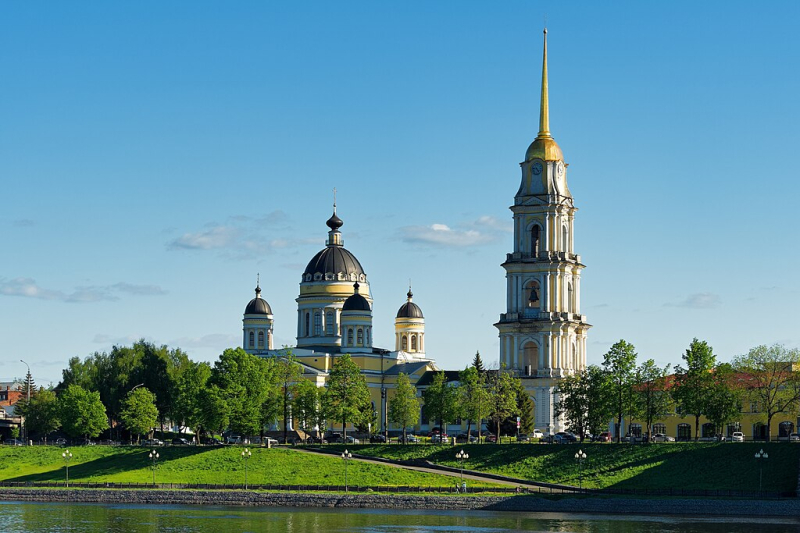
The Transfiguration Cathedral in Rybinsk. Credit: Alexxx1979 / Wikimedia Commons / CC BY-SA 4.0
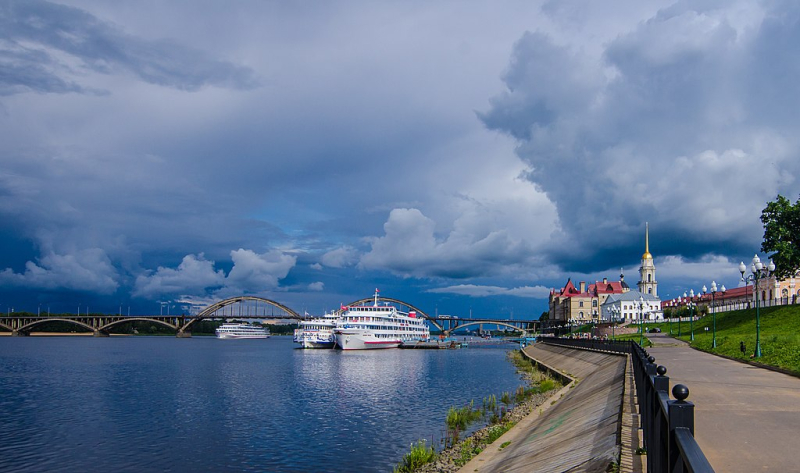
The embankment in Rybinsk. Credit: Belliy / Wikimedia Commons / CC BY-SA 4.0
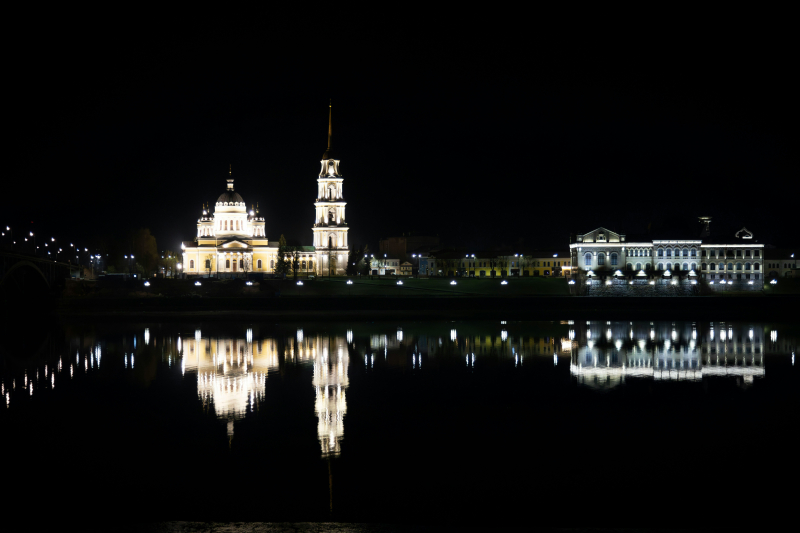
The buildings of Rybinsk at night. Credit: Belov Sergey (@belov7043) via Unsplash
In 2025, the traditional route was expanded with Rybinsk – owing to the massive reconstruction the city undertook in recent years. The city got most of its fame from the Rybinsk Reservoir – what was supposed to be the world’s largest artificial lake at the time. But there are other sites to visit, as well: namely, the city’s railway station, the Transfiguration Cathedral, the Red Square, and the House of Artists – a fine example of Russian wooden architecture. Some of the scenes of the Soviet comedy The Twelve Chairs were filmed in the city.
Kostroma
Year of founding: 1152
Population: 264,952
The Ipatievsky Monastery in Kostroma. Credit: Loppy poppy / Wikimedia Commons / CC BY-SA 4.0 The shopping arcades in Kostroma. Credit: Alexxx1979 / Wikimedia Commons / CC BY-SA 4.0 The Susaninskaya Square in Kostroma. Credit: AleksandraRaspopina / photogenica.ru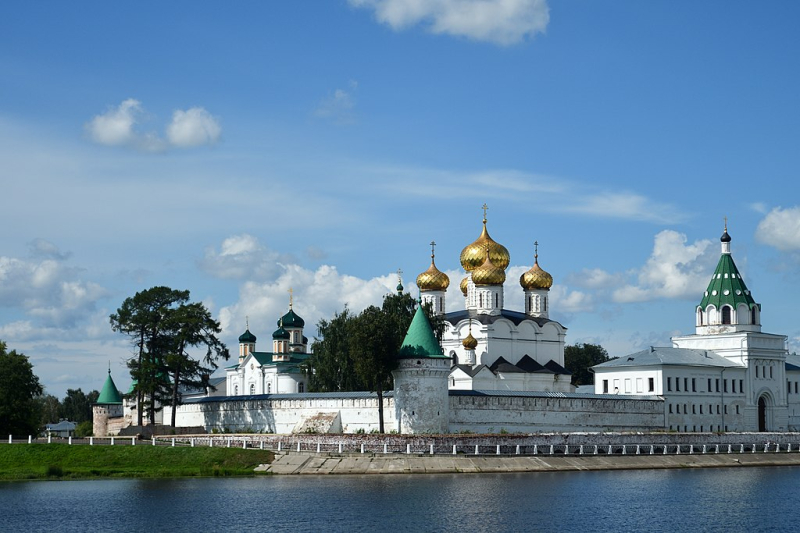
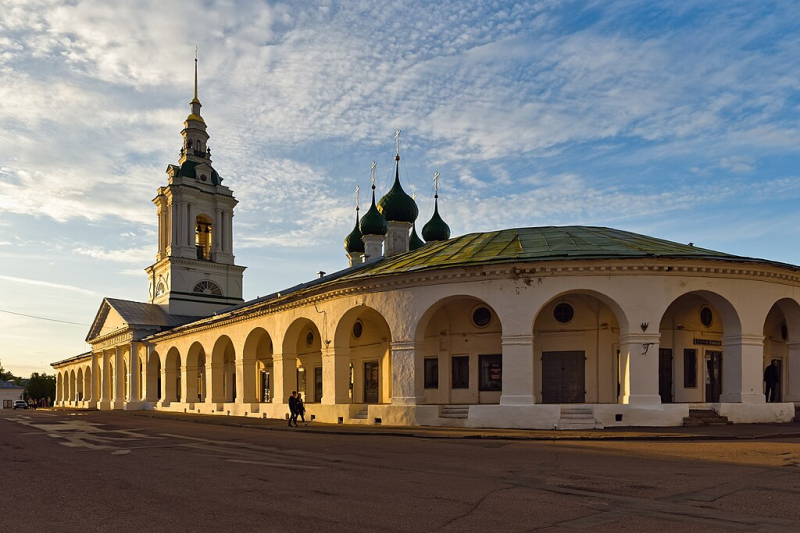
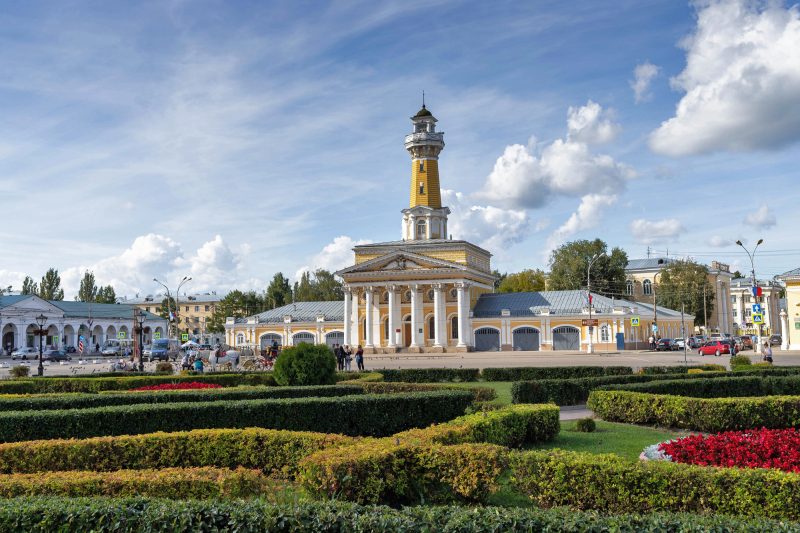
Kostroma is commonly referred to as the cradle of the Romanov dynasty, the reason being that here, at the Ipatievsky Monastery, Michael I, the first tsar of the Romanovs, received the offer of the throne. Other attractions include the restored Kostroma Kremlin, the main square and neighboring shopping arcades, and even the city’s own “Walk of Fame” – featuring the names of notable residents, including martyr Ivan Susanin, tsar Michael I, and poet Nikolay Nekrasov.
Ivanovo
Year of founding: 1608 (first mentioned)
Population: 356,735
The River Uvod and the embankment in Ivanovo. Credit: Yaiuspeh777 / photogenica.ru A bird’s eye view of Ivanovo. Credit: A.Savin / Wikimedia Commons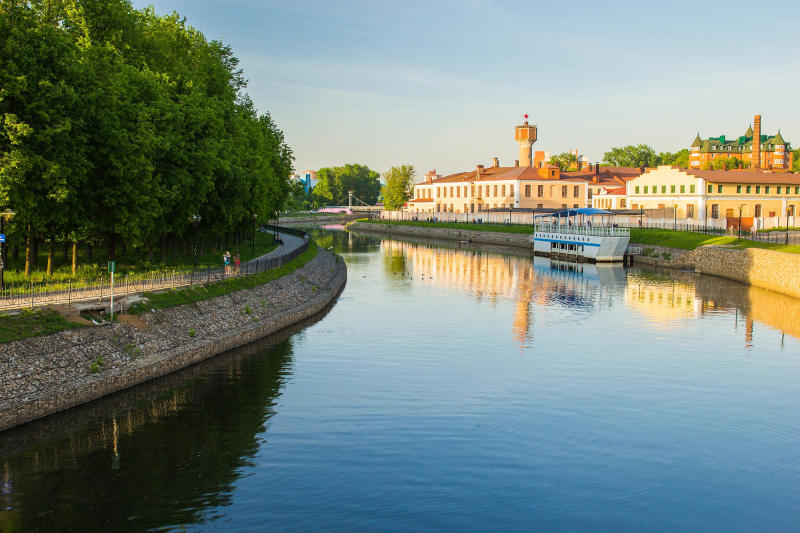
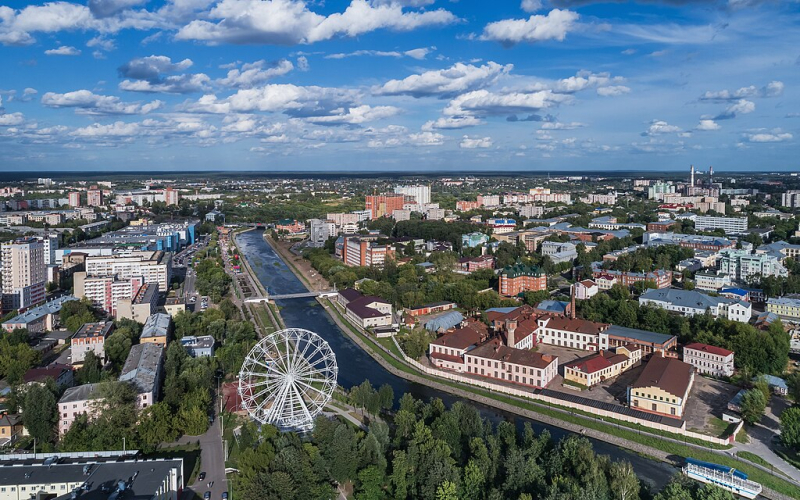
Ivanovo is the youngest city of the Golden Ring, recognized for its crafts and textile background, Soviet architecture, and picturesque riverside landscapes. In terms of architecture, the city’s scene is rather diverse: here, you will see many sacred places accompanied by constructivist-style gems that take the form of a ship, a horseshoe, and even a bird. Ivanovo is also dubbed “the city of brides” – though there’s not much ground to it, it is allegedly so called because of the city’s specialization in a female-dominated field, namely textile.
Suzdal
Year of founding: 999 (first mentioned)
Population: 9,286
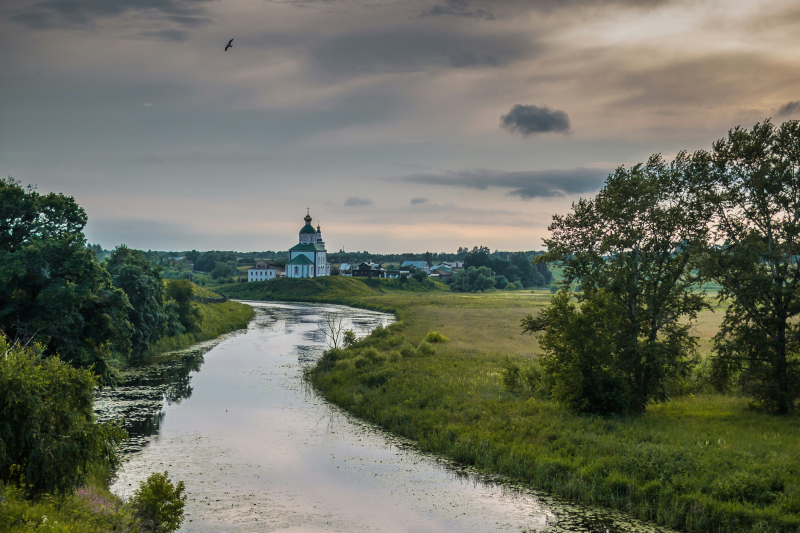
The view of the Church of the Prophet Elijah in Suzdal. Credit: Mihail Tregubov (@tregubov) via Unsplash
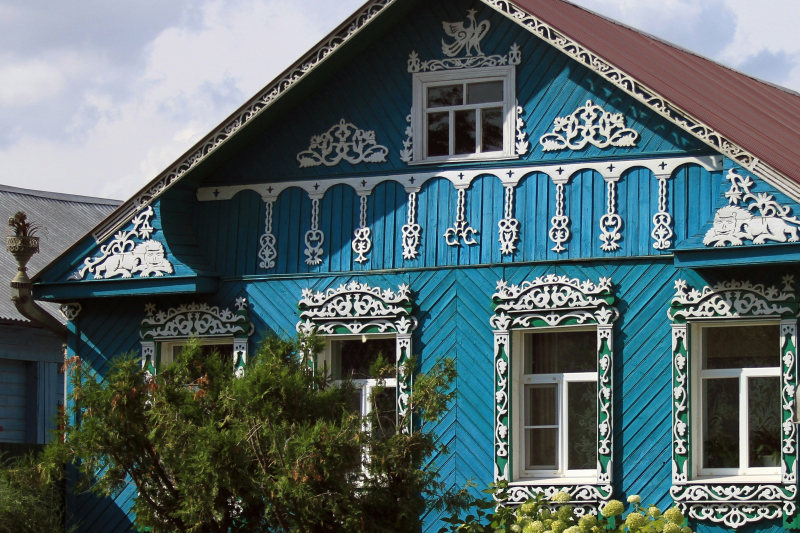
Wooden houses in Suzdal. Credit: Lydia Gulinkina (@madamrazor) via Unsplash
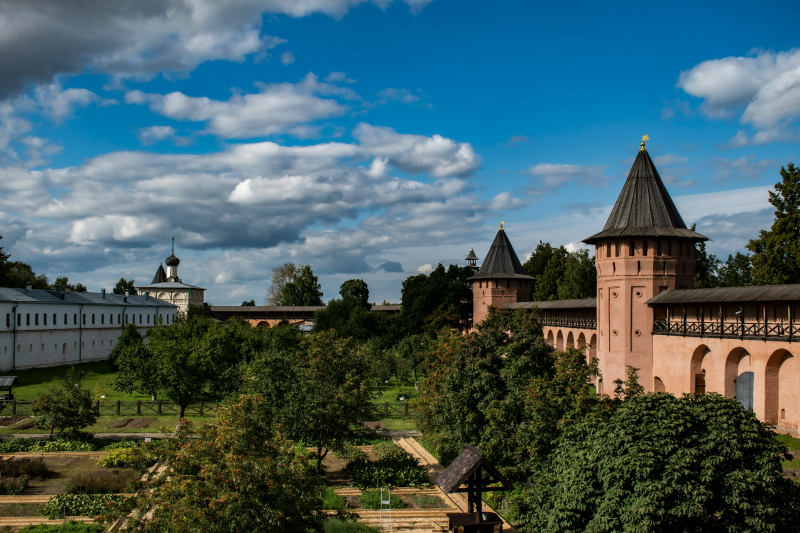
The museum complex of the Monastery of Saint Euthymius in Suzdal. Credit: yulia arnaut (@buta3) via Unsplash
Small yet booming, Suzdal fascinates with its diverse architecture, pristine nature, and love for festivals. The city is well tucked away: there’s no railway station nor an airport nearby – but that doesn’t seem to deter tourists who are eager to enjoy the city’s kremlin, elaborately-decorated churches, and wooden architecture, as well as visit one of its many festivals recently gone viral – such as Cucumber Festival.
Vladimir
Year of founding: 1108
Population: 341,579
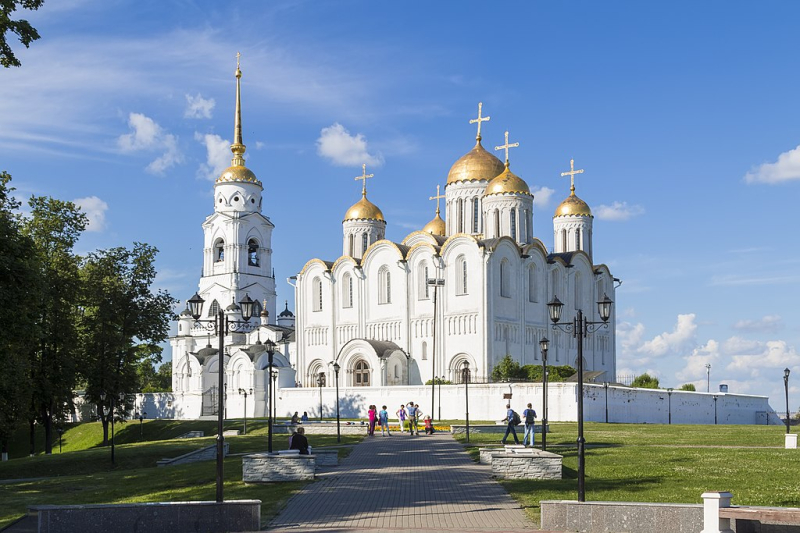
The Dormition Cathedral in Vladimir. Credit: Mike1979 Russia / Wikimedia Commons / CC BY-SA 4.0
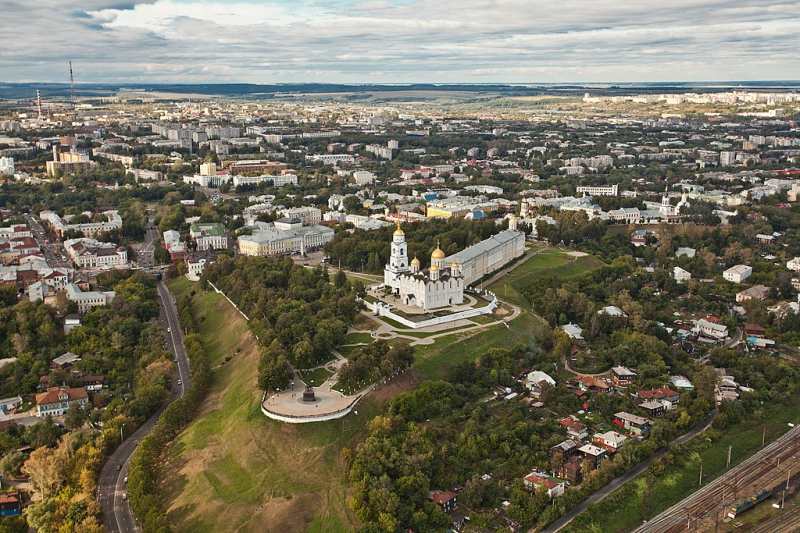
A bird’s eye view of Vladimir. Credit: Vladimir-city / Wikimedia Commons / CC BY-SA 3.0
Your last (or first) destination, Vladimir, is a city on seven hills, like Rome or Moscow. The city’s three main churches are the Dormition Cathedral, the Cathedral of Saint Demetrius, and the Golden Gate – plus, a far more distant, but definitely worth visiting, the Church of the Intercession on the Nerl in a nearby village. Apart from its religious sites, there are other attractions, too; for example, an old-time water tower and a pharmacy that was in service from 1805 to 2010.
The route typically takes a minimum of 7 days to complete, most conveniently by car or as part of a tour, as some towns may not be easy to reach. As it includes numerous religious sites, check the most common rules to follow before visiting the iconic landmarks.
For weekend travels, ITMO students can join the university’s guided tours during the academic year – check this VK group for any updates. See more travel destinations under our Travel Russia tag.
Title image credit: Дмитриева Ирина / Wikimedia Commons / CC BY-SA-3.0