Hi Houssam! Please introduce yourself to our readers.
Hello, and thank you so much for your invitation. I am Houssam Aabdani, an expert in energy and hydraulics engineering and a member of ITMO Academic Council for social activities. I am 27 years old, born and raised in Casablanca.
Your Master’s program – Decarbonization Technologies in the Fuel and Energy Complex – is quite cutting-edge. What drew you to this specific field of study?
It all started when I was a kid in 2010 and felt the real impact of climate change in my country, especially during the hot summers. So, I decided to develop the necessary work skills to excel in my future and help save the planet from this phenomenon.
What was your academic background before joining ITMO, and how has it prepared you for your current studies?
In Morocco, I got my Bachelor’s in hydraulics, urban, and environmental engineering at the Hassania School of Public Works, but before that I had to take two years of intensive preparatory courses in mathematics, physics, chemistry, industrial science, and French. When I started my Master’s degree, I immediately understood that I’d seen so many of these disciplines before; it was at the same time a great opportunity to rewire my brain, to learn new things, and to discover the unknown in this field.
Can you tell us about a topic, project, or research area in your Master’s program that you find particularly exciting?
My Master’s topic, the practical training that I’ve undergone at ITMO or even the events I’ve taken part in Russia are all related somehow to green energy sources and technologies, such as hydrogen, which is very promising for the future of energy. I’ve also studied the technologies to capture greenhouse gases and how to model different processes in various simulation tools like CFD modeling, and of course ESG strategies, which are highly demanded by companies since energy transition now is a must and a global priority, not just a luxury. In my opinion, thermodynamics is the foundation of this field, and mastering it is essential for anyone looking to succeed in it. I find it really exciting to use its rules to explain how a compressor works or how you can increase its efficiency.
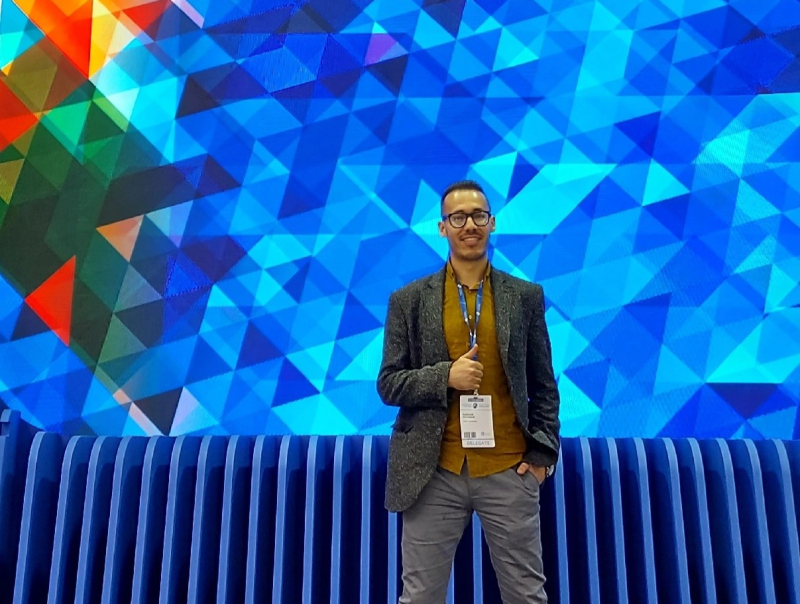
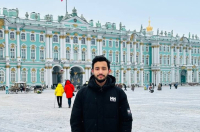
Houssam at an event organized by ITMO’s industrial partner Gazprom. Photo courtesy of the subject
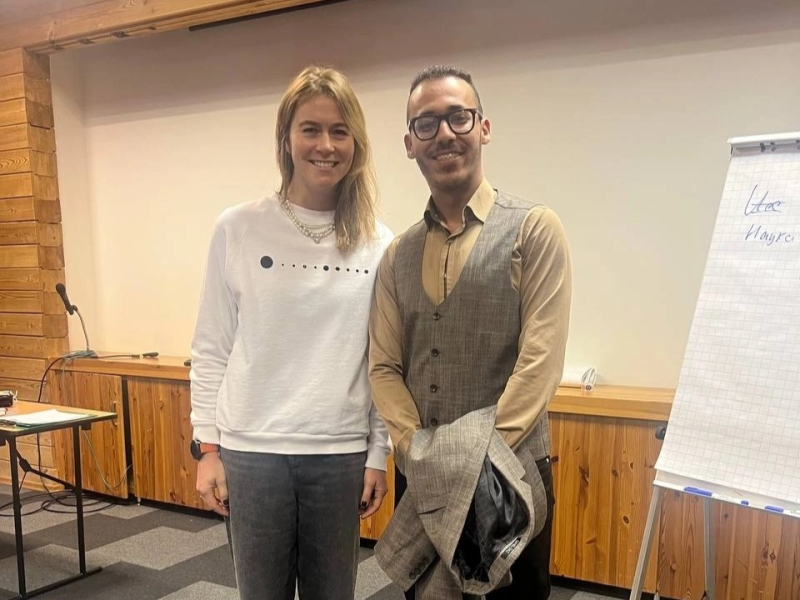
Houssam with ITMO’s Director for Strategic Development Daria Kozlova. Photo courtesy of the subject
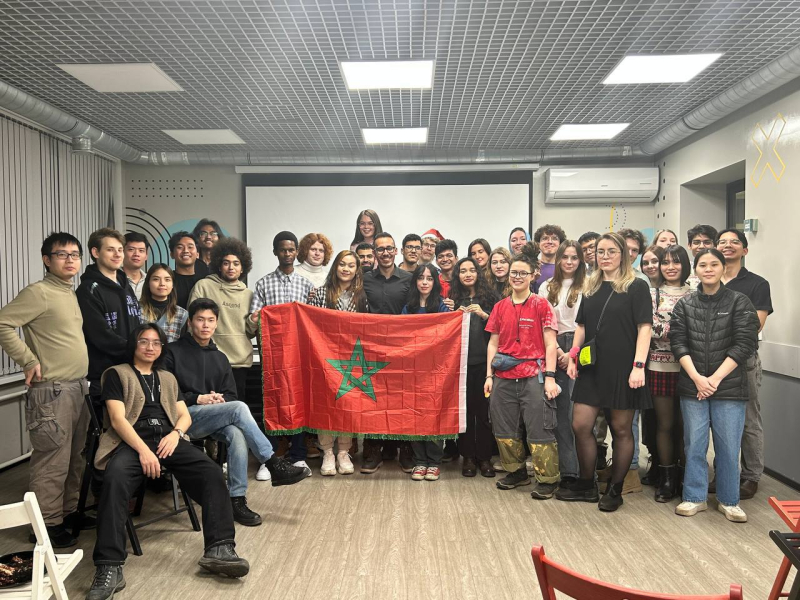
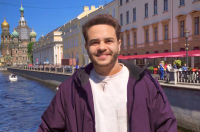
Houssam at a Moroccan Night at ITMO. Photo courtesy of the subject
How have you found the transition into Russian academic life? Any differences in teaching style, student interaction, or expectations?
Honestly, there is a huge difference between the Moroccan and the Russian academic systems. As I mentioned before, the intensive preparatory classes were a real struggle – unfortunately, we still follow the French educational system, which is complicated, busy, and less structured. In contrast, the Russian system feels more straightforward and focused on practical application, which I find more motivating and aligned with my learning style. Also, Russian students are very helpful.
You mentioned earlier you are a member of ITMO Academic Council for social activities. What other extra-curricular activities are you involved in?
That’s right. I’ve tried so many sports at ITMO which I couldn’t practice in my country because I didn’t have the chance to. Last year, I was a member of the ITMO KronBars team in fencing and shooting. I've also attended open classes in swimming and running at our dormitory. This year, I joined Skatemo for figure skating, and I’m incredibly grateful to the three amazing coaches I had. I want to sincerely thank them for their effort and support throughout my journey. On the other hand, I’ve organized the Moroccan Night twice, along with ITMO Culture Fest, with the help of the Buddy System Club. These events gave me the opportunity to share my culture with ITMO staff and introduce Morocco to them.
How are you adapting to the Russian language and culture? What experiences have stood out to you so far?
It was quite easy for me to adapt here, as if I am a native. I lived in the dormitory on Lensoveta St. 23 with Russians, which helped me practice the language and discover the culture. When I was still in the Foundation Program for Russian language, I had a lot of time – so, I’ve been to Moscow twice, as well as Vyborg, Sochi, and Abkhazia. I visited the ITMO Speaking Club for English, French and Russian languages. I’ve been to historical museums and tried Russian traditional dishes. Personally, I find Russian society to be balanced, thoughtful, and highly civilized. I’ve learned a lot from them and still do.
What’s your favorite place in St. Petersburg to clear your mind after a long week of lectures?
To be truthful with you, there is no special place to feel relaxed. In Morocco, a simple walk barefoot along the Atlantic can make a big difference. Or the simple desire to touch and hug my loved ones can trigger a surge of happiness. In St. Petersburg, I’ve been to Yagodnoe many times and I love it. I recommend all ITMO students go there to relax and enjoy nature. But to break the daily routine, I prefer more to have an honest conversation with my favourite person, call my family and asking about how they’re doing, work out in the gym, watch football games or funny reels, go for walks and breathe in fresh air while listening to natural sounds, without the need for headphones, and hang out with my closest friends on the weekends. Overall, it’s always important for me to strike a balance in my life between studies and my mental health, which is vital for my well-being and my academic success. For me it’s more about the people I am with, not just the place.
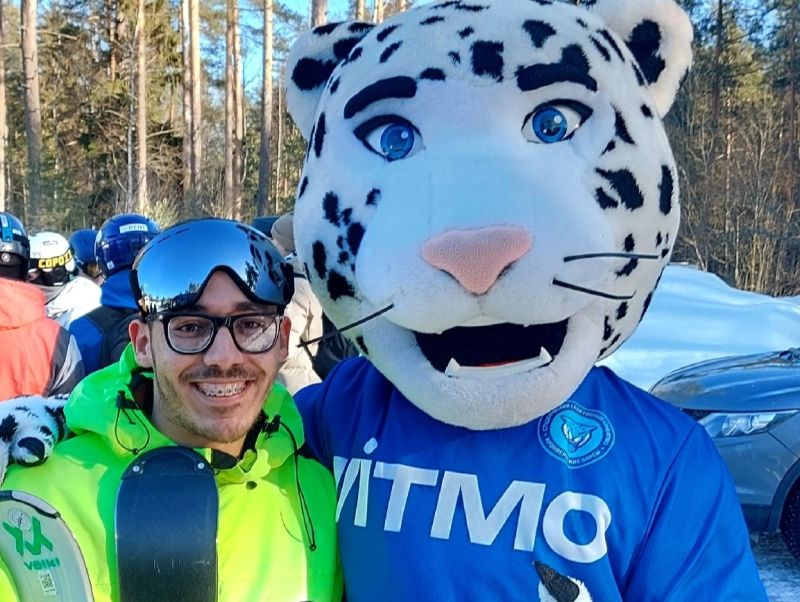
Houssam with ITMO’s sports mascot, Tim the Snow Leopard. Photo courtesy of the subject
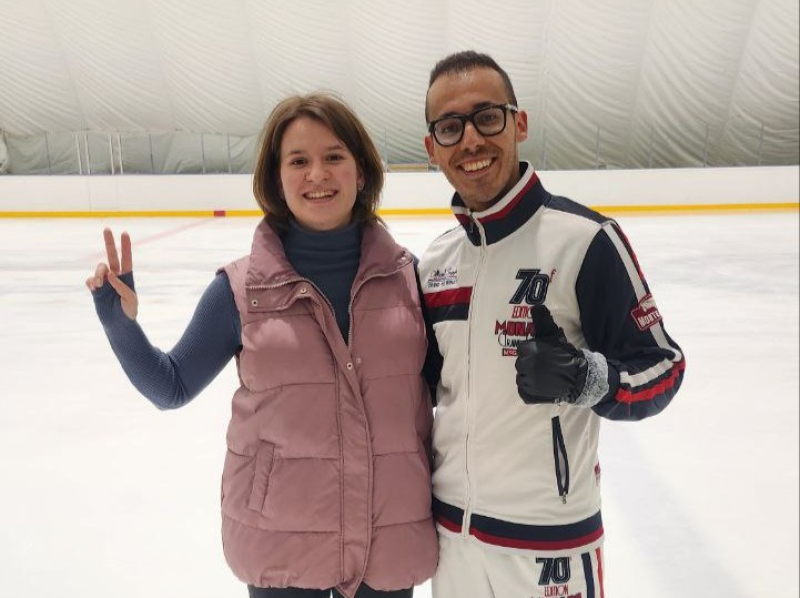
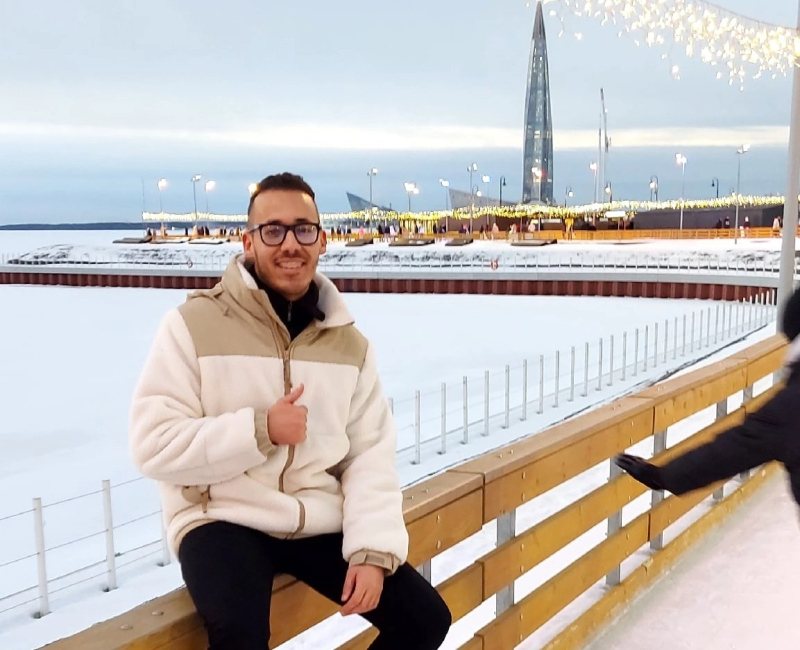
Houssam with his figure skating coach. Photo courtesy of the subject
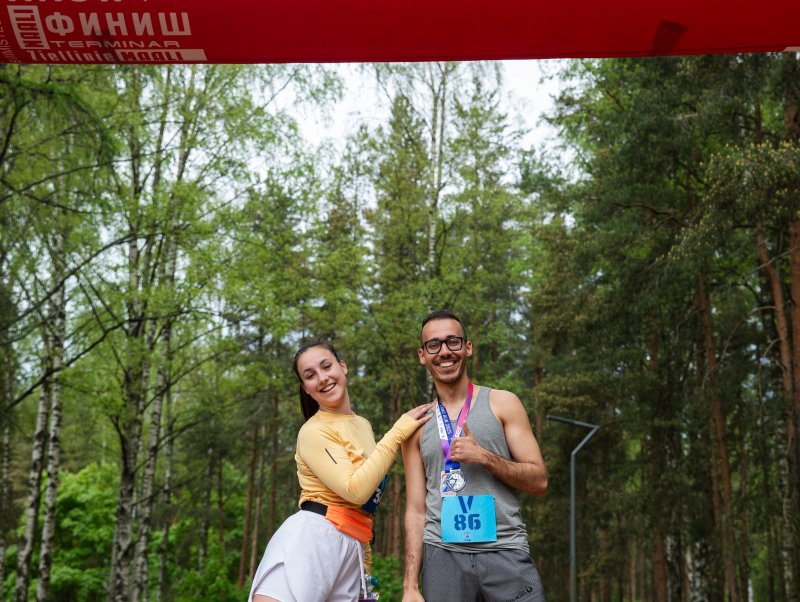
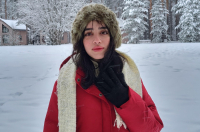
Houssam with his friend at a marathon. Photo courtesy of the subject
If you could introduce a Moroccan dish or practice to your classmates, what would it be and why?
Actually, Morocco won an award for best cuisine in the world last year. So, absolutely, I would introduce my classmates to my favourite Moroccan dishes like couscous, rfissa, and bastilla, along with the traditional way we serve mint tea, msemmen, baghrir and sweets. These represent our culture of hospitality, family unity, and rich flavors. I also love preparing fish or chicken dishes using a traditional tagine – it’s super tasty. Furthermore, I would introduce the practice of mindful water use, such as turning off the tap while soaping dishes or showering, which is common in many Moroccan homes due to limited resources. It’s a simple habit that raises awareness about sustainability and encourages everyone to value every drop.
Have there been any memorable moments during your time here so far?
Yes, of course, I collected so many memories, made new friends and had fun while participating in different events. I’ve got very few days left at ITMO, and I think I am gonna feel very emotional saying goodbye to all of it.
What are you looking forward to after completing your studies?
The joy of coming back and seeing everybody again. You know, everyone’s become family now for me and it’s all very familiar in the best way. It’s gonna be very strange without it; it’s been three years, I will miss it. After graduation, I plan to work to apply what I’ve already learned and to achieve new goals in this life, but there is also a high chance to do a PhD in Russia in the energy sector.
What advice would you give to students who are considering studying at ITMO or entering the field of sustainable energy?
Guys, just learn to take the risk successfully, that’s the only advice you need. In this life, you must try everything with a lot of courage and optimism. If you say goodbye to your family at the airport, you must understand that it’s time for you to create your future. Sure, there will be hard times when you feel away from your relatives, but you can overcome all this with firm determination. In Russia, chill to the maximum but never get distracted. Plus, ITMO offers great resources, use them! And for those who are interested in sustainable energy, there is no magical formula or a great path for an engineer to decide whether or not to pursue a Master's degree in this field. The world needs more sustainability champions, so apply and dive into the magic of green energy.