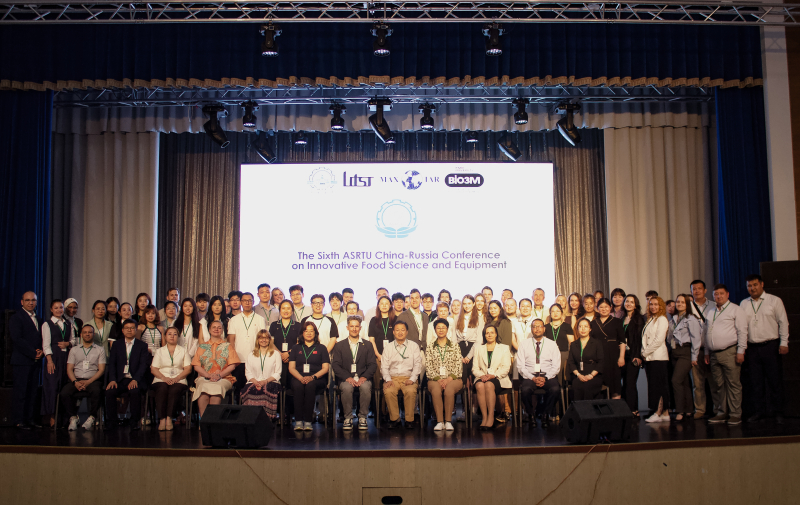
The conference was organized by ITMO University’s international research center “Biotechnologies of the Third Millennium” with support from Harbin Institute of Technology, Heilongjiang Bayi Agricultural University, Zhengzhou University, and other leading higher education institutions of China. Grant support for the conference was provided by the Potanin Foundation.
“We’ve brought together like-minded thinkers from all subject fields – agriculture and forestry, foodtech, nutrition physiology, green chemistry, clinical medicine – in order to find joint solutions to creating the next generation of food products; products that will possess new qualities and help preserve people’s health and respond to the trends of sustainable bioeconomics. All of the conference’s participants work in food science, public health, food security, or other socially important fields. For that reason, all these scientists and specialists have gathered here from across the world not to compete, but to work together,” says Denis Baranenko, one of the conference’s organizers and the head of ITMO’s international research center “Biotechnologies of the Third Millennium.”
Participants and organizers of the conference: (left to right) Tamer El-Messery, Lyudmila Nadtochiy, Mohamed Boulkrane, Denis Baranenko, and Weihong Lu. Photo by Agata Vanieva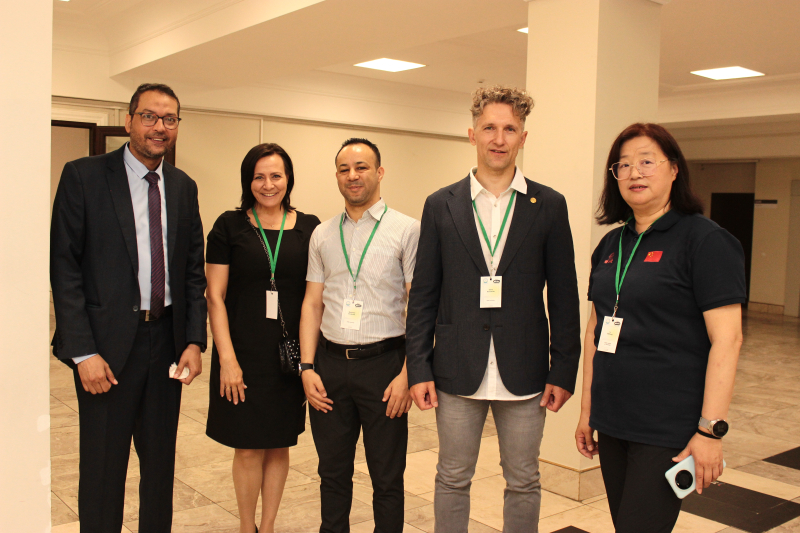
This year, the conference has brought together 150 scientists from institutes of the Russian Academy of Science: the Gorbatov Federal Research Center for Food Systems, the Federal Research Institute of Nutrition, and other universities in Kaliningrad, Moscow, Volgograd, Tomsk, Surgut, and Novosibirsk. They were joined by 40+ researchers from 11 Chinese universities and institutes located in Harbin, Zhengzhou, Beijing, Daqing, Changchun, Hohhot, and other cities. Several reports were also presented by researchers from two Kazakhstani universities. Industrial partners, such as the companies Protein Plus and Tekhnomir, presented their technical developments, while representatives of health clinics and organizations that oversee food quality at kindergartens, schools, and hospitals presented their vision of future partnerships.
“In the field of social nutrition, there are many limitations: sanitary codes, guidelines, technical regulations, and state standards. Those who provide food to social institutions cannot afford themselves the same degree of freedom as in hospitality and catering. But nevertheless, we, too, must keep up with the latest scientific developments and technologies that’ll be beneficial and safe for those we feed. The conference became a perfect opportunity to describe what ‘social nutrition’ is – not just a menu and a calorie count, but a system of state support for myriads of people. In the future, we hope that our understanding of correct nutrition will be shaped not just by science, but AI, as well – for instance, it could shape individual diet plans that are age-appropriate or designed to prevent specific medical conditions,” explains Alla Porkhun, the deputy head of the association of professionals in social nutrition and public health improvement.
Alla Porkhun (left). Photo by Agata Vanieva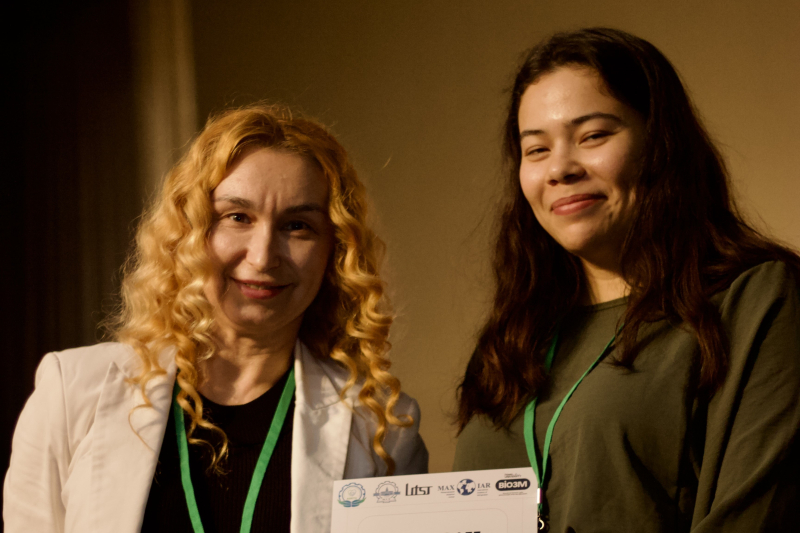
The conference program included plenary and poster sessions, roundtable discussions, and themed sections on hot topics in food science. Among the key subjects were: new resources for innovative products; systems for quality control and shelf life extension; the effects of biologically active compounds on human health; solutions for effective microelement delivery; and the introduction of environmentally-conscious food waste recycling technologies.
“We are studying medicinal plants – both the wild growths of the Northwest Siberia and the lab-grown specimens, which are cultivated in controlled conditions with the help of hydroponic systems and artificial lighting. Our focus is on sweet yellow clover (Melilotus officinalis) and garden thyme (Thymus vulgaris). These plants are rich in important natural elements, coumarin and thymol, which possess anticoagulant, antioxidant, and antimicrobial – including antifungal – qualities. Together with the international research center ‘Biotechnologies of the Third Millennium,’ we are studying how growth conditions affect the chemical makeup of sweet yellow clover. One of the examples of its practical application is the use of its extract in edible gelatinous film. Such a covering may be applied onto food products to extend their shelf life thanks to the antiseptic qualities of the natural compounds it contains. We are also studying ways to amplify the amount of biologically active elements in garden thyme. This would open up new prospects for sustainable development of raw natural material with predetermined properties,” comments Yuliya Petrova, the head of the Institute of Natural Science and Engineering at Surgut State University.
Yuliya Petrova (right). Photo by Agata Vanieva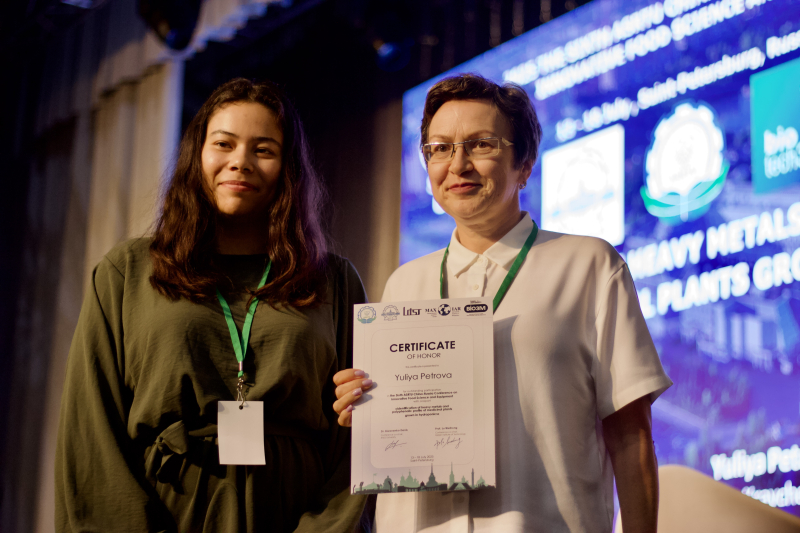
The 7th China-Russia Conference of the Association of Sino-Russian Technical Universities (ASRTU) will take place in 2027 in China.