Research
From next-gen devices to medical implants, nanomaterials are a building block of the future across many fields. Designing them, however, can be a time-consuming process of trial and error. A new analytical AI platform developed by ITMO scientists solves the problem: in mere minutes, it scours its database for academic data on the properties and synthesis of various nanostructures. To increase its reliability, the developers have paired it with a “fact-checker”: an additional agent that evaluates the response before forwarding it onto the user. As a result, the software already demonstrates an 81% accuracy rate.
Read more: ITMO Researchers Present Smart Assistant for Nanostructured Materials Design
***
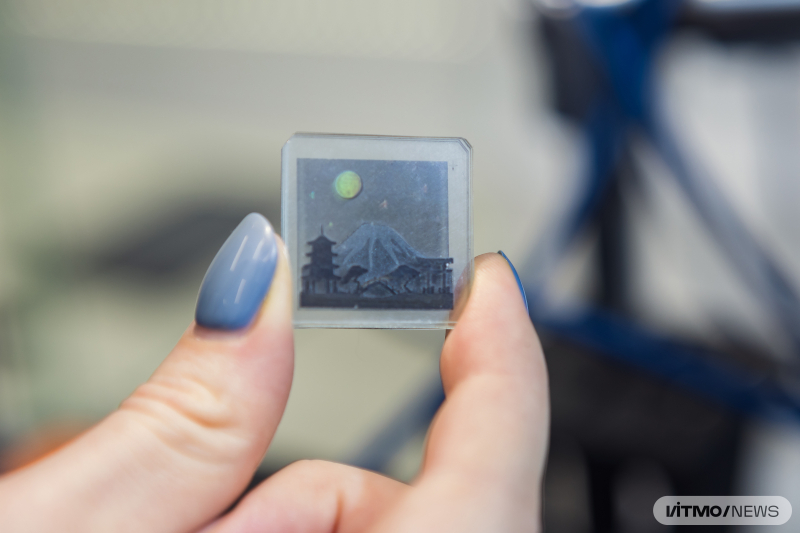
How do you fuse glass and metal together without damaging the former? One ingenious scientific method is laser-induced backwards transfer – in essence, the application of metal “steam” onto the glass substrate. This creates a material that’s hugely useful for electronic devices (or art). It is, however, a pretty unpredictable process. But not when you have access to the predictive model developed by researchers at ITMO’s Institute of Laser Technologies.
The software calculates the relevant physical and mathematical processes to a tee, with a margin of error at only 5-10%. Now, the team is looking into experimenting with new materials and applications.
Read more: ITMO Researchers Suggest Model to Predict Parameters of Laser Metal Transfer Onto Glass
***
Earlier this month, we learned the names of 2025’s Nobel Prizes recipients. When it comes to natural sciences, this year’s awards recognized achievements in quantum mechanics, smart materials, and immunology. For each of the occasions, we reached out to ITMO’s own science experts to learn more about the laureates and the impact of their work on our everyday life.
Read more:
University
Students at St. Petersburg's IT Lyceum. Photo by Dmitry Grigoryev / ITMO NEWS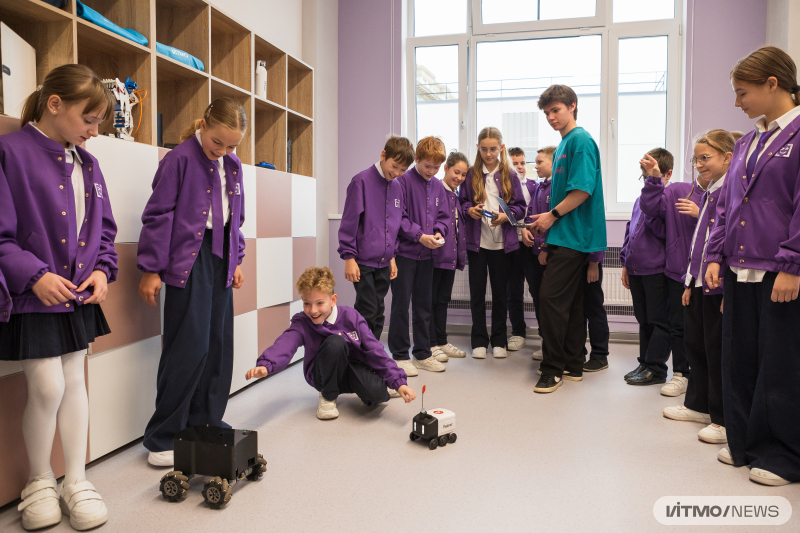
The early bird gets the worm – an adage that certainly applies if your kid is intending to become a cybersecurity expert. And that is exactly what the new IT Lyceum is designed to help with. As St. Petersburg’s first lyceum with a focus on information technologies, the ITMO-backed institution will teach kids in grades 1-8 about all things science. What’s more, its teaching staff will be trained in AI-integrated education by experts from ITMO University.
Read more: ITMO and IT Lyceum to Promote AI Education in St. Petersburg
***
Speaking of AI in the classroom: blog author and ITMO student Shahriar Rashid Nafi returns with a take on the advantages and drawbacks of using ChatGPT, Grok, DeepSeek, and the like in education. Are neural networks and generative models accelerating the learning process or simply allowing students to skate by without retaining knowledge? Find out in the blog post.
Read more: Blogs My Take on AI in the Classroom