The Vyborg Side (or Vyborgskaya Storona) is a historic district located on the right bank of the Neva and Bolshaya Nevka rivers. It takes its name from the city of Vyborg, as the main road leading there once emerged from this area.
Factories
Industry thrived in this area since the time of Peter the Great, but it truly reached its peak in the 19th century. Here, factories were built that specialized in mechanical engineering and metalworks, or produced textile and paper. This progress was fueled by the proximity to Finlyandsky Railway Station (which, by the way, is a great starting point for trips to the north of the Leningrad Oblast!).
By the late 20th century, some of this industrial grandeur faded, and most of it has now been repurposed into offices, warehouses, and art clusters.
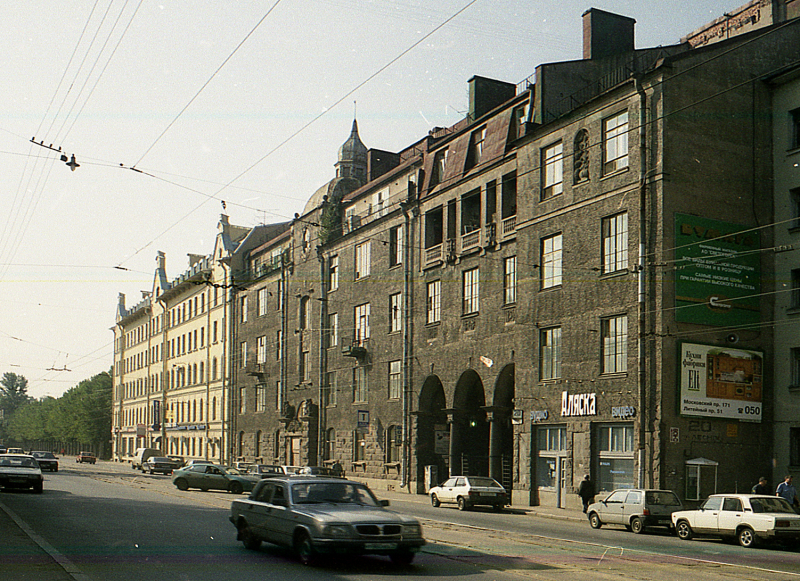
Nobel revenue house. Credit: Vitold Muratov, CC BY-SA 3.0, via Wikimedia Commons
One name still strongly associated with the area is of Ludvig Nobel, the older brother of the famous Alfred Nobel. His mechanical engineering factory supplied St. Petersburg with guns, wagons, steam engines, and later, diesel engines. Unlike many businessmen of his time, he chose to live near his workplace, and his revenue house on Lesnoy Prospekt remains one of the architectural gems of the district. Another one of his mansions, the factory administration building on Pirogovskaya Embankment, now stands abandoned.
Cathedrals
But it’s not just factories! Even among red bricks and concrete, you’ll find a few interesting cathedrals – a full palette of architectural styles to feast your eyes on.
First, there’s Sampsonievsky Cathedral, built in the 18th century in the Baroque style. It’s surrounded by a small park, which once was a cemetery for the first builders of St. Petersburg. Despite its history, the place feels calm rather than eerie.
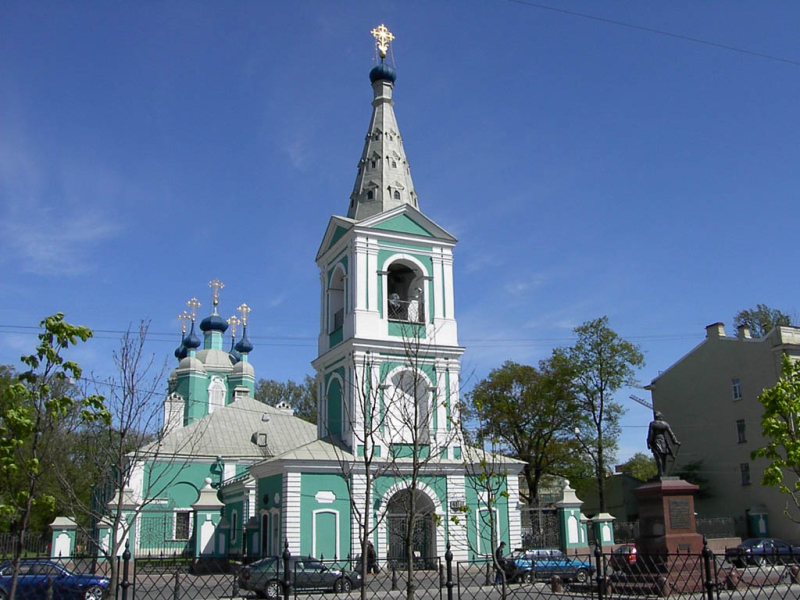
Sampsonievsky Cathedral. Credit: Aleksandr Razumov, CC BY-SA 2.5, via Wikimedia Commons
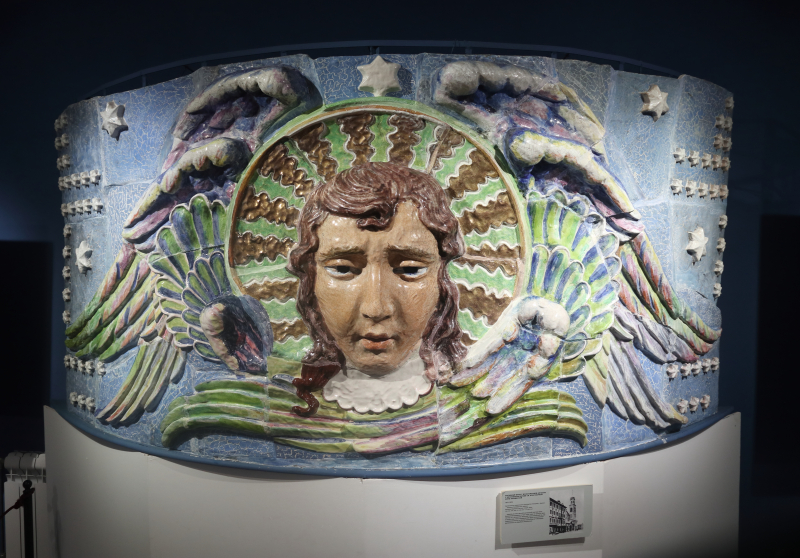
Anna Kachinskaya church decor. Credit: Aleksandr Sigachev, CC0, via Wikimedia Commons
Just a few houses down the street, you’ll find the Church of Saint Anna Kashinskaya, a fine example of Russian Revival architecture, fresh after restoration. The church doesn’t have much decor compared to other examples of the style, but that’s because its decorative ceramics are now preserved in the Keramarch Museum.
In contrast, hidden among the industrial warehouses of Mineralnaya Street stands the Church of the Visitation. You wouldn’t expect to find such a Gothic Revival treasure here. For much of its existence, it was surrounded by a Catholic cemetery. Though the building may seem abandoned at first glance, it’s actually quite alive: it hosts art performances, concerts, and religious services. The interior still holds much of its beauty, including the elegant Benois family crypt in the basement.
Embankments
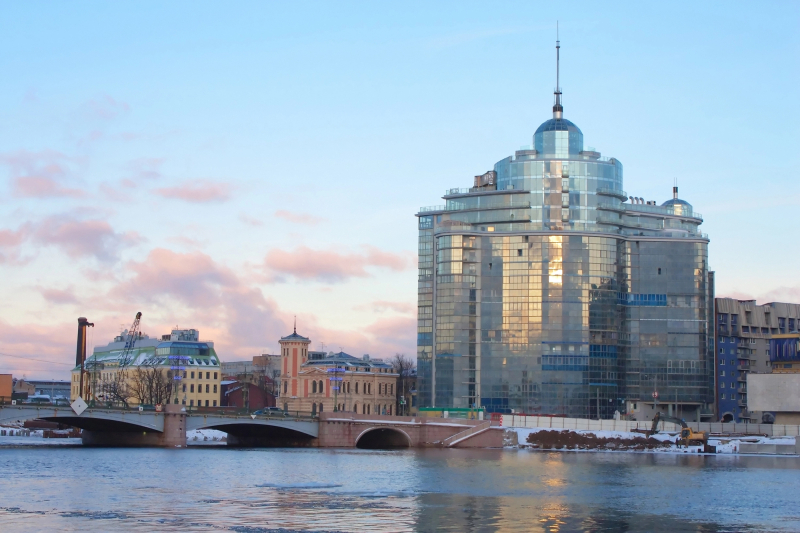
The Vyborg Side boasts two picturesque embankments: Pirogovskaya and Arsenalnaya. Both have designated cycling paths and are perfect for either a relaxed walk or a bike ride.
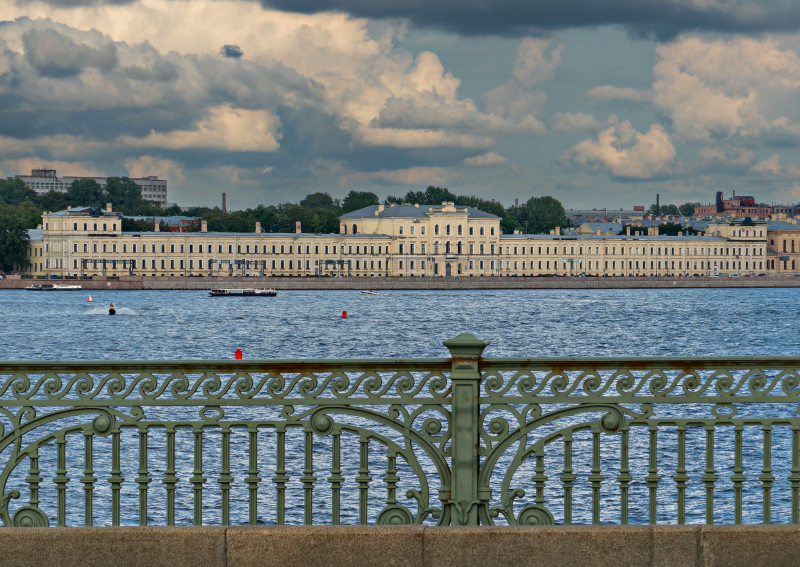
Pirogovskaya Embankment. Credit: Igor Gordeev, CC BY-SA 4.0, via Wikimedia Commons
From Pirogovskaya Embankment, you’ll get a beautiful view of the Petrograd Side, including the cruiser ship Aurora. As you walk along, you’ll pass by a mix of old industrial buildings and modern architecture. Meanwhile, Arsenalnaya Embankment offers a fresh look on the city center near Chernyshevskaya metro station, including Smolny Cathedral. On the same shore stands the gloomy yet striking building of the former Kresty Prison. If you turn back inland from the embankment, you can switch to a lighter note! Nearby, there's the unique Upsala Circus, a special project where all performers are teenagers. The best part is – their performances can be enjoyed no matter the language you speak!