Contents::
- Check the state standards
- Review the rankings
- Evaluate programs from the inside
- Verify details in person and asking for opinions
Check the state standards
Every university program is state-verified: in 2025, the Ministry of Digital Development, Communications and Mass Media in collaboration with the Analytical Center of the Russian Government conducted competitions aimed at the development of top-level educational programs in IT and AI (data science, DS). Moreover, the experts compiled a list of advanced-level programs in AI (data science).
These competitions aim to support relevant educational programs and enable them to train highly qualified specialists in AI and IT. This means that students of these programs will be capable of solving the industry’s relevant problems, work while studying, and, upon graduation, qualify as middle-level or even senior developers at major companies.
What this means for applicants. Based on the results of these competitions, the government named the universities capable of meeting these goals – their programs have passed the rigorous selection and earned funding. This means that they will need to deliver. A major stand-alone feature of these programs is that they are implemented in partnership with the country’s leading AI and IT companies: Yandex, VK, Sberbank, Avito, Rostelecom, YADRO, and others.
Thanks to the involvement of these partners, students of the programs receive:
- additional stipends (for instance, at ITMO, monthly payouts may add up to 40,000 rubles);
- the opportunity to intern and work during their studies;
- access to the infrastructure and computational power of major companies;
- lectures delivered by active industry members.
26 universities passed the selection for Top IT programs, 6 universities – for Top DS, and 19 – for DS. The full list of winning universities in DS and Top DS can be found here, and in Top IT – here.
ITMO landed in the top three in both competitions, receiving over 160 million rubles in funding for its IT programs and over 350 million rubles – for AI programs.
These are the winning Bachelor’s programs at ITMO:
- AI360: ML NATIVE;
- Computer Technologies;
- Neurotechnologies and Programming;
- AI Engineering;
- Software Engineering.
Credit: ITMO Mediaportal
Review the rankings
With university rankings, it’s possible to evaluate the quality of education from different angles. There is a great number of rankings for AI and IT programs: state reports, evaluations by analytics agencies, and business surveys. Additionally, there are also salary rankings; while they don’t offer direct insights into quality of education, they do demonstrate how successful each program’s graduates are and where they work.
Analytics from business and state. Peruse the study by AI Alliance and the analysis by the non-profit organization Digital Economy: the former shows who trains the best AI specialists, while the latter – which universities significantly contribute to quality and large-scale training of IT specialists. Last year, ITMO, along with HSE University and MIPT, was ranked in the top three by AI Alliance and in the top five by Digital Economy (along with Bauman Moscow State Technical University, HSE University, MIREA – Russian Technological University, and MIPT).
There are also rankings by professional communities, such as the one by Russoft, an association of Russian software developers. For a decade, the association has been ranking Russian universities based on their quality of training for software developers; in their studies, the experts evaluate the quality of training and the number of graduates who meet at least the minimal job requirements. In 2025, ITMO was ranked as the top Russian university by Russoft.
Educational rankings. For instance, those by the Russian RAEX agency; the company publishes the ranking of the country’s top 100 universities, as well as subject rankings, for instance, in IT.
Employer rankings. These can help you see where young professionals find it comfortable to work and grow. Such analytics is done by the HeadHunter job engine, Habr Career, or Forbes. For instance, the Forbes Education ranking reflects the level of employer trust and the value of each university’s diploma among employers.
Salary rankings. One of the biggest in Russia is conducted by the SuperJob center and analyzes the salary level of recent IT graduates in linear and management positions in development, information security, testing, analytics, data science, machine learning, data engineering, and DevOps. Among the leaders of the latest ranking are MIPT, Lomonosov Moscow State University, and ITMO. According to the study, ITMO graduates working in IT make an average of 290,000 rubles per month, which is the highest value in St. Petersburg.
You can also evaluate the salary level, as well as the required experience and skills, in your desired position on your own by perusing job aggregator websites.
Recommendations by students and graduates. These can also help make a decision on a university. The Changellenge career platform annually reaches out to several thousands of young professionals from all over the country to ask about the quality of education and employment process, as well as whether students and graduates would recommend their university to others. In 2025, ITMO landed in the top three enrollment recommendations.
Photo by ITMO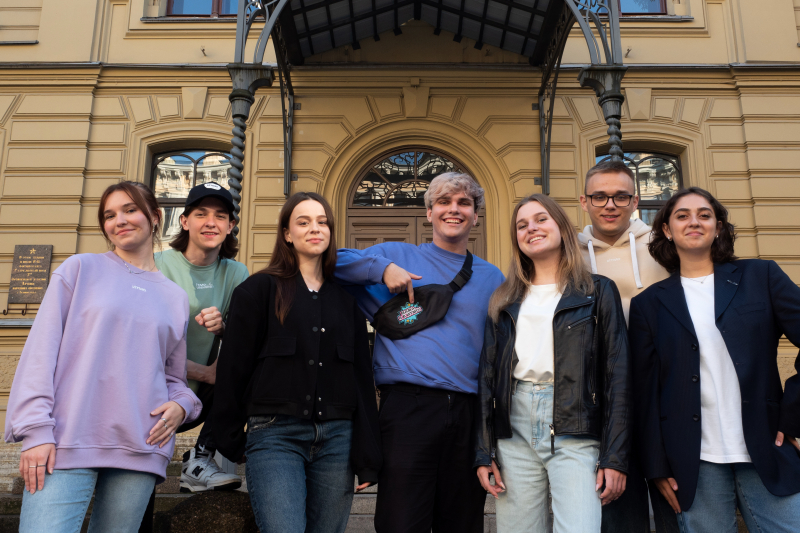
Evaluate programs from the inside
Once you have a preliminary list of programs from different universities, it’s wise to analyze what they have under the hood: the courses, lecturers, partners, and opportunities, including financial ones.
Additional stipends from partner companies. For instance, at ITMO all students of the program AI360: ML NATIVE receive a monthly stipend of 40,000 rubles during the four years of their studies. ITMO students can also participate in various scholarship competitions by the university’s partners and have a chance to win an up to 300,000-ruble grant from Alfa-Bank or a monthly 30,000-ruble stipend from T-Bank.
Lecturers = practicing industry specialists. Often, the staff of a university’s partner companies hold special or elective courses in AI and IT. This is a great chance to understand the realities of the industry and learn from experts’ professional experience.
Lecturer expertise can also be evaluated by professional competitions and awards, such as RuCode. This is an award created with support from the Ministry of Science and Higher Education to honor educational organizations, lecturers, and developers for achievements in applying or popularizing AI technologies in education and science. Another example is Yandex ML Prize, an annual research and education award by Yandex and the School of Data Analysis; it is given to lecturers and heads of educational programs who develop modern approaches to AI specialist training in Russia. ITMO lecturers annually become laureates of the award.
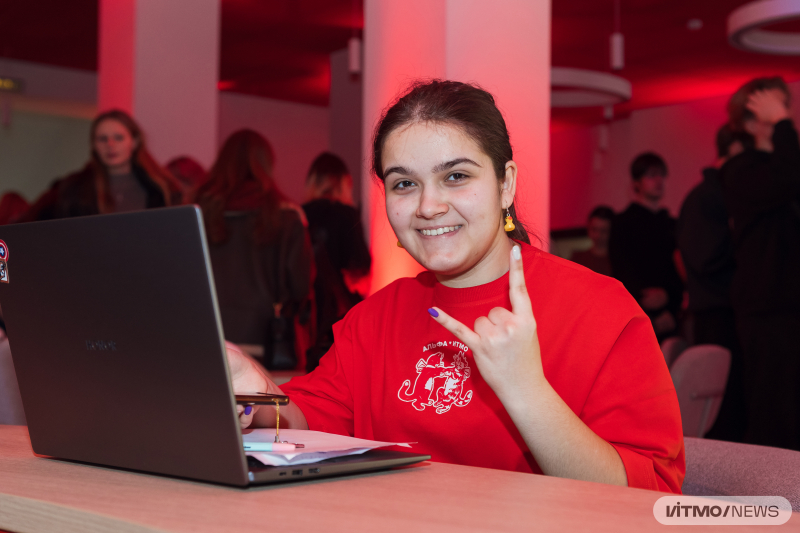
Photo by Dmitry Grigoryev / ITMO NEWS
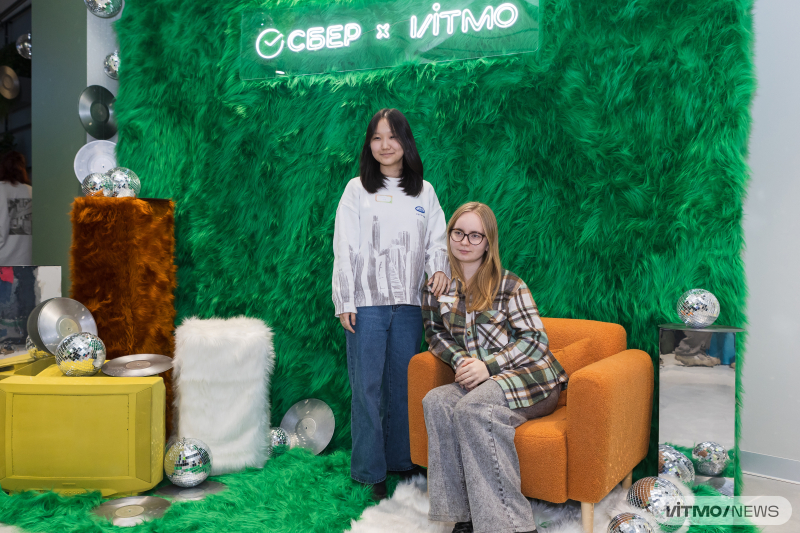
Photo by Dmitry Grigoryev / ITMO NEWS
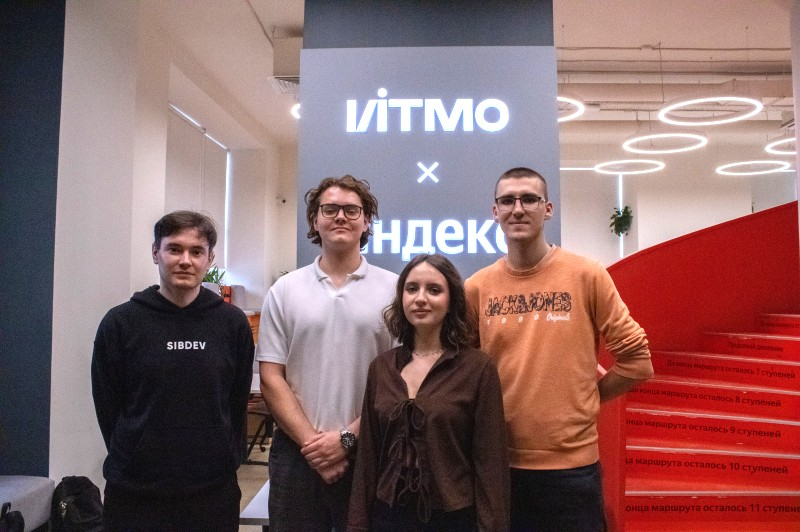
Photo by Malika Agadilova / ITMO Mediaportal
Environment and student results. Another factor that is important for many is an environment where students can grow professionally and expand their network. It is often the case that former groupmates become colleagues or business partners. Take a look at the students of the university you are considering and the projects they are involved in. If there are significant results, such information can be found on the social media or websites of universities or faculties, as well as in major media. Take note of major competitions and hackathons. For instance, ICPC, the largest and most prestigious collegiate programming championship in the world. ITMO remains the world’s only seven-time ICPC champion.
Apart from recognition, contests can be a way to make quite a sum. In 2025, ITMO students won a total of 5.8 million rubles for their top performance at AI Challenge, an international competition by Sberbank, one million rubles for a win at the Artificial Intelligence and Data Analysis Olympiad (AIDAO), and 500,000 rubles and simplified internship selection offers at Yandex Cup.
Verify details in person and asking for opinions
Once you’ve collected information from various sources, it’s good to verify it by reaching out to students and staff of universities in person and online and visiting universities to explore infrastructure and form your own opinion.
Various universities organize different events: open lectures, conferences, competitions, hackathons, and contests for school students, both online and offline. If you have the chance to visit in person, it’s best to attend several such events before your final year at school – this way, you get to see the universities on your list before the heat of the admission campaign.
You can also learn everything at open days. At ITMO, university-wide and faculty-specific open days are held both online and offline.