Where are you from and what has brought you to ITMO?
I am from the capital city of Pakistan, Islamabad, often considered one of the most beautiful capitals in the world. I am currently pursuing my Master’s degree in big data and machine learning at ITMO. I’m passionate about artificial intelligence and building scalable, real-world solutions. I’ve worked on projects ranging from multi-agent AI systems to large-scale data pipelines, and my research focuses on advancing multimodal AI models.
What originally drew you toward data and machine learning?
Big data and machine learning are the core of artificial intelligence. I was initially drawn to AI during my Bachelor’s degree, especially through the debate: “Will AI take over the world?”
So, do you think AI will ever fully replace humans?
Fully? Maybe not. But I do think it could replace around 80-85% of jobs. That said, human intuition still has an edge over machine intelligence in many situations, so nothing can be said with complete certainty.
In your opinion, what makes data science such an impactful field today?
As the world moves toward AI agents and autonomous systems, these technologies rely entirely on data. Major companies even describe themselves as data companies, which shows how central data has become.
What has been the most challenging concept or course so far in your program?
It was Industrial Machine Learning. In that course, we had to develop an industrial-level multi-agent system. Although it was very demanding, the rigorous training helped me build real-world, production-level solutions during my studies.
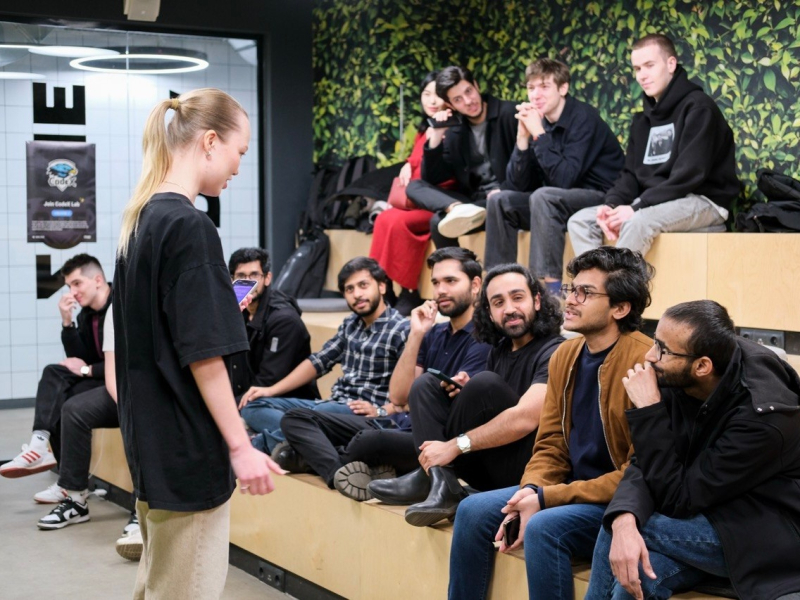
Shajee Raza at ITMO. Photo courtesy of the subject
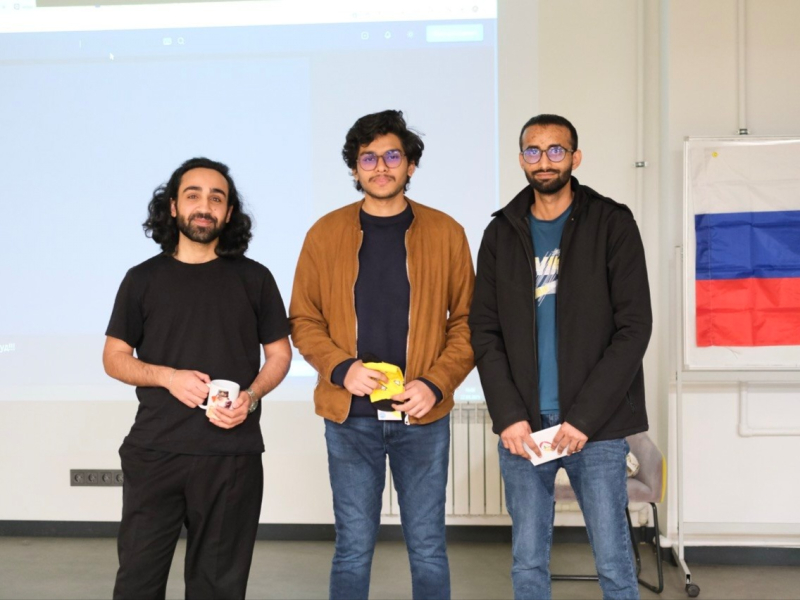
Shajee Raza at ITMO. Photo courtesy of the subject
Has anything surprised you about how machine learning is taught or applied at ITMO?
What I appreciate is how it is taught through practice rather than just theory. This approach has helped me grow significantly as both an AI engineer and a researcher.
If you had access to unlimited data, what problem would you want to solve first?
I would focus on real-time disaster prediction and response. By analyzing global climate patterns, population data, and infrastructure in real time, we could predict floods, earthquakes, and other crises earlier, and coordinate faster, smarter responses to save lives and reduce damage.
How do you think data and AI can contribute to solving real-world challenges in Pakistan?
They could play a transformative role there, especially in healthcare, urban planning, and education. AI can improve diagnostic systems in under-resourced hospitals, while data-driven insights can optimize traffic and resource allocation in growing cities. In education, personalized learning systems can make quality education more accessible.
How has studying in an international environment influenced your approach to teamwork and problem-solving?
Working with people from diverse backgrounds has taught me to approach problems from multiple angles and communicate ideas more clearly. It has also made me more adaptable and open-minded, which leads to more creative and effective solutions.
What does a typical day look like for you as a Master’s student?
My typical day is a balance between academics and daily life. I spend most of my time attending classes, working on projects, and continuously learning. At the same time, I manage my routine independently – cooking, handling daily tasks, and making time to relax. It’s a simple but disciplined lifestyle that keeps me productive.
When you’re not working with data, how do you unwind or stay creative?
I do it through creative outlets like design, content creation, and competitive gaming. I also enjoy watching films, listening to music, and occasionally working on fun side projects. These activities help me reset and often spark new ideas.
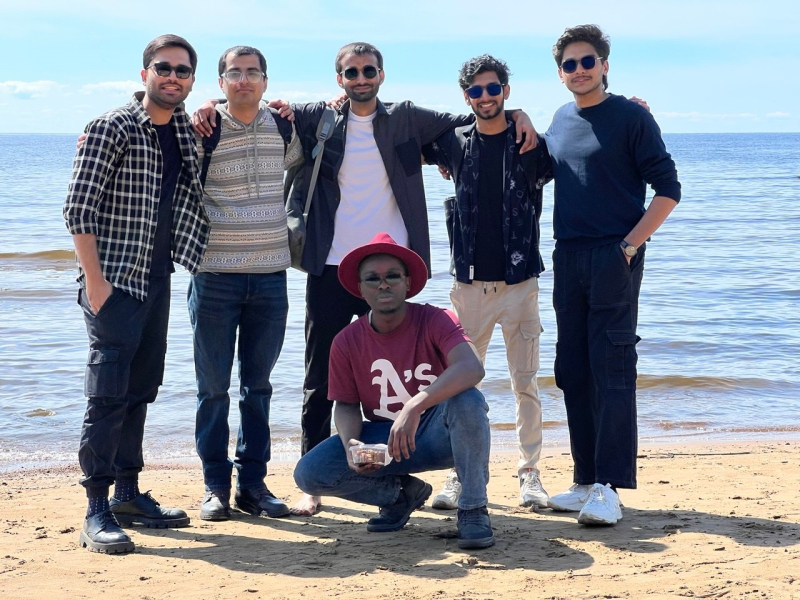
Shajee Raza with his friends in St. Petersburg. Photo courtesy of the subject

Shajee Raza with his friends at Yagodnoe. Photo courtesy of the subject
What has been the biggest challenge of studying abroad, and how did you overcome it?
The biggest challenge has been staying away from my family, something many international students experience. Another challenge was the language barrier, but spending a year learning Russian helped me overcome it.
Where do you see yourself in the next 5-10 years?
In the next 5-10 years, I see myself as Dr. Shajee Raza, running a successful AI consultancy business.
What advice would you give to students in Pakistan who want to study big data and ML at ITMO?
I would advise them to pursue this field only if they are genuinely interested and committed to achieving a high level of expertise. The competition is intense, and technology is evolving rapidly. Passion, consistency, and dedication are essential to success.