Could you introduce yourself and tell us a little about your academic background?
My name is Kamran Munir, and I’m from Pakistan. I received my Bachelor’s degree in environmental sciences from the University of Peshawar, where I placed second in my class.
My research focused on synthesizing a membrane using polystyrene waste and polysulfone beads. I wanted to explore how waste materials could be turned into a sustainable solution for removing heavy metals from water.
After graduating, I gained some professional experience and then applied for the Open Doors Scholarship. I was selected and chose ITMO University, where I am now pursuing a Master’s degree in industrial ecology.
How does industrial ecology relate to what you studied before?
It is closely connected to environmental sciences, but it focuses more specifically on industry. We study industrial pollution, carbon budgeting, environmental management, and standards such as ISO 14001.
For me, it was a natural continuation of my previous studies because I could keep working with environmental issues while gaining knowledge that can be directly applied in industry.
What first got you interested in environmental science?
I was actually very good at mathematics in secondary school, but environmental problems such as ozone depletion and plastic pollution started catching my attention. That ultimately led me to choose environmental sciences for my Bachelor’s. During my studies, I joined different societies and participated in campaigns, including afforestation activities and international online programs. The more involved I became, the more I understood the importance of environmental issues.
I believe that if we don't invest in protecting the environment today, the consequences will eventually cost us much more.
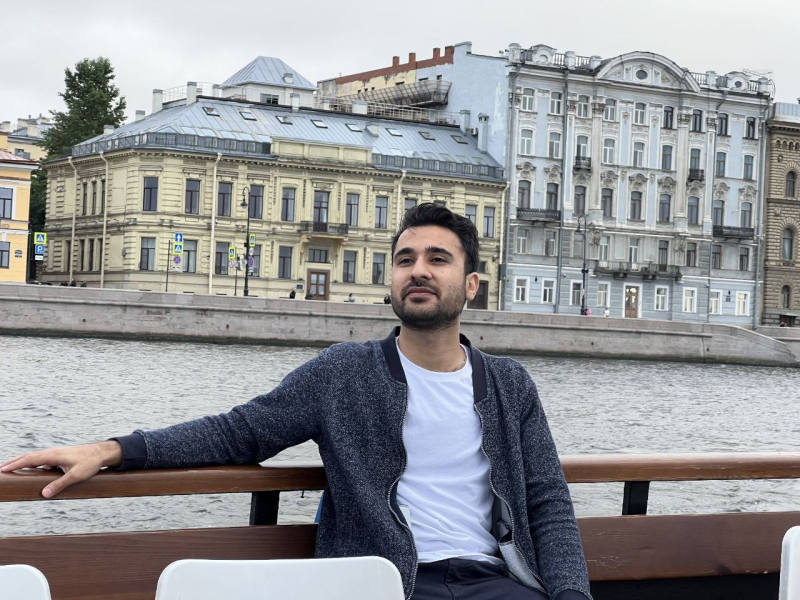
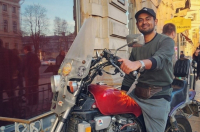
Photo courtesy of the subject
What does being an environmentalist mean to you?
For me, environmentalism is about finding realistic solutions. Sustainability is not only about the environment. Economics and technology are also important.
You might be able to solve an environmental problem with a very expensive technology, but the question is whether that solution can actually be implemented on a larger scale. If you can solve the same problem using affordable materials and sustainable technologies, that makes it much more valuable.
What do you see as one of the biggest environmental challenges facing the world today?
Global warming is certainly one. We are consuming resources at an unsustainable rate and relying heavily on fuels such as coal, which contributes to increasing carbon dioxide concentrations in the atmosphere.
The important thing is that global warming is not simply about the temperature increasing. It causes a whole chain of consequences, including melting glaciers, rising sea levels, droughts, and disruption to ecosystems.
A lot of work is already being done internationally, but countries have to take these issues seriously and cooperate on policies and solutions. If we act responsibly now, future generations may look back and appreciate what we did. If we don't, they will have every reason to blame us.
How did you find out about ITMO, and why did you choose it?
Initially, I didn't know very much about ITMO. I was searching for universities in St. Petersburg and started reading about the different options available. ITMO stood out to me; most importantly, it offered the Industrial Ecology program, which matched my interests. I wanted to study in St. Petersburg and continue in my field, so those factors made ITMO the right choice for me.
You came to ITMO through Open Doors, an international scholarship contest. How does it work?
First, you create an account and submit your application and documents. Then there is an initial screening stage followed by another test, after which the results and merit list are announced. If you are selected, you can study without paying tuition fees and also receive a stipend.
It can definitely be challenging, but it is also quite flexible. There are different time slots available for the tests, so you can choose one that works with your schedule.
I would say you shouldn't underestimate it, because you do need to prepare and cover the syllabus. At the same time, you shouldn't be intimidated and decide not to apply. It is difficult, but absolutely possible.
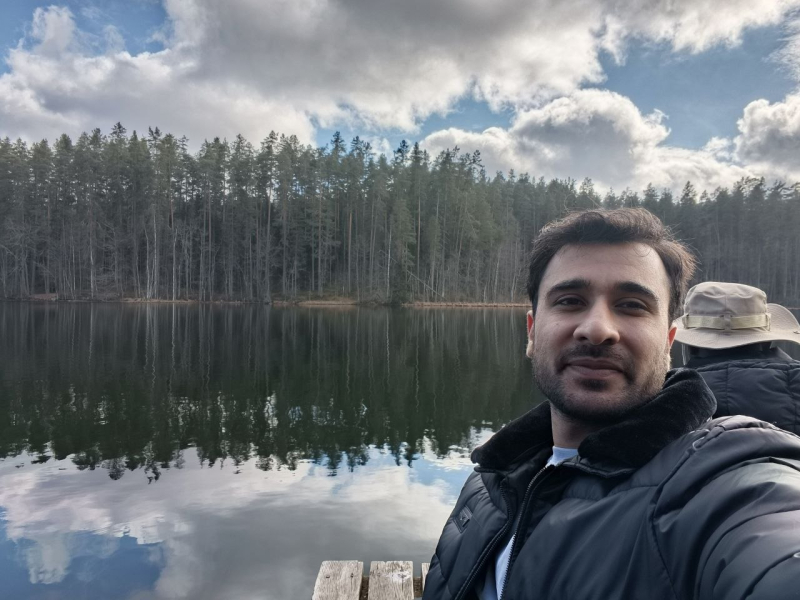
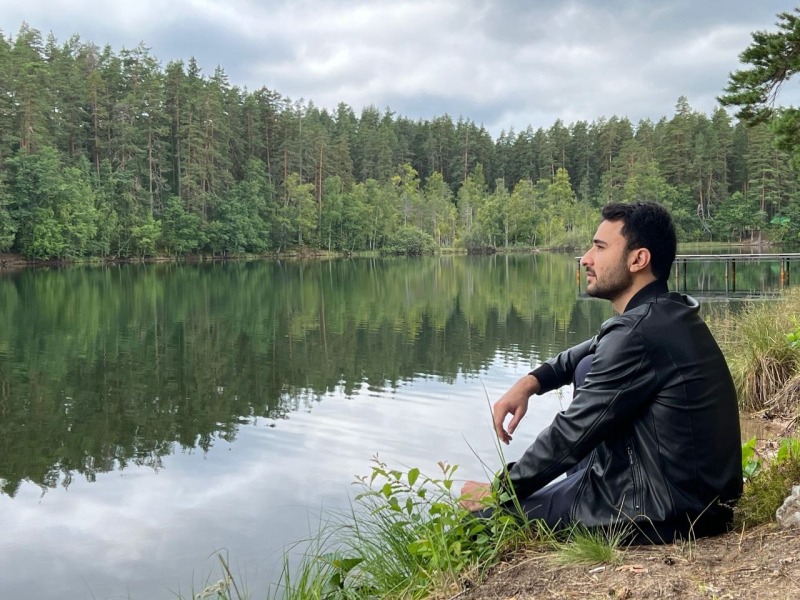
Photo courtesy of the subject
Moving from Pakistan to Russia must have been a major change. What was the adaptation process like?
The beginning is difficult because everything is unfamiliar. But with time, you start exploring the city, understanding how things work, and enjoying it. St. Petersburg is a very beautiful city.
The first major challenge was the language barrier. When you arrive at the airport and suddenly everything around you is in another language, it feels like entering a completely different world.
Fortunately, ITMO's Buddy System helped me a lot. My buddy, Dasha, met me and helped me with things like buying a transport card and SIM card, getting to the dormitory, and finding my way to the university.
What has your experience with the Buddy System been like since then?
If you've had a difficult week, there is often something happening during the weekend. There are cultural nights, sports activities, cooking classes, forest trips, kayaking, and many other events.
I especially enjoy trips to the forest and the cultural nights. The cultural events give you the chance to learn about countries you may not have known much about before. I've attended events featuring cultures from countries such as Egypt, Morocco, India, Bangladesh, Afghanistan, and Pakistan.You can learn a lot simply by meeting people from different places.
Have you noticed any major cultural differences between Pakistan and Russia?
There are definitely differences. Russian people tend to be quieter. At first, that can feel unfamiliar, but I think once you spend more time here, you begin to understand people better. I've found Russians to be very nice and helpful when you approach them. Knowing Russian also makes a big difference.
Speaking of language – how is your Russian coming along?
It's difficult to master, but now I can move around the city, communicate in everyday situations, and understand some of what people are saying.
For anyone who wants to really experience Russian culture or plans to stay here for a longer period, I would recommend doing a preparatory year and learning the language. It gives you access to much more of the country and its culture.
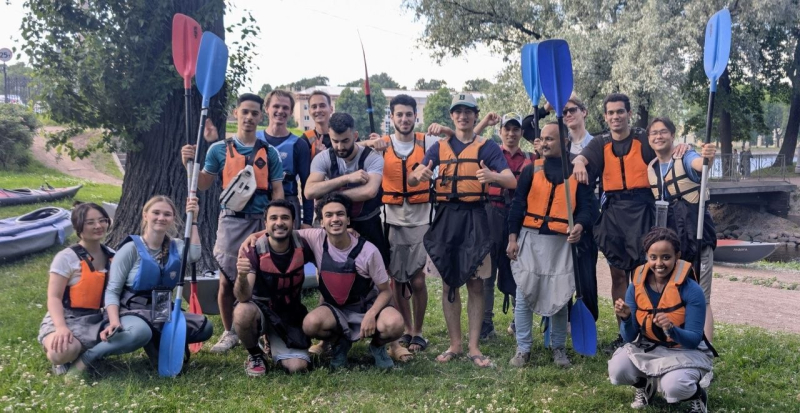
Photo courtesy of the subject
What practical advice would you give to international students arriving in Russia for the first time?
The first thing I would recommend is getting a SIM card and internet access. Once you have internet, you have a translator, maps, taxi services, and everything else you need to navigate the city.
Translation apps are incredibly useful in the beginning, and Yandex Maps can help you get around. Those basic tools make the adaptation process much easier.
Read also:
What do you like to do when you're not studying?
Because I'm far away from home, I spend a lot of time calling my parents and talking with them. I also enjoy video games.
As for physical activities, I really like badminton. I recently had the opportunity to play again at one of the events here. On weekends, I usually look for activities, events, or trips around the city. I like getting out and exploring whenever I have the opportunity.
Have you discovered any Russian food you particularly enjoy?
I really like Russian cakes and sweets. Kartoshka is one of my favorites. I also really enjoy the cheesecakes here.
Finally, what would you tell other international students who are considering studying in Russia?
I would tell everyone to try.
There are scholarship opportunities such as Open Doors and other programs that international students can explore. They can allow you to study in Russia and experience a completely different culture.
Come, experience Russian life and food, learn about the culture, and explore the country. Russia is enormous, and there is so much to see.
Even though I haven't traveled around the country as much as I'd like yet, in St. Petersburg I would definitely recommend visiting Peterhof and the Hermitage Museum. And if you're coming to ITMO and get the chance to visit Yagodnoe, don't miss it.