Please introduce yourself to our readers.
My name is Umair Bin Aamir, and I come from Islamabad, Pakistan. During my Bachelor's studies at Air University, I majored in mechatronics engineering, where I designed and developed a thermoelectric incubator based on the Peltier effect. That project not only earned me the prestigious IGNITE NGIRI 2017-2018 national research grant, but also won the best project award at our university's Open House.
More importantly, it taught me how exhilarating it is to combine knowledge from different disciplines to solve real-world problems. That is exactly why I felt incredibly fortunate when I discovered the Master's program in industrial ecology at ITMO University's Faculty of Ecotechnologies.
Industrial Ecology is a relatively specialized and interdisciplinary field. What first drew your interest to this area?
My professional background is mainly in asset integrity within the oil and gas industry. I’ve collaborated with major international companies on large-scale projects involving reliability-centered maintenance, failure mode and effects analysis, and the management of fire and gas systems. These experiences taught me: industrial progress must go hand in hand with environmental protection and sustainability.
ITMO's Industrial Ecology program is designed to cultivate professionals who can design and implement comprehensive, integrated solutions. The curriculum covers clean production, environmental design, ISO-based management systems, and urban ecology – all modules that resonate deeply with my goal of using systemic thinking and advanced technology to push industries toward greener, more sustainable practices.
The faculty here are world-class experts deeply engaged in new research in this domain, and their guidance will be invaluable. And it is not just the professors; my fellow classmates are equally inspiring. They come from diverse backgrounds and cultures, and I already feel that learning alongside such brilliant and passionate people will make this journey even more enriching.
Why did you choose to pursue your Master's abroad, and what made ITMO stand out to you specifically?
My long-term goal is very clear: to contribute to a cleaner, more sustainable, and ultimately carbon-free world. I want to develop innovative systems for sustainable heating, renewable energy sources and smart control mechanisms to drastically reduce carbon footprints in urban infrastructure. Ultimately, I see myself as an environmental policy maker for Pakistan.
My homeland is hit every single year by devastating floods, choking industrial pollutants, and raging wildfires, and I deeply believe that policy backed by solid engineering and ecological science is the only way to build real resilience. This program at ITMO is the crucial step in turning that vision into reality.
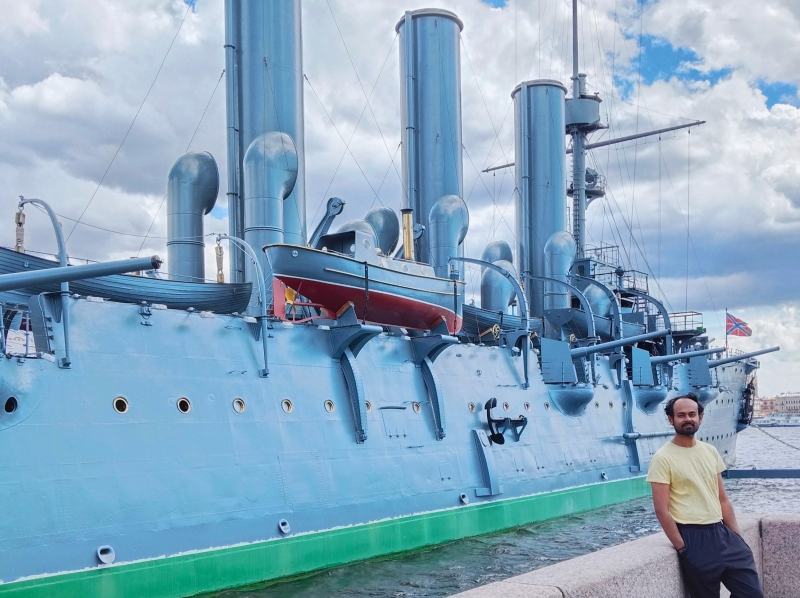
Photo courtesy of the subject
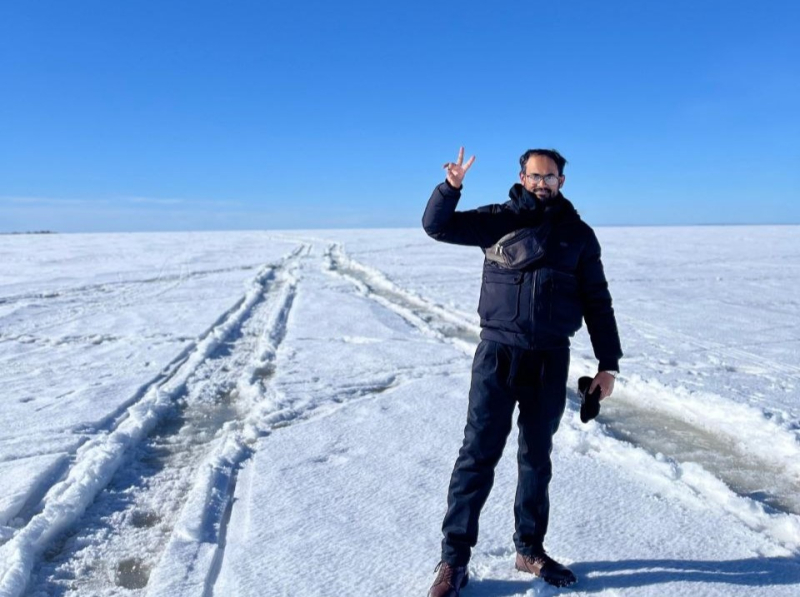
Photo courtesy of the subject
Coming from Pakistan to Russia is a major transition. What has been the biggest adjustment for you since arriving in St. Petersburg?
Coming from Islamabad, where winters are mild and short, experiencing my first St. Petersburg winter was a real challenge. I had to learn how to dress properly, layer my clothes, and manage my time wisely to make the most of the limited daylight.
The language barrier was another significant hurdle. Even though I had prepared before arriving, actually communicating in Russian in daily life, whether at the supermarket, on public transport, or with locals, was much harder than I expected. But I have been learning every day, and people are very patient and encouraging.
Despite these challenges, St. Petersburg has completely stolen my heart. They call it the Venice of the North, but honestly, I think it is even more charming than Venice itself. And the food! I have developed a genuine love for mors, that traditional Russian berry drink – it is incredibly refreshing. The city is also a treasure trove of historical museums; you could spend a lifetime exploring them. And how can I forget the White Nights? In summer, the city stays alive 24 hours a day, glowing with an ethereal light that makes every walk feel like a dream.
But what truly touched me the most are the people here. They are incredibly warm and friendly, which has made me, as a student from so far away, feel genuinely at home.
How would you describe the academic atmosphere at the Faculty of Ecotechnologies?
It is incredibly dynamic and deeply collaborative; it is built on active dialogue and mutual respect between students and professors. The staff genuinely encourage us to challenge existing paradigms and to bring our unique industrial and cultural experiences into the classroom.
Since our cohort comes from such diverse engineering and scientific backgrounds, our discussions often evolve into intense brainstorming sessions where we tackle real ecological challenges together. The labs are modern and well-equipped, and there is a strong emphasis on project-based learning, which makes theoretical concepts come alive in practical, meaningful ways.
One aspect I particularly appreciate is that students are actively encouraged to engage in collaborative research projects across different specializations within the faculty. This not only broadens our technical perspective, but also builds essential teamwork and problem-solving skills that have a profound impact on our future journey, whether we choose to pursue a career in research or move into professional practice. It feels less like a traditional university and more like a living think tank where everyone is passionate about building a sustainable future.
What has surprised you the most about life in Russia or St. Petersburg so far?
Honestly, the warmth of the people surprised me the most. I expected a much more reserved and distant atmosphere, but people here are deeply caring, genuine, and incredibly helpful once you take the first step to break the ice.
I was also pleasantly surprised by how smoothly everything functions, from the world-class metro system with its palatial stations to the seamless digital services for students. Another delightful surprise was discovering how much Russians love their tea culture. I have been invited to tea by people I barely knew, and it turned into hours of wonderful conversation.
Have you discovered any favorite places in the city where you like to relax, walk, or recharge?
Absolutely! Since my dormitory is located on the Petrogradskaya Side, I can reach the river with just a short walk. It’s one of my favorite ways to unwind after a long day of lectures, watching the water and the city lights reflect off the surface. I have also fallen in love with the Kurortny district along the Gulf of Finland. There is something profoundly moving about standing there and watching the vast sea turn into a frozen, silent landscape in winter. When I need a quick recharge in the city center, I love to wander along the canals near the Moika River, where the reflections of the historic buildings create a completely different, dreamlike atmosphere. The Summer Garden is another haven of peace for me; it is a quiet green island that offers a perfect escape from the urban hustle.
I have also been fortunate to explore the stunning suburban towns. Peterhof with its magnificent cascading fountains is absolutely breathtaking, especially in summer when the golden statues glisten against the blue sky. Pushkin, formerly known as Tsarskoye Selo, is a place of incredible historical charm, and walking through the Catherine Palace gardens feels like stepping into a fairy tale. Pavlovsk offers a more intimate and serene experience, with its beautiful English-style park and peaceful forest trails perfect for quiet reflection. And I recently visited Vyborg, a charming town near the Finnish border, which has a unique medieval character and a fascinating blend of Russian and Scandinavian influences that left me completely captivated.
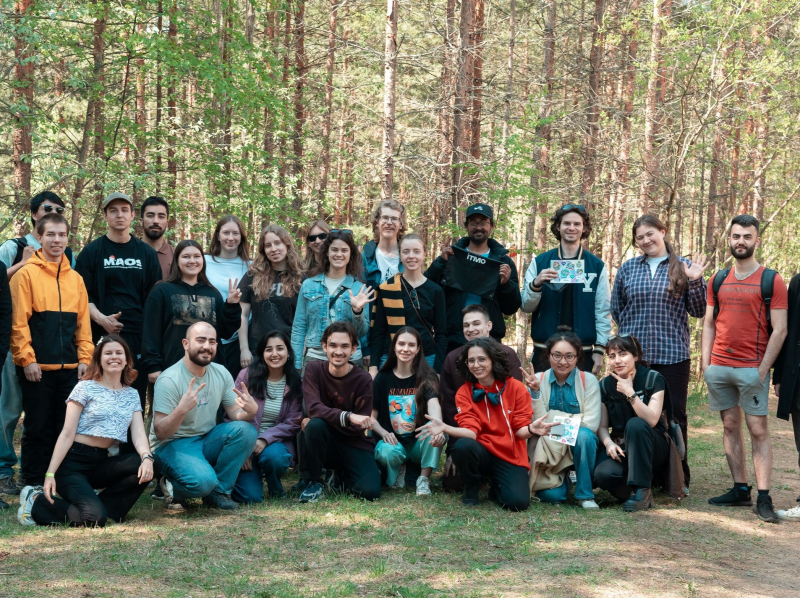
Photo courtesy of the subject
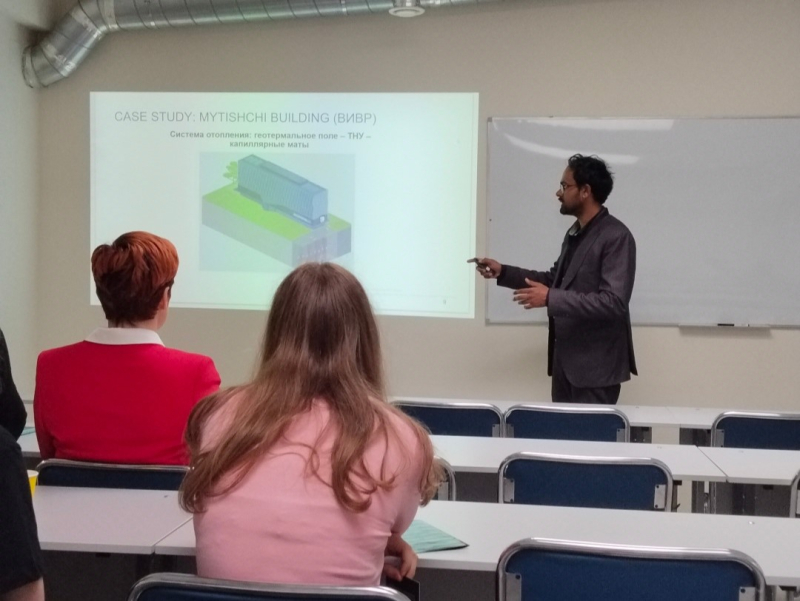
Photo courtesy of the subject
When you're not studying or working on research, how do you usually spend your free time?
Since I am naturally an extrovert, I thrive on social interaction and discovering new experiences. I enjoy wandering through St. Petersburg, uncovering hidden gems of this magnificent city.
Just recently, I discovered a huge and vibrant bazaar that I had no idea existed (at the end of the metro’s brown line), and it was such an exciting experience to get lost in its colorful aisles and taste local treats. I got to try two amazing local street foods there: pirozhki, which are delicious baked or fried buns stuffed with fillings like meat, cabbage, or potato, a perfect savory snack on the go, and pyshki, soft, fluffy Russian doughnuts dusted with powdered sugar that melt in your mouth.
I have also joined the Buddy System, Energy Club, and Language Club at ITMO, which have been fantastic opportunities to meet new friends from all over the world, practice my Russian, and learn about fascinating new cultures. I also try to stay physically active through sports and hiking.
What keeps you motivated, especially during difficult moments?
My motivation always comes from the bigger picture. Whenever I face difficulties, I force myself to pause and reflect on why I am here.
I think about the devastating floods that wash away villages in Pakistan, the thick smog that chokes our cities, and the wildfires that destroy our forests every year. I think about my parents' sacrifice back home and the dreams they have for me. Every single challenge I overcome here is not just a personal victory; it is a necessary step toward becoming the environmental policy maker I aspire to be.
I remind myself that resilience is built in moments of struggle, and that the knowledge I am gaining right now has the power to build real resilience for my country and for future generations. I always keep in mind: "Don't be pushed by your problems, be led by your problems."
Finally, what advice would you give to students from Pakistan who are considering pursuing a degree at ITMO?
My own journey so far has not always been easy, but every struggle has been worth it.
So, my message to future students is this: embrace the challenges, because they are your greatest teachers. Before you even arrive, do your homework. Dig deep into your chosen field, collect emerging research questions, and set fixed, clear targets for what you want to achieve.
Once you are here, do not just stick to the classroom. Avail the incredible exchange opportunities to other countries; it will broaden your horizons in ways you cannot imagine. Participate actively in conferences, join student clubs, and network relentlessly. At ITMO, you are not just a student; you are part of a global community. Stay focused, stay curious, and I promise you, this experience will reshape not just your career, but your entire worldview.