Joined by 100 companies and research organizations, the forum’s expo demonstrated how research in biotechnologies relates to current tasks in bioeconomics. ITMO’s exhibit included three projects: a contrast agent for ultrasound diagnostics; ImmOnko, a medicine for targeted tumor therapy; and a technology for accelerated DNA sequencing by the Photonica.tech startup.
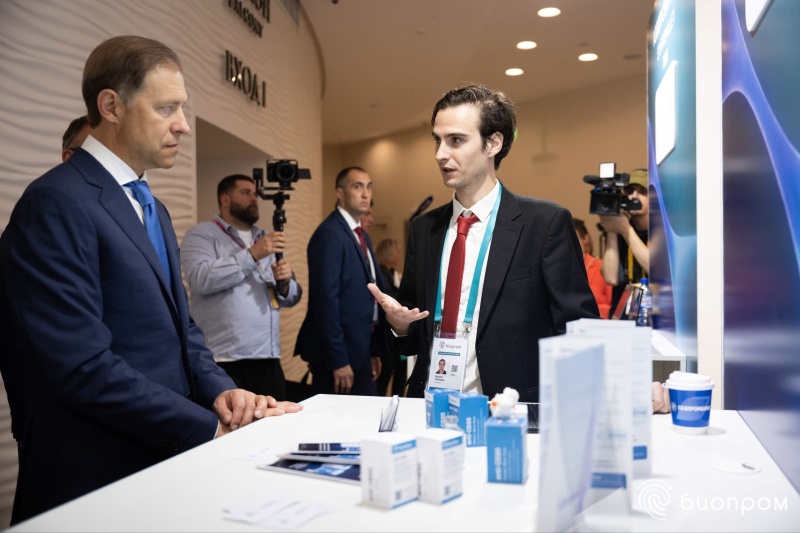
The first project, an ITMO- and Skoltech-developed contrast agent for ultrasound diagnostics, was presented by Anna Orlova, a senior researcher at ITMO’s International Research and Educational Center for Physics of Nanostructures. The technology will help clinicians obtain more information during ultrasound examinations. This is particularly important when more advanced imaging methods, such as CT or MRI, are needed to clarify the findings. It could potentially shorten the time to diagnosis; for example, when assessing focal changes in the liver or determining whether the fallopian tubes are open. The technology is based on microbubbles with a protein-polymer shell that enhance the ultrasound signal. The prototype has passed lab testing: in comparative experiments, it produced greater contrast enhancement than imported counterparts. The team’s ambition is to bring their domestic product to every compatible ultrasound device in Russia.
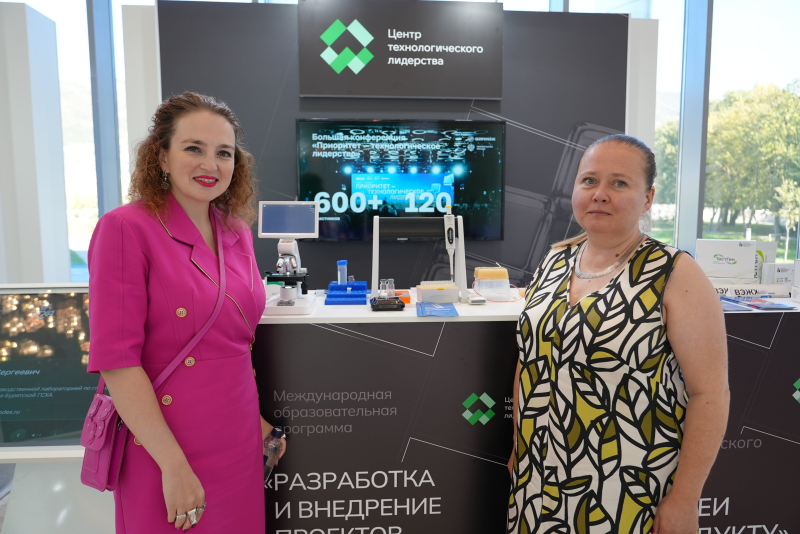
Polina Rudakovskaya and Anna Orlova at the stand of ITMO's contrast agent for ultrasound diagnostics. Credit: Bioprom
At the forum, the team of ITMO’s Center for Molecular and Biological Technologies, headed by Sergey Tsymbal, presented ImmOnko, a medicine for targeted therapy of drug-resistant tumors. One special feature of the treatment is that it uses two components: conjugates of therapeutic antibodies with copper ions. Separately, they don’t have any effect on tumor cells, but their combination provides a targeted effect with controlled intensity. This type of therapy will have a smaller number of side effects and be capable of treating drug-resistant tumors. Currently, the treatment is going through preclinical trials.
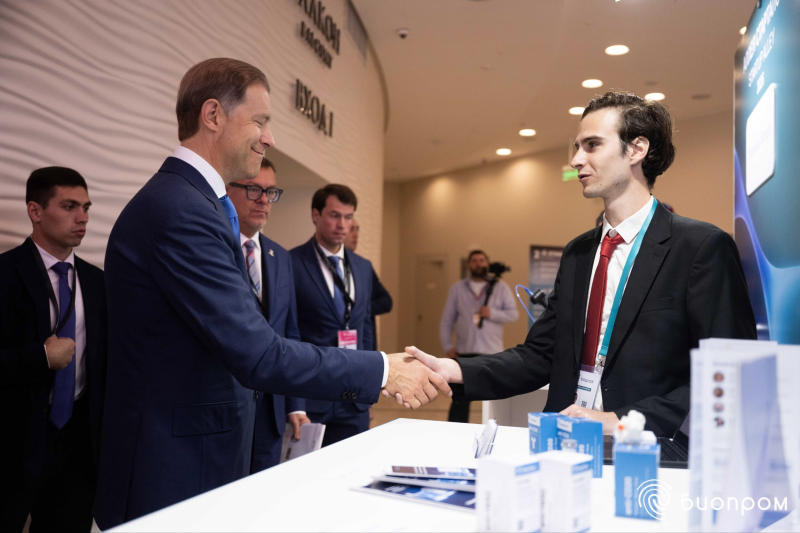
Sergey Tsymbal (right), ImmOnko stand. Credit: Bioprom
ITMO Fellows Arseny Alekseev and Evgeny Alekseev talked about their startup Photonica.tech, which is developing a technology for massively parallel next-gen DNA sequencing. Their goal is to reduce the time required for genetic analysis from days to just a few hours and make such tests available directly at the point of care. Thanks to this solution, genomic data acquisition will become massively accessible and regular without the need to access centralized laboratories. For this purpose, the team has incorporated two technologies within a single cell: nanofluidics and nanophotonics. The key binding element is nanoimprint lithography, which makes it possible to produce both nanofluidics and nanophotonics elements in a single production step. Nanofluidics is used to prepare the material, while nanophotonics collects and amplifies the optical signal. This approach means to cut down on the amount of required reagents and analysis time.

Arseny Alekseev (right), Photonica.tech stand. Credit: Bioprom
Within the forum’s business program, ITMO experts joined discussions on human resources for bioeconomics. For instance, at the session Bioeconomics Specialists Rule, Elena Koshel, the dean of ITMO’s Faculty of Biotechnologies, and Daria Gorbenko, a manager of educational programs at BIOCAD and an associate professor at ITMO’s Center for Molecular and Biological Technologies, as well as other university and industry representatives, discussed what kind of specialists are in demand in the industry right now and how their training should be organized while taking into account the industry’s long-term goals, as well as the objective of establishing technological independence. Also mentioned in the discussion were the role-based competence models developed at ITMO as an approach that organizes education around the roles required in an industry.
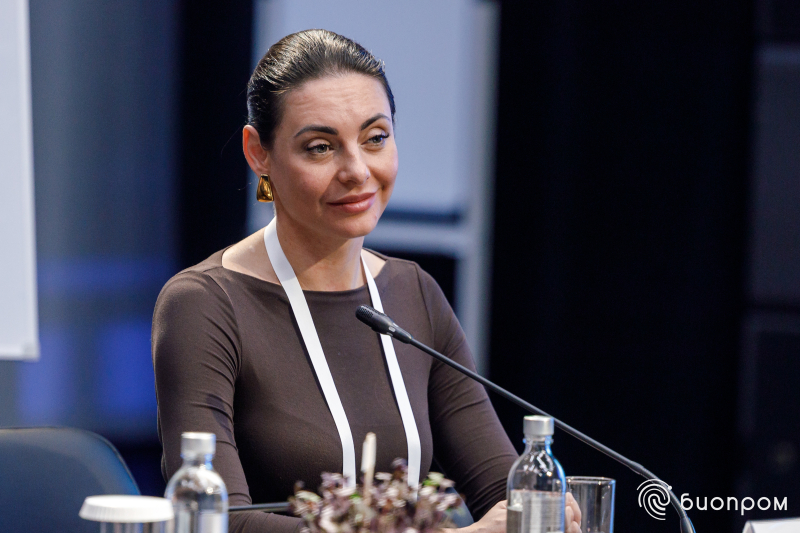
Elena Koshel at the session Bioeconomics Specialists Rule. Credit: Bioprom
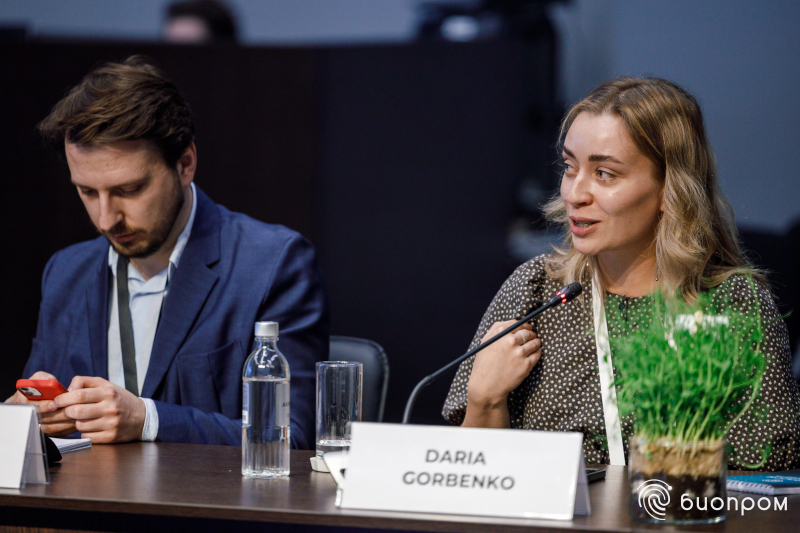
Daria Gorbenko at the session Bioeconomics Specialists Rule. Credit: Bioprom
One of the key events in the field of bioeconomics, the third international forum Bioprom: Industry and Technology For Humans, supported by the Russian Ministry of Industry and Trade, took place on October 5-6 in Gelendzhik. The event’s central topic this year was Ecosystems for High Quality of Life: from biological knowledge to technologies, and from technologies to products and solutions for people.