
PhD student at the Faculty of Digital Transformation, engineer at the National Center for Cognitive Research
The Story of a Fir Tree: From New Year to Maslenitsa!
Christmas and New Year celebrations around the world are most recognized for their cozy festival atmosphere, vibrant lights, gifts & sweets, winter markets, and festive celebrations. This is the most awaited time of the year for many! Here in Russia, the New Year arrives first, followed by Orthodox Christmas on January 7. One of the most iconic symbols of this time is the fir tree (ёлка). Having a fir tree at home has been a tradition for many generations. Yet, in modern times, it feels easier to purchase a harvested or artificial tree from the store. Despite the convenience, we end up missing out on a whole collection of emotions and experiences, especially the fresh smell of fir and birch trees, the damp and snowy forest, and the delicate touch of nature in winter.
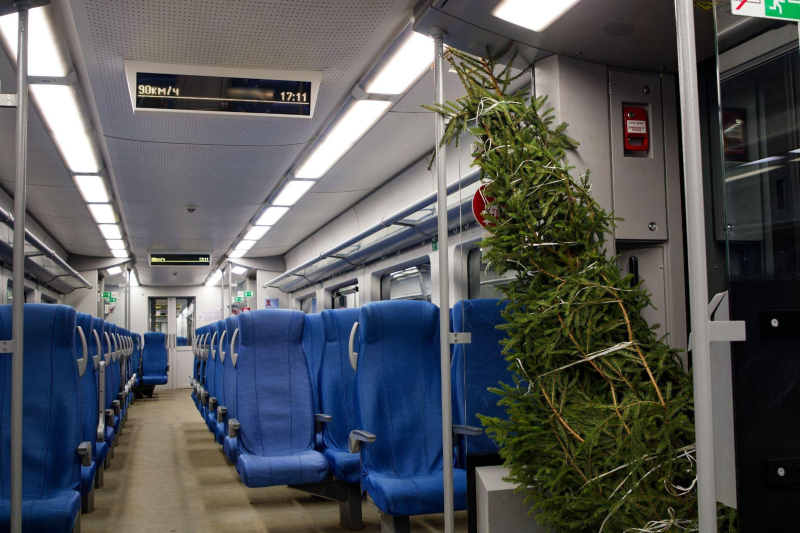
Inspired by Soviet articles and tales, picturing citizens harvesting their own fir trees from the forest, transported via elektrichkas, I was mesmerized by the idea and began planning for my own fir tree!
To start! Where can I find and harvest a tree? Yes, from the forest, but where & how?
Every year, around the first week of December, the local forestry department, in conjunction with regional municipal governments across Russia's various regions (oblasts), releases an announcement for the regulated harvesting and sale of fir trees to citizens for personal use. For St. Petersburg, the Leningrad Oblast Forestry Department has its own webpage dedicated to information regarding the rules, procedures, and areas where trees can be harvested. There are several important rules for harvesting a tree. A person may harvest only one tree of a height less than 3 meters from the designated area; it’s also necessary to sign a contract with the forestry department prior to harvest in compliance with the regulations.
Many readers may believe that harvesting trees is cruel; however, it is worth noting that the forestry department selects areas that are scheduled for the construction of infrastructure or urbanization to ensure that excess waste/unnecessary deforestation can be minimized.
With all the rules, geolocations, and information at hand, I began brainstorming strategies and ideas to harvest, transport, and prepare my fir tree. Although most harvest locations can be reached by car or off-road vehicle, I deliberately chose to travel by elektrichka, maintaining tradition. I invested several hours into selecting spots that would be easily accessible via public transport. Ultimately, the Luga and Tolmachevo districts in southern Leningrad oblast proved the most favorable, considering the proximity of public transport, ease of access to harvest sites, and the total return time to St. Petersburg.
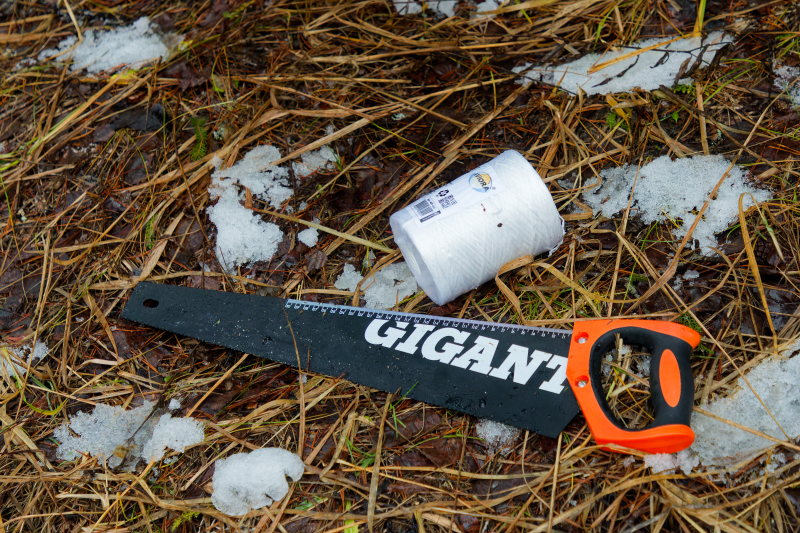
Having selected potential harvest sites, I began packing for my trip. First, I had to take into account the schedule of the Forestry Department, the elektrichka’s departure-arrival times on the St. Petersburg-Luga route and the local town bus schedule. The second crucial factor to consider was the Russian winter. With 2−3 layers of clothing, a coat, woollen socks, high boots, a hat and gloves, the winter outdoors becomes manageable and comfortable to stay out for longer durations. Lastly, harvesting gear: a saw, a knife, some twine rope, scissors, and a tape measure. I decided to exclude packing food (as it gets frozen) and opted for a hearty breakfast instead, but I recommend carrying a hot flask.
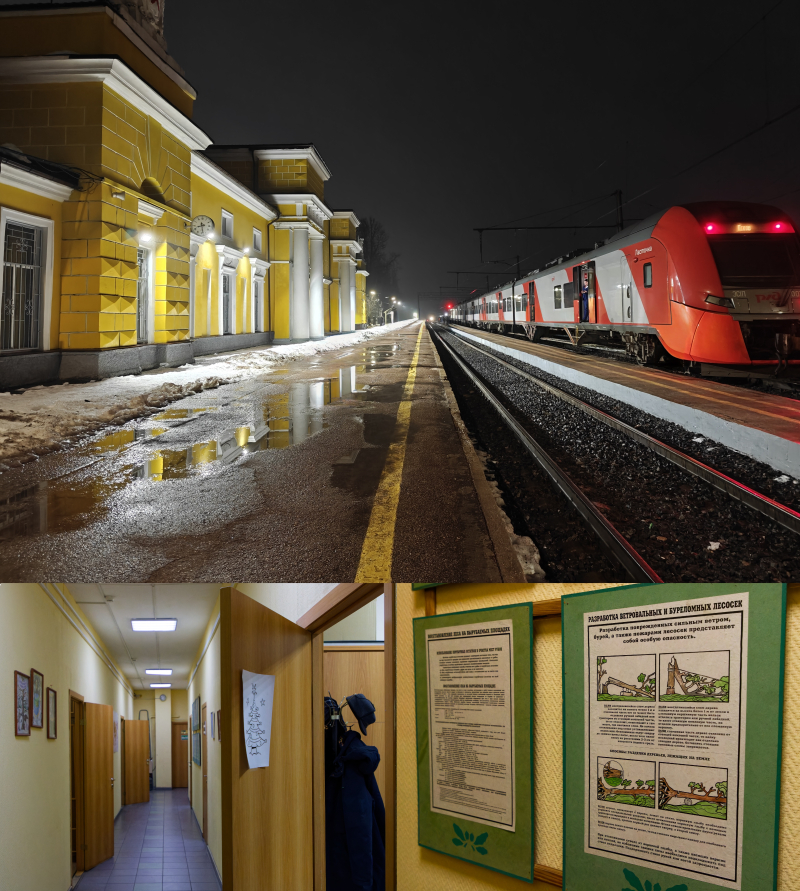
On the day of my journey, the early morning weather was rather mild, around -5C with light snowfall and spells of mist. I was ready for adventure. I set off on the 6AM train from Baltiysky railway station, scheduled to reach Luga by 8AM. On arriving at Luga, it still felt like night! Dark and with very few people and cars on the road, unlike in St. Petersburg, which was already buzzing at the time.
From the railway station, my first stop was to head towards the Forestry Department — an intensive walk through the heavy snow-covered sidewalks and icy cement crossings. At the office, a friendly inspector drew up my contract and offered a few favorable tips on picking the tree and handling myself in the forest (identifying drenched trees, avoiding pits, and other precautions).
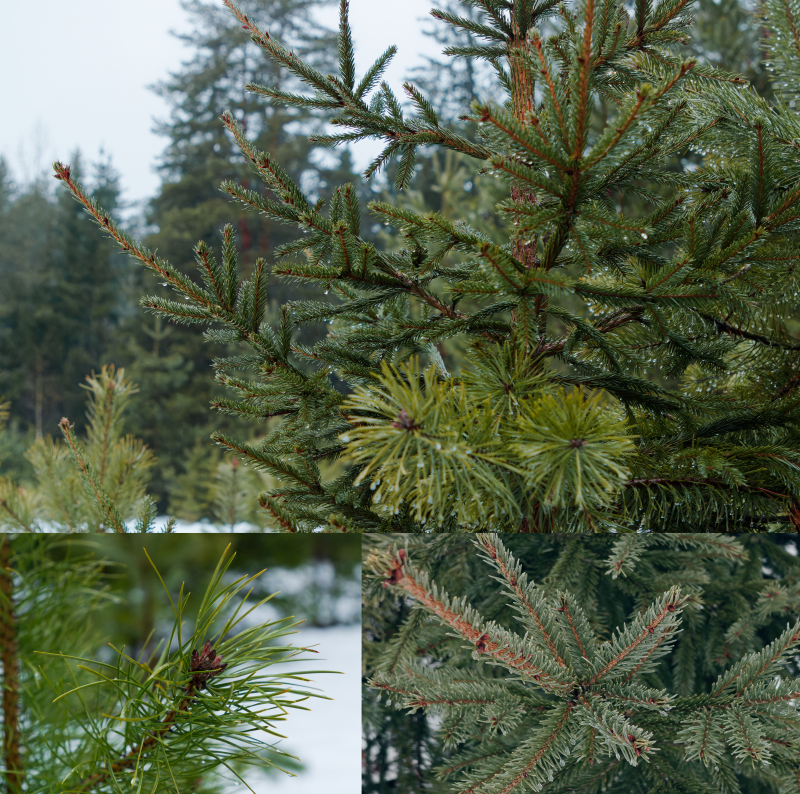
With the contract secured, I set off to the first of the four shortlisted locations in Luga District, which could be reached by a local bus that plied once an hour through the area. On arriving at the location, I had to walk for about 30 minutes to reach the designated harvest spot and began scouting for suitable trees. It is here that I learnt to identify the differences between spruce and fir trees.
Walking through the forest, the fresh smell of fir and damp wood was a heavenly treat, along with the occasional snow puddles, frozen lakes and streams, and the crisp sound of footsteps in the snow. The winter forest has its own unique atmosphere. Unfortunately, I didn’t find a suitable tree as most of them were either young (too short), tall (taller than 3 meters), or were older trees. Hence, I set off to my second selected location, Tolmachevo.
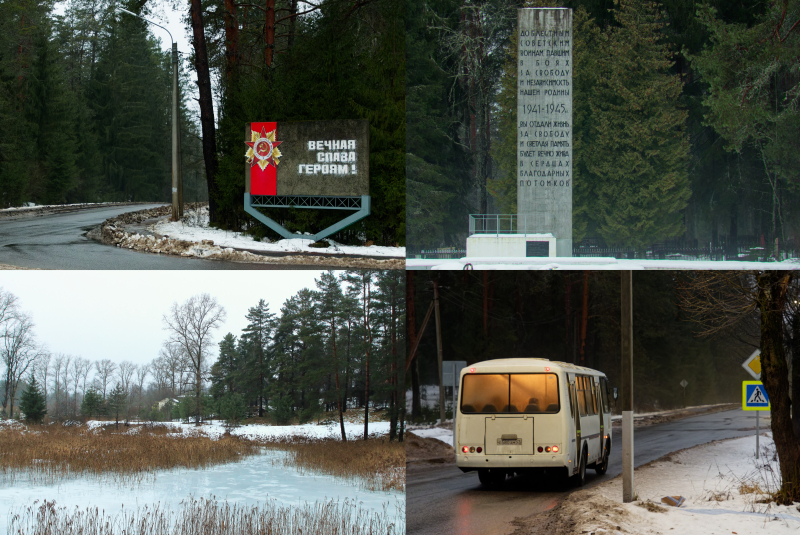
By then, it was about 10:30 am, and there was daylight. I headed towards the nearest bus stop to board the return bus to Luga. On my way, I discovered a bit of the city’s history. Founded by Catherine the Great in the 1800s, it was a battleground in WWII where Soviet troops halted an attack on Leningrad. The town is a city of Military Glory, with many monuments commemorating these events.
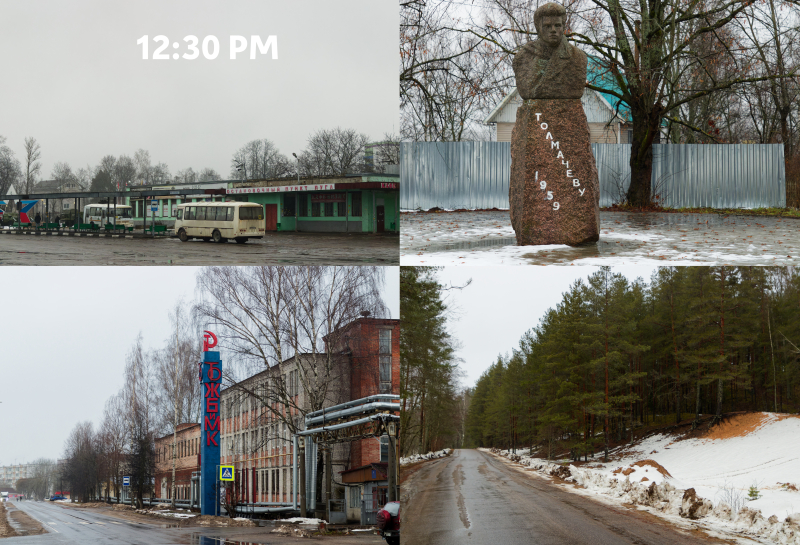
Once in Luga, I boarded another local bus, this time to Tolmachevo, my second destination, located about 30 minutes from Luga. Upon arriving, there was still a long walk to the designated harvest area located outside the village. Walking down the street, I felt a taste of the Soviet atmosphere with modernized Russian infrastructure. The village is centred around a foundry and industrial manufacturing plant; it has one supermarket and a few stores dedicated to hardware supplies, clothing, general accessories, and a bakery. All of which have short working hours, 11:00 am to 4:00 pm, compared to St Petersburg.
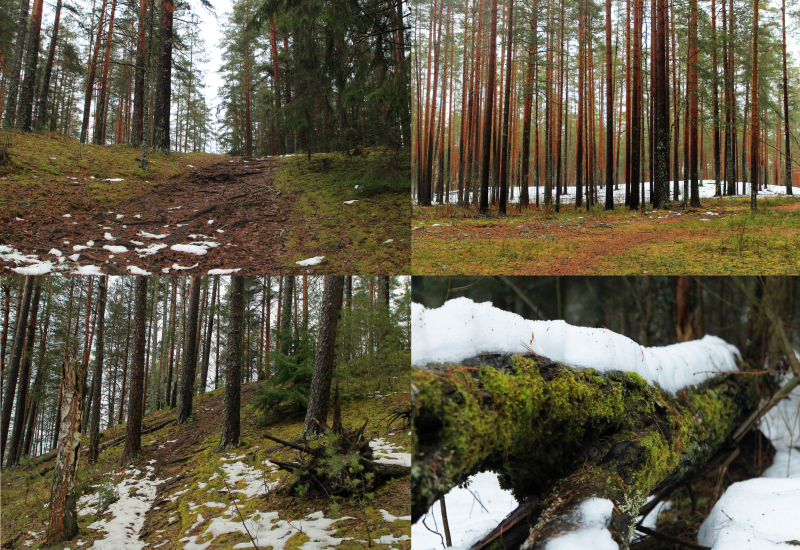
A collection of the explored regions in the forest when around the designated harvest area. In certain parts, the land was blanketed by snow and in other places, patches of slush and wet ground.
The time was almost 12:30 pm by then, and the weather was slowly picking up, mist and fog were starting to settle in with drizzles of rain. I increased my pace and started walking towards the designated area located beyond the village limits, across the railway line and had to leave the main road moving deeper inside the forest.
Navigating the forest requires more attention than usual, as there is close to no markings or paths, and the return route is entirely based on prior memory. The forest was eerily quiet, with the wind gently whooshing through the trees above. There were patches of deep and light snow with patches of wet ground and snow pits, so I had to walk extra carefully and to keep dry. I continued scouting for trees crossing small streams of the Yashchera river flowing inwards.
As I was coming close to a slope on the southern border of the designated area, I spotted a strong and healthy tree that stood among a batch of others. This was it, I had found my fir tree!
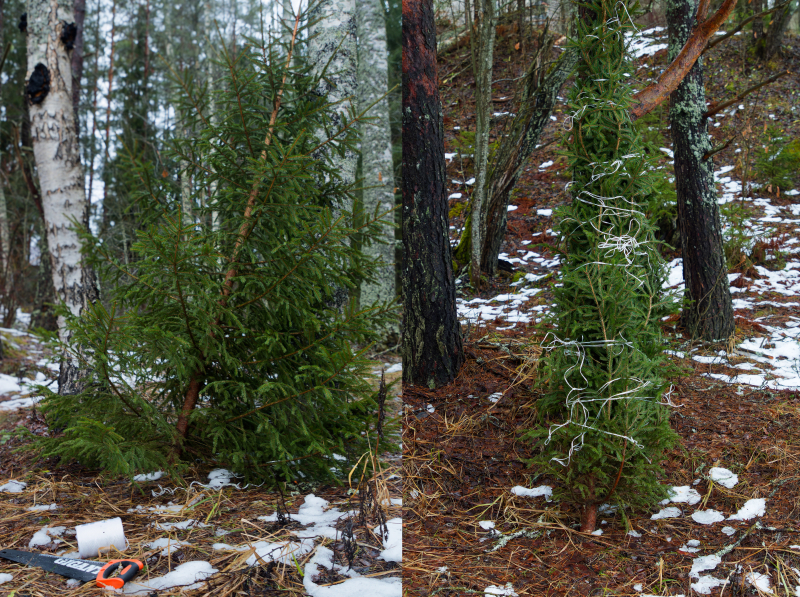
I began inspecting it closely to ensure there were no bugs, ticks, fungi, or patches of algae, and then measured the height, which turned out to be 2.8 meters from tip to root. As the weather started to deteriorate, with drizzling snow and slush, I took out my saw and got to work. After a few minutes, the tree came down, and it was time to clean up the sawed area and cover the stump to allow for future growth there. Next, it was time to pack the tree! It took some time to work the twine into knots and wrap up the tree while protecting its branches. Earlier, I did find nets designed for this purpose that would’ve made everything easier, but I couldn’t secure one before my trip, so twine was the go-to option for me.
With the tree packed, now it was time to head towards the railway station in Tolmachevo. One of the main reasons for selecting this harvest spot was its proximity to the railway station and the frequency of local trains during the evenings from Luga and Pskov to St. Petersburg.
The tree was rather lighter than imagined, weighing in at about 20−30 kg, yet holding the tree was quite challenging. Initially, it wasn’t very comfortable to hold the tree in my hand, as its pointed needles were rough to manage. However, after a few tries, I caught on to the stem and held it firmly. From there on, throughout the journey back to St. Petersburg, the fresh smell of the fir tree was densely aromatic and relaxing, such that the task became rather simple.
By then, it was nearing 4:00 pm, and the daylight was slowly starting to fade. With breaks every 10 minutes along the way, I finally reached the station, gaining a few curious glances from passersby who were surprised by the tree I was carrying.
As I had to ensure that the tree fits in the train, I had to let two trains pass, which had a lower height clearance, and boarded the third one headed to the city with greater clearance. Having purchased a ticket for myself and the tree (my baggage) I was transporting, I reached St. Petersburg with my festive ёлка, preparing to cherish the weeks ahead!
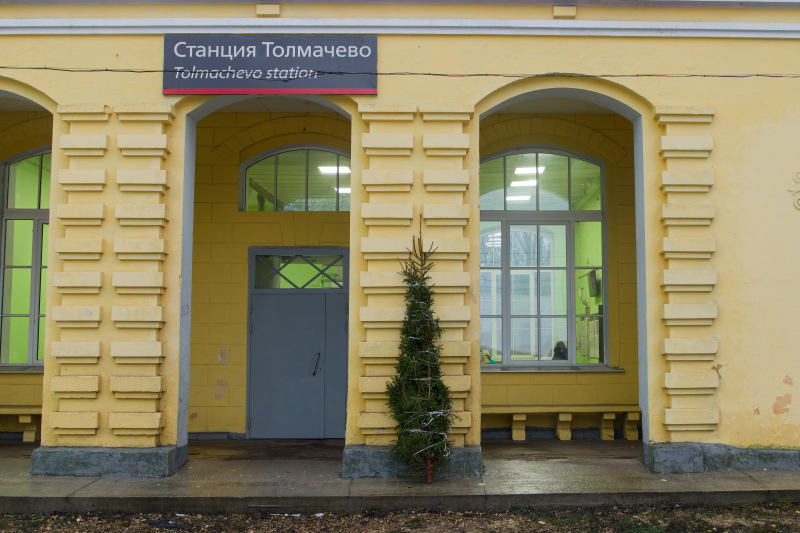
One of the main traditions of the winter holidays is being together with your close friends or family! I decided to give the tree to my close friend and his family, and to boost the spirit of Christmas and the New Year! From the Baltiysky railway station, I rented a mini truck and headed to their place. Once there, we set the tree in their living room, and it soon filled with joy and the fresh scent of fir! The journey was incredible.
The next step was decorating the tree. From bells to stars, ceramic toys to garlands, the magic of the Silantev family livened the tree even more!
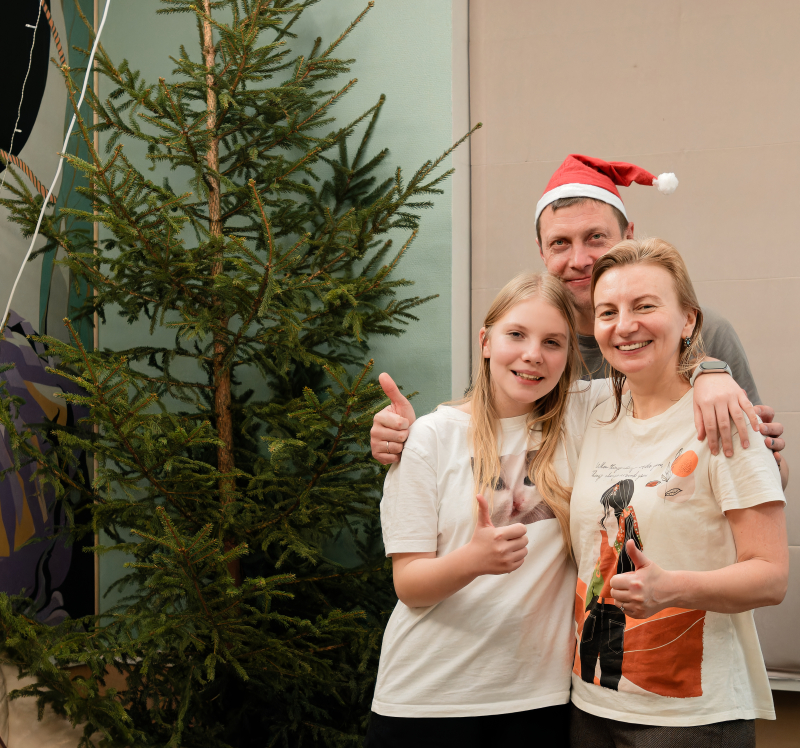
And hence, the New Year and Christmas were graced by the delightful presence of a live and decorated fir tree!
Maintaining the tree was rather simple. When fresh, the tree was bright and strong, but as the days passed, it slowly began shedding its leaves, and over time, in larger quantities. Eventually, after a month, it was mostly the stem that remained. However, what happens next? Do we just dump it? No! The tree has many-many forms to take!
The stem can be turned into home-made souvenirs and more. Together with the Silantev family, we cut the thicker branches of the tree and created saucers, place-mats, key-chains, magnets, and wooden sculptures that remind us of the wonderful holidays.
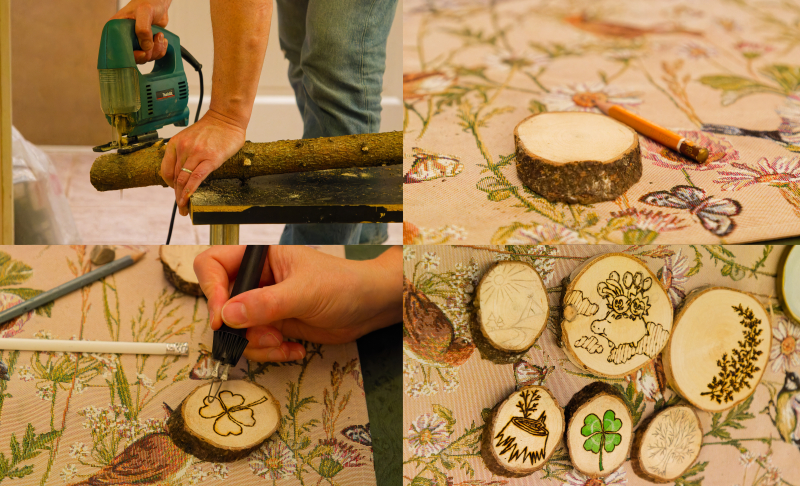
And later, as Maslenitsa came around, the remaining upper stem, branches, and twigs were collected as packs of sticks and used in the contents of the effigy traditionally burned during the holiday to greet spring!
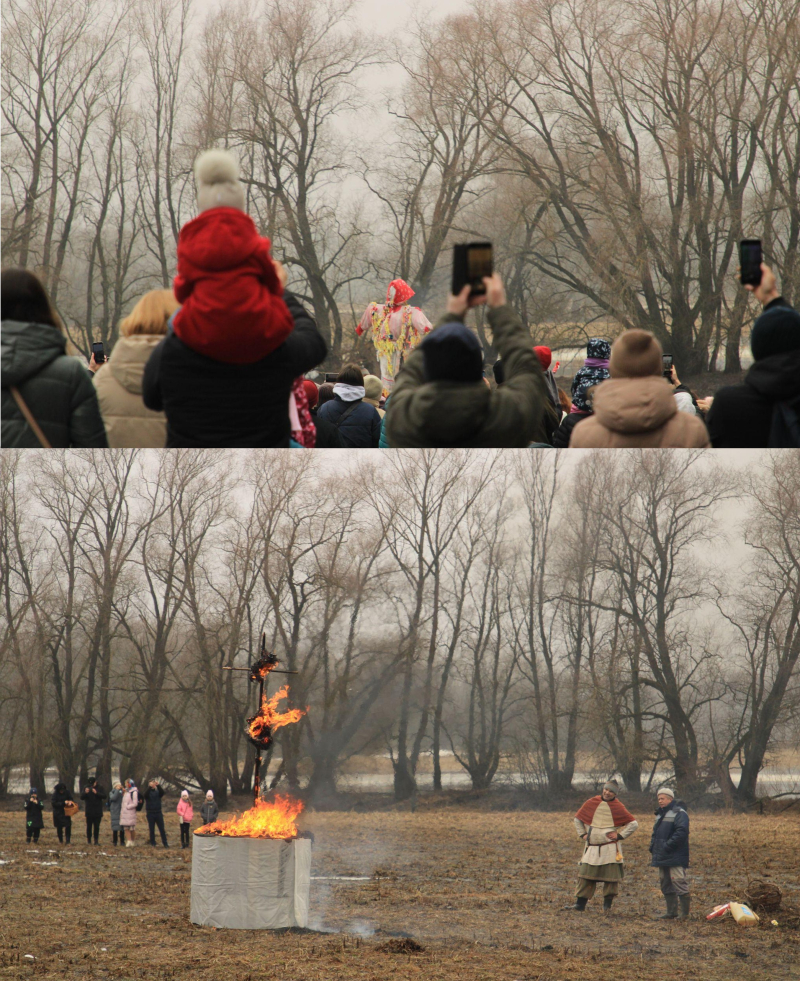
That’s how one tree traveled from Tolmachevo to St. Petersburg and created many memories throughout the winter holidays!