
Bachelor's student
How to Join ITMO’s Energy Lab: Interview with Anna Ponomarets
I got to chat with Anna Ponomarets, an engineer and lab assistant at the Energy Lab, back when she was finishing up her Bachelor’s degree. Currently, Anna is a Master’s student, continuing her education and work at ITMO. Here's what she had to share about her journey with anyone wishing to follow in her footsteps.
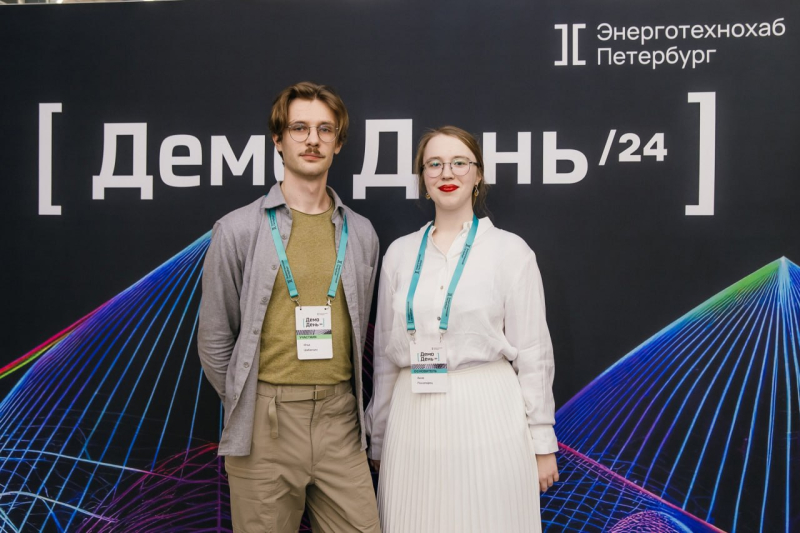
From what I understand, you started practice at this lab first before working here?
Yes, that’s actually a rather funny story. I had Pavel Krivoshapikin as my professor. He taught physical chemistry and asked one day, "Does anyone here want to work in electrochemistry?" And I said yes! He told me to write down my name on a list, although nothing happened, so I simply followed him around until he took me in as a practice student. He passed me off to a Master’s student who taught me how to work in a lab, then said, "You work here and you do it well; why don't we make you a lab assistant?"
Tell me a little bit about the Energy Lab. What are the main experiments right now?
We cover a few scientific fields with our experiments, but mostly we work with electrochemistry. We have some sorbents and membranes as well, where we extract useful ingredients from water. I call them ingredients, but they’re actually lithium and some heavy metals.
And you extract these things from water?
Yes, water from factories and stuff like that. We make the water clean and collect useful components like lithium, as it’s used in lithium-ion batteries. So it’s very relevant to the field studying energy. As for studies in electrochemistry, I used to work with the hydrogen evolution reaction, the oxygen evolution reaction, and water splitting. I also made catalysts to enhance the reaction and make hydrogen fuel more accessible. We study the CO2 reduction reaction using different catalysts such as high entropy catalysts and some copper catalysts, so that we can make useful components such as ethylene and some acids from air.
What does your average day working here look like?
You know, each day is different from the rest. To average it out, I would say that I start work around 10 am, drinking tea and preparing for the day by planning what I’ll do. If need be, I schedule myself in the lab calendar to use special equipment.
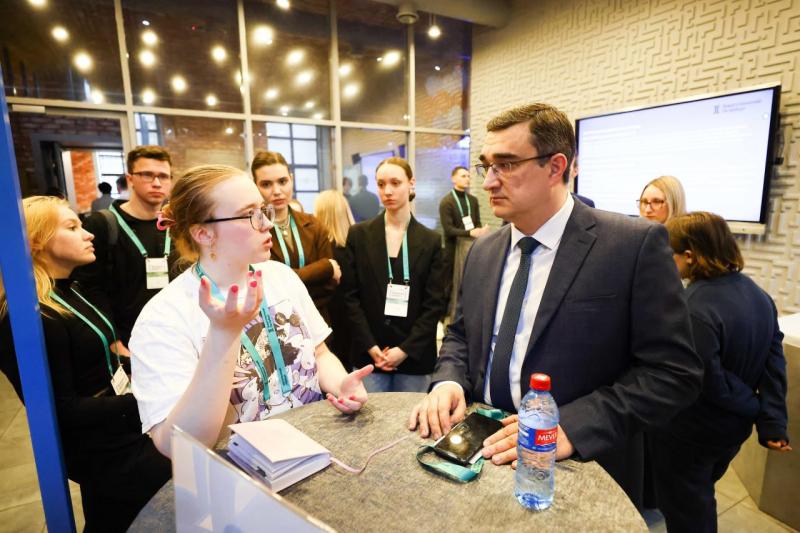
You mean you need to put yourself on a schedule for the equipment you’re going to use?
Yes. Not all equipment needs appointments, but some does and I really like to make everything upfront. So then I can just go to the lab and synthesize anything I need. Synthesis always takes some time, a few hours and longer. After that, I just clean the samples, studying and characterizing them.
What would be your advice for students who want to get experience working in a lab at ITMO?
Okay, there are two main ways to do it. The first is through the official practical training competition. I think it is always posted on social media, like on VK.
The second way is to contact anyone from the Energy Lab and ask if they want to take on a practical training student; like I did with Prof. Krivoshapkin — and you did as well. So, it's always an option, as we’re usually very welcoming to new students. I, for one, adore teaching someone; it really makes my day brighter.
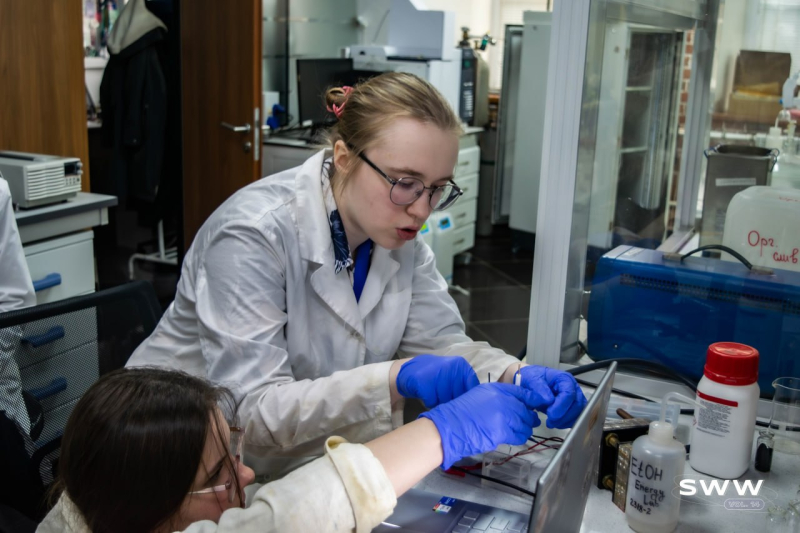
How many people are working in this lab, approximately?
It’s hard to say. Master’s students from several programs at ITMO, including Sustainable Chemistry for Energy Technologies, Chemistry and Artificial Intelligence, and programs in biology and biotechnology, work at the lab in some capacity. There are also postdocs and PhD students. So, quite a lot of people.
Do you have any scientific papers out already?
I have one out and one in review (at the time of the publication, Anna has two articles and one patent out!).
Very impressive! What are your future plans? Regarding the Energy Lab, your research field, and your career?
I want to continue my studies in my field because I absolutely adore it. It’s my dream job. I want to complete my Master’s here, and then go for my PhD.
What’s your favorite thing about working here? Why did you choose to work here in particular? Or was it just the easier choice?
I wouldn’t say it was the easy way. The easiest would be to continue my studies in biotech, like my Bachelor’s degree suggests. I work here because, firstly, like I said, I adore the field; I really like electrochemistry. But, another important thing as well is all the people I get to work with, like my scientific advisor Prof. Krivoshapkin, who is a really important person to me.
In addition, I absolutely love teaching students. That’s why I work here: because of the people, of what I can give to them, and what they can give to me.
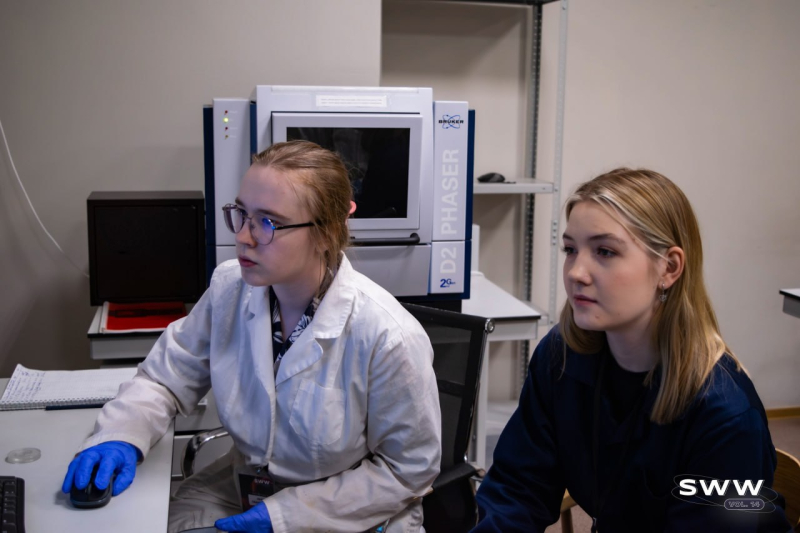
For my final question, is there anything else you'd like to add? Do you have any advice for students who want to go down a similar path as you and become scientists?
I would really like to advise them to just try. Like everything in life, you just have to do it. The only way to learn to draw is by drawing. The only way to learn to sing is by singing. And the only way to learn how to work well is by working well. And also! Try and enroll in the SWW contest.
What is it?
The Scientific Workshop Week. My experience there was great, and it provides easy access to related Master’s programs. It’s a week full of learning and different events. It happens twice a year: in summer and in winter.
Thank you for the interview!