Profile
Responsibilities: associate professor at the Faculty of Biotechnologies, head of the International Research Center “Biotechnologies of the Third Millennium.”
Research team: around 30 people.
Projects: the team identifies promising ingredients for functional foods and uses them in new food products to support consumers’ health and active longevity. The scientists also improve existing technologies and create new ones for producing, storing, and freezing products, enabling high quality and safety standards while extending shelf life.
From student research association to heading a research center
I got into science when I joined the student research association in the second year of my Specialist’s program at St. Petersburg State University of Refrigeration and Food Processing Technologies – that was over 25 years ago!
For me, science is always about looking for something new and unknown. In my Specialist’s program, we were trained to create high-quality, cost-effective, and safe food products. This is a highly multidisciplinary applied field, but progress in it requires fundamental research – for example, on the impact of biologically active substances (BAS) and food components on physiological processes in the body and, consequently, overall health. It’s also important to study how various conditions affect thermophysical and structural-mechanical processes of crystallization, how microbiological cells change with biochemical or physical effects, and much more.
This is why the scope of my research interests is quite broad: for instance, I develop functional food products to prevent various diseases (1, 2); search for new ways to ensure the stability of BAS, as well as the quality and safety of food products in production and storage (1, 2); and implement new digital technologies into food sciences research (article).
Among my proudest achievements as an organizer is the launch of our International Research Center “Biotechnologies of the Third Millennium,” where we collaborate with researchers from Europe, the Middle East, South Africa, China, and the US on major projects.
One of our most notable projects was focused on the functionalization of secondary bread raw materials. There existed the practice of purchasing an unlimited amount of bread and then returning the unsold product; thus, slightly stale but still edible bread ended up in the landfill. In St. Petersburg alone, hundreds of tons (millions of kilograms, according to some sources) of bread went to waste – which was definitely an unbecoming decision, especially if we consider the city’s WWII past. Finland and Italy faced their own problems connected to loss in production, so in collaboration with the University of Helsinki (then a top-100 university, according to QS World University Rankings) and the University of Bari Aldo Moro (one of the leading Italian universities in foodtech) we developed a sustainable and economically efficient technology for processing secondary raw materials into higher-value products. For instance, glucose syrup that could be used as a food ingredient or in microbiological growing media, as well as various biopharmaceuticals, including those for extending the shelf life of bread.
For a little over 10 years, I’ve been supervising PhD student research. This became the logical next step for our team: as you work on research, your team grows, and you naturally acquire PhD students.
My PhD students have won the Presidential Scholarship and grants from the Committee for Science and Higher Education of the Government of St. Petersburg; several of my students did year-long research internships in China, and one other student won a two-year 1.5-million-ruble Russian Foundation for Fundamental Research grant that helped them conduct high-tech research and increase their stipend.
All of our PhD students participate in various projects of the International Research Center “Biotechnologies of the Third Millennium” as paid staff, so they work on their own projects while also being part of the team. Since 2021, I have supervised 10 PhD students and two more PhD candidates, all of whom have successfully graduated. PhD projects take 3-4 years, depending on specialization, and we usually aim to defend the PhD title in the final year of a student’s program.
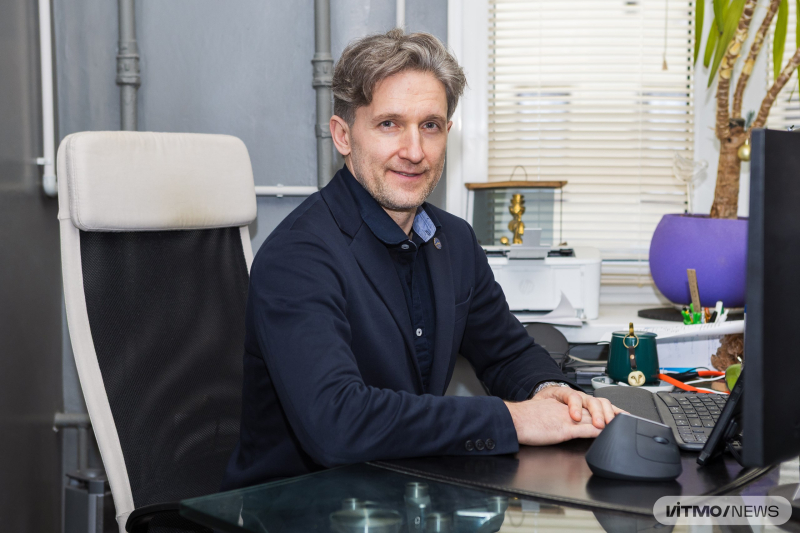
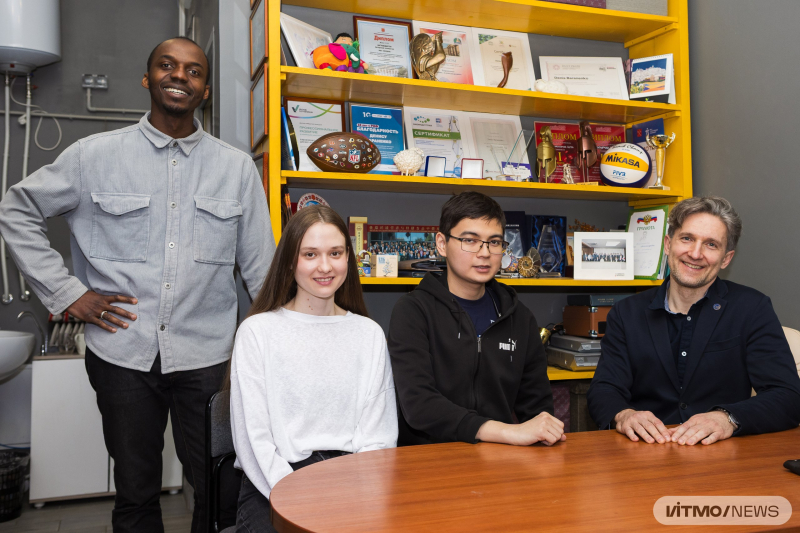
Denis Baranenko. Photo by Dmitry Grigoryev / ITMO NEWS
Research at the lab
This year we won a three-year Russian Science Foundation grant for the project “Development of geroprotective functional food ingredients using artificial intelligence” (No. 26-16-00211). This means we receive 7 million rubles a year in funding. In this project, we implement digital solutions to identify, predict, and validate BAS that have an anti-aging effect: they regulate cell metabolism, antioxidant protection, and autophagy, and support genome stability in the body. Such BAS include flavonoids, stilbenes, proanthocyanidins, and plant-based polysaccharides.
The problem is that there are many plants with these target BAS, but the composition of the resulting substances depends on morphological parts – roots, leaves, inflorescences, and so on, while extraction methods, harvest location, season, and other factors play an even bigger role. Searching through all combinations manually and then testing them experimentally would take a long time, which is why we want to implement AI tools: ML methods, infochemistry, computer vision, and physiology-based pharmacokinetic modelling. This will allow us to more quickly and effectively search for, predict the biological activity of substances, and analyze the obtained data, all in order to later propose digital protocols for selecting BAS, formulations, and technological conditions.
In other projects, our team improves existing technologies or develops new ones for production, storage, freezing and defreezing of products, analyzes the influence of BAS and new foods on the human body, creates forms for nutrient delivery, and develops products aimed at preventing various diseases, including oncological and neurodegenerative ones. Finally, we implement various modern methods, including digital ones, in food production. This is necessary when assessing the safety and quality of products and increasing their shelf life.
In our work, we collaborate with many Russian and international companies and universities. Among our partners are VkusVill, Partner-M, Nordena, Harbin Institute of Technology, Heilongjiang Bayi Agricultural University, Zhengzhou Xinda Institute of Advanced Technology, Kaliningrad State Technical University, Surgut State University, N.N. Petrov National Medical Research Center of Oncology, Pavlov Institute of Physiology, the Almazov Center for Medical Research, and others.
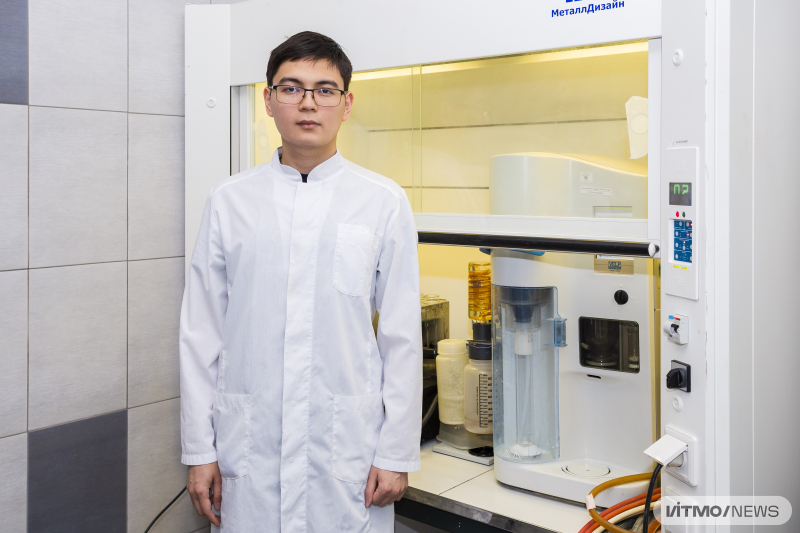
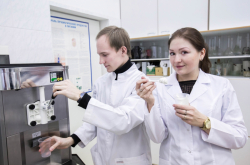
Arvig Badmaev, a second-year PhD student at the Faculty of Biotechnologies, studies the effects of electromagnetic waves on meat, rice, and other frozen products. His research can help preserve the biological value, taste, structure, and appearance of products after defrosting. Photo by Dmitry Grigoryev / ITMO NEWS
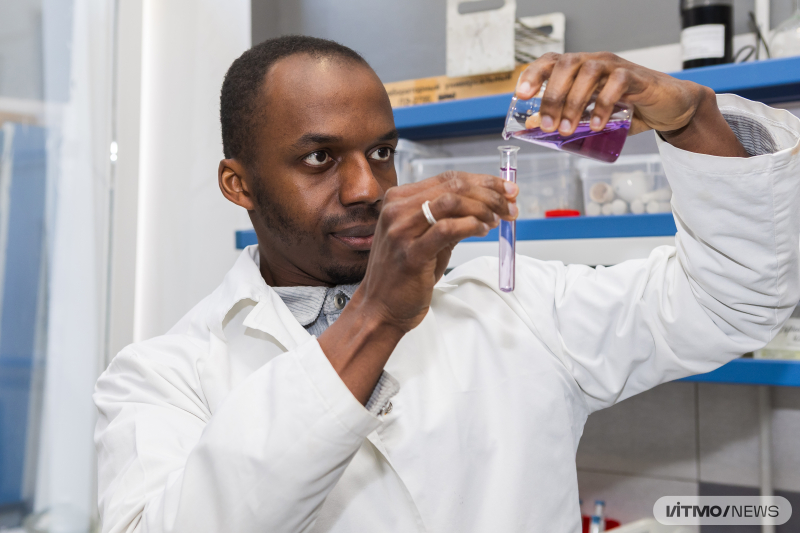
Pablo Alloh, a fourth-year PhD student at the Faculty of Biotechnologies, has developed a cream cheese with a protective food coating that is enriched by microcapsules with polyunsaturated fatty acids and antioxidants. With the developed technology, it’s possible to develop a functional food product that contains the daily intake of these healthy nutrients. Photo by Dmitry Grigoryev / ITMO NEWS
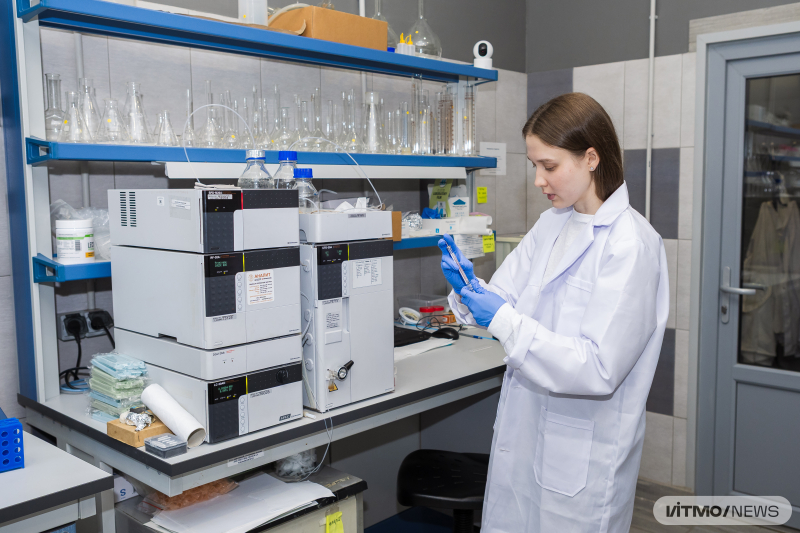
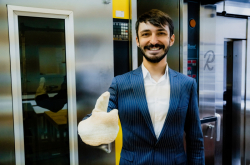
Angelina Sorokina, a first-year PhD student at the Faculty of Biotechnologies, is developing a functional food ingredient based on bioactive compounds of meadowsweet (Filipendula ulmaria) and Japanese knotweed (Reynoutria japonica). These plants are rich in natural antioxidants – flavonoids and stilbenes – that have a positive effect on the body with their anti-inflammatory and anti-aging properties. Photo by Dmitry Grigoryev / ITMO NEWS
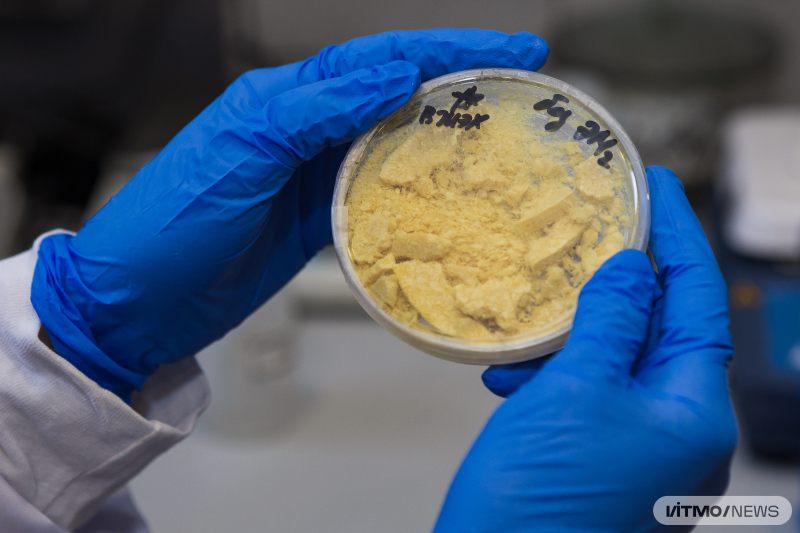
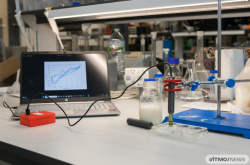
This Petri dish contains lyophilized liposomes with an extract of Reynoutria japonica. Photo by Dmitry Grigoryev / ITMO NEWS
PhD supervision
Currently, my research team counts around 30 people, with 70-80% of them young researchers under 39 years old. About 70% of our PhD students come to us after completing a Master’s program at the Faculty of Biotechnologies, but we also have graduates of other universities with relevant backgrounds.
PhD studies require a new level of responsibility. Students prepare theoretical reviews for their research and decide what and how they are planning to study; at our regular seminars, we look at their work and identify growth areas. Apart from lectures and experiments, each semester students have to present at conferences and publish at least three papers over the course of their studies, with at least one of them being indexed in Scopus or Web of Science.
There are other opportunities for PhD students at ITMO:
Apply for the competition of practice-oriented R&D projects in the track Foodtech. Winning teams receive 2.5 millions a year in funding for two years, access to the university’s research infrastructure, and assistance with documentation, testing, and detecting problems with their prototypes.
Complete an interdisciplinary student project with ITMO Collab. PhD students can head a team with representatives of several ITMO schools, suggest an idea that corresponds to one of the university’s strategic projects, and receive up to a million in funding for their project.
Develop a new project at the joint food innovation R&D center by ITMO and VkusVill. PhD students analyze consumer needs, develop recipes and technologies, calculate market metrics, and create prototypes at ITMO laboratories. VkusVill provides expertise and methodology, as well as “test shelves” for the new products that have passed internal selection.
Present at FooDigital, one of the major foodtech conferences. ITMO regularly acts as a partner and platform for the event, where owners and staff of major productions, experts, investors, and young researchers meet to discuss food industry cases and trends.
As every PhD students requires time, I try not to take on too many at once. However, if you do wish to join our research team, I’d consider doing it under the supervision of our recent PhD graduates, who are now postdocs at the lab. Three of them will start accepting PhD students for supervision in 2026: Elmira Eminova, Malikakhon Kurbonova, and Nikita Tyutkov.
Denis Baranenko's PhD graduates (left to right): Malikakhon Kurbonova, Nikita Tyutkov, Elmira Eminova. Photo by Dmitry Grigoryev / ITMO NEWS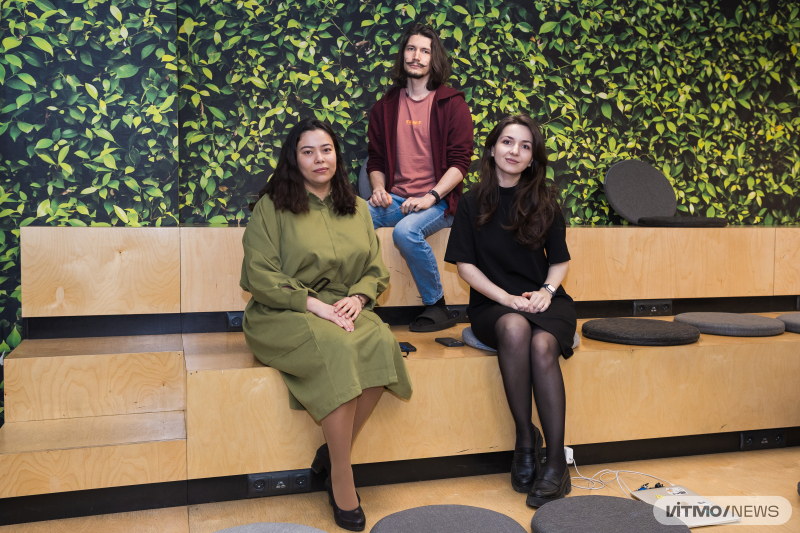
Elmira Eminova, PhD graduate, a researcher at the International Research Center “Biotechnologies of the Third Millennium:”
PhD studies at the Faculty of Biotechnologies often involve interdisciplinary teams of chemists, biologists, biotechnologists, and food technologies, which is why we are primarily welcoming applicants with experience in these fields. If you specialize in IT and want to dive into the food industry, you can also apply; we already have a Master’s student with such a background. In order to help everyone feel like part of the team, we regularly host seminars, where, for instance, chemists talk about analysis methods and biologists – about working with microorganisms.
Admission prep tips
Here’s a step-by-step on how to apply to a PhD program:
1. Decide on your specialization and look into the universities that offer it. You can find all of ITMO’s PhD programs here (in Russian) and all specializations – here (in Russian).
2. Look through the list of potential supervisors. The ones available at ITMO are listed here (in Russian). Points to consider: a supervisor’s research interests, number of publications (especially in high-ranking international journals), and the number of graduated PhD students under their supervision.
3. Email your chosen supervisor. It’s better to do this in advance: not in summer, but at the start of the spring semester. Attach your portfolio (describing your education history, publications, and conferences). Share your research proposal, but be ready that the topic may change to align to the interests of the research team. It’s also important to have a match with your supervisor in terms of values and work ethic to have a comfortable PhD experience. You can gauge this match at an online or in-person meeting or at an open day.
4. Learn how to gain additional admission points. For instance, at ITMO you can get those by doing an internship, acquiring a letter of recommendation from your future supervisor, winning a student competition or research grants, or registering a patent. All applicable personal achievements are listed here (in Russian).