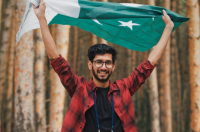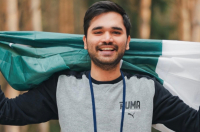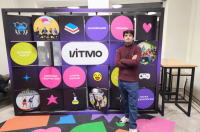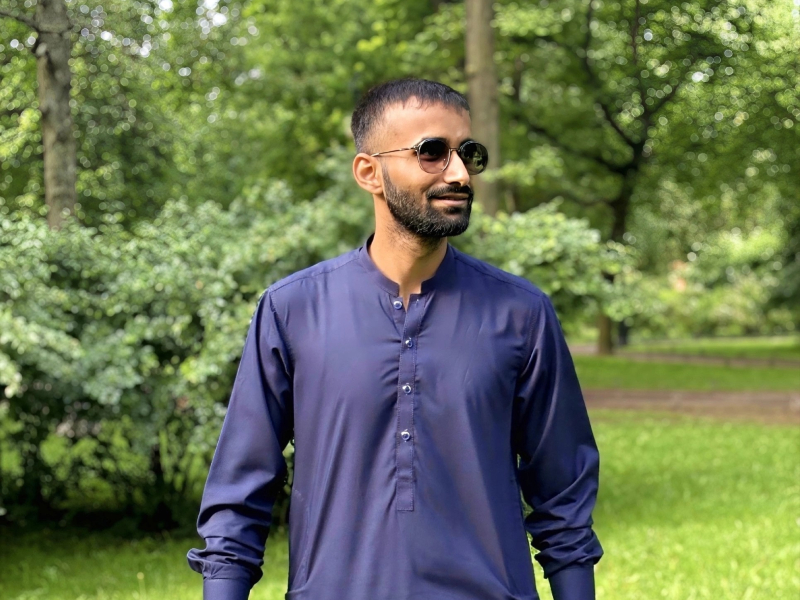
Could you introduce yourself and tell us a bit about where you're from?
I'm Urwa Khalil, a mechanical engineer who got obsessed with making machines think. I'm from Sialkot, the city that quietly makes most of the world's footballs and surgical instruments, so precision engineering was basically in the air I grew up breathing. Now I'm at ITMO with a full scholarship from Open Doors, implementing that precision into robotics and AI research.
What first drew you toward those subjects?
Working as an engineer at Pakistan's largest oil company, I kept watching people go into genuinely dangerous places – pipelines, heavy machinery, extreme heat –and thinking: robots should be doing this. That frustration became my research direction.
What has been the most exciting or unexpected thing you've learned so far?
That a robot can perform brilliantly in simulation but also be completely hopeless in reality. While working on my thesis involving autonomous robots that monitor air pollution, I have noticed that there's a clear gap between working with a clean simulated dataset and real-world data. It is humbling but also fascinating, and honestly, this is where the best research lives.
Are there any specific technologies, tools, or programming frameworks you especially enjoy working with?
Learning ROS/ROS2 feels like finally learning to speak the language robots actually use. PyTorch for deep learning and MuJoCo for testing are my other favorites.
How would you describe the academic and research environment at ITMO?
Intense and genuinely exciting. The expectations are high here and my supervisor always pushes me to think bigger and out of the box. It's the kind of place that makes you want to be in the lab even on weekends!
Has studying in an international environment changed the way you approach teamwork or innovation?
Completely. I used to think good teamwork meant everyone being aligned. Here, I've learned that the best solutions come from people who aren't on the same page at all. The most interesting ideas I've had at ITMO came out of arguments, not agreements.
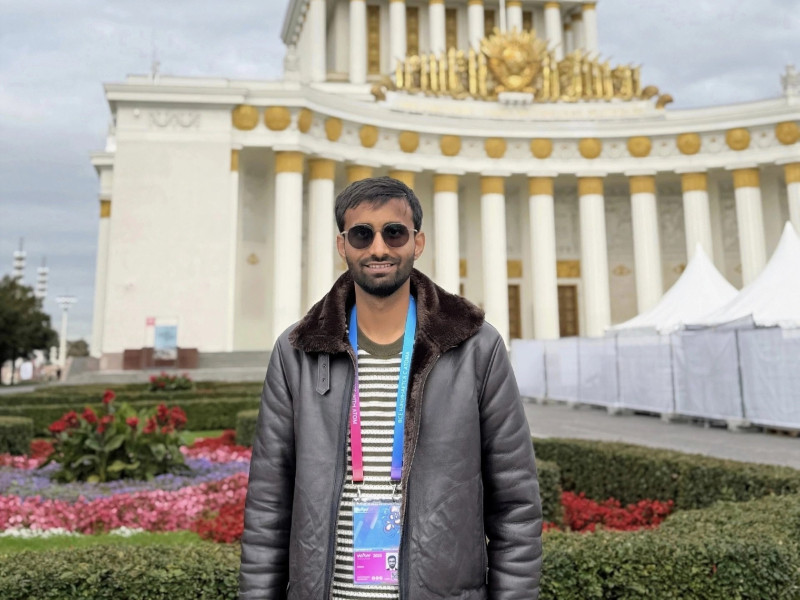
Urwa at VDNKH in Moscow. Photo courtesy of the subject
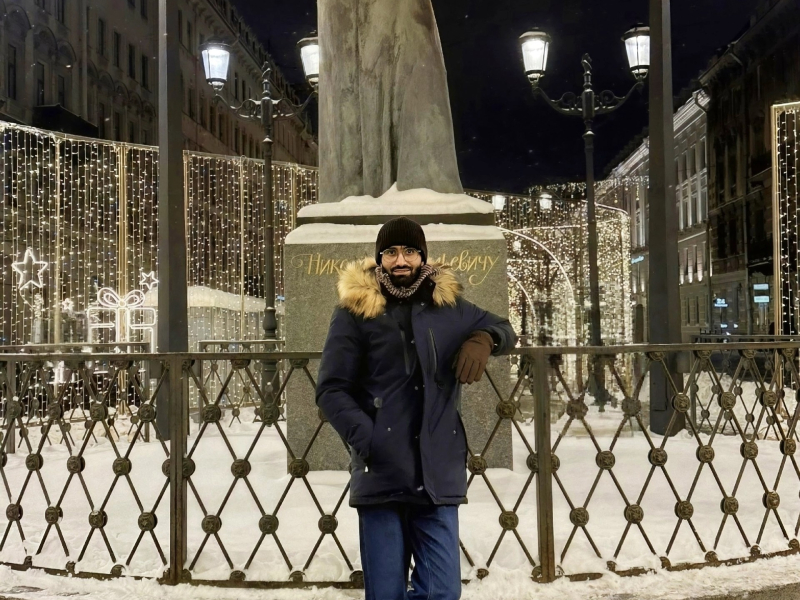
Photo courtesy of the subject
What's one misconception people often have about AI or robotics that you would love to debunk?
That robots are about to replace us. The systems I build every day are extraordinarily capable of specific tasks, but the real future is humans and robots thriving together.
What real-world problem would you most like to solve through robotics or AI?
Environmental monitoring in places too dangerous for human inspectors. My thesis is about a robot that can map air pollution in real time. The bigger vision is to produce affordable robotic systems that give developing communities access to environmental data that currently only wealthy governments can afford.
Moving from Pakistan to Russia is a major change. What was the biggest adjustment for you?
The social codes, surprisingly. Not the cold or the language, but learning that silence isn't always coldness or rejection. Once I understood how trust is built here, I stopped misreading everything and started making real connections.
What has surprised you the most about life in Russia so far?
How deeply culture is woven into everyday life. People playing random classical symphonies at unexpected places; the Palace Square turning into a jolly fair; experiencing this made me realize that intellectual life and daily life don't have to be separate entities.
When you're not studying or working on robots, how do you like to unwind?
I travel whenever I can. Arriving somewhere new completely resets my brain. I also read a lot. Right now I'm into thrillers and philosophy.
Have you found any favorite places, routines, or activities in St. Petersburg?
The canals at night during white nights are my favorite locations to chill. That specific hour, when the light turns pale gold and the reflections look as if they were painted, never fails to reset my mind.
Where do you see yourself in the next 5-10 years?
I see myself as someone pursuing a PhD and simultaneously building a company that puts robots where they're actually needed. The measure of success for me isn't just academic papers. It's whether something tangible changes for real people.
Finally, what advice would you give to students in Pakistan who are interested in studying at ITMO?
Apply before you feel ready. That moment never comes! I applied when my robotics knowledge was mostly self-taught and I wasn't sure I was qualified. I still managed to get in.
ITMO is looking for curiosity and drive, not a perfect profile. Pakistan has enormous talent waiting for exactly this kind of opportunity. Don't wait too long!